
 E-Paper



How Juhu, Versova beaches were cleaned up over six years
Mumbai's beaches have undergone a sea change with clean-up efforts, resulting in cleaner beaches like Juhu and Versova, attracting throngs of citizens

 Prefer HTon Google


Mumbai: There was a time when Mumbai’s beaches were known for the litter and sludge strewn across. However, over the years, thanks to the push for cleanliness by beach clean-up groups and the Brihanmumbai Municipal Corporation (BMC) a sea change has taken place, particularly in the beaches of Juhu and Versova.
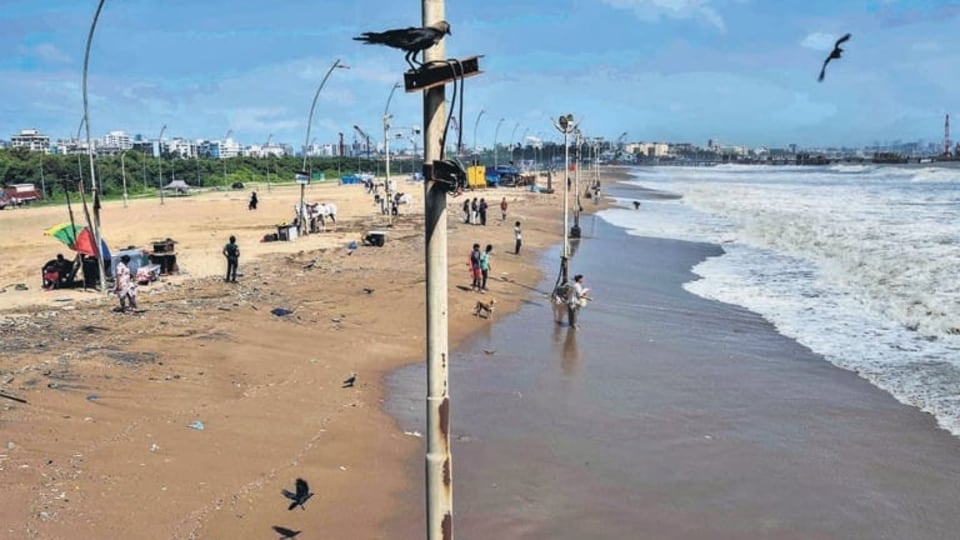
No longer is the Mumbaikar greeted by five-feet high garbage thrown up by high tide. As Juhu resident Zoru Bhathena said, “The Juhu beach is beautiful and clean for around 300 of the 365 days in a year.” Lawyer Afroz Shah, who has completed 485 weeks of clean-ups on Versova beach put it down to “constant and repeated efforts of clean-ups”.
In 2018 BMC invited tenders for cleaning both the beaches, marking a budget of ₹22 crore for each, for a period of six years. Spectron Engineers Pvt Ltd, a company that sends its equipment for cleaning, was appointed to carry out the task on both beaches. While the contract for Juhu beach’s clean-up expired on June 3, that of the Versova beach will expire by the end of July.
An official from the civic body’s solid waste management (SWM) department said, “As a stopgap measure till the tenders are reinvited and contracts renewed, the ward office is deploying its own manpower so that the beaches remain clean.” The tendering for both beaches will be done over the next 15 days, he added.
The clean-up act
Spectron collects 50 metric tonnes (MT) of waste from the Juhu beach daily, and around half the amount from Versova beach. Versova beach is half the length of Juhu beach – the former measures 3.5 km while the latter is 6 km. Both have the width of 60 to 100 metres, depending on the height of the tide. This changes in the monsoon, especially with high tides that come along with the first rains.
“There is little garbage in the dry season, and littering by beach goers only contributes to it marginally, compared to the quantum the tides throw up,” said the official. The volume of waste quadruples in the monsoon. “Anywhere between 150 to 200MT of waste is collected at the time in Juhu; Versova generates half of that.”
Shah underscored that the week before last after monsoon struck Mumbai, his NGO Afroz Shah Foundation conducted a four-day beach clean-up drive on the Versova stretch, collecting garbage from 7am to 11am and 4pm to 7pm. “We collected garbage for six hours daily from Friday to Sunday, amounting to 400 tractor loads,” he said. “The BMC’s machinery is adequate around the year, except for in the rains, when cyclonic disturbances in the sea throw up lots of garbage on the beaches. But it’s still not nearly as bad as when we started in 2015, when there would be over five feet of garbage to be collected.”
Manpower and machines are deployed depending on the nature and humidity of the terrain. Comber machines are used to churn the sand through its claws to separate the garbage. The official said, in future advanced machines will be deployed for the purpose.
Blocking nallahs
Bhathena pointed to BMC using a mechanism to reduce garbage from flowing into the beaches – by blocking the prominent Irla and Gazdhar Bandh nallahs, which are in close proximity to the beaches. “The civic body has installed pumps at the nallahs that prevent garbage from entering the sea and throwing it back on the beaches,” said Bhathena. “This works round the year.”
An official from the storm water drains (SWD) department added how a lot of garbage is fished out from the water. “There is a back rake (a filtering system) at the Irla nallah pumping station, whereas there are stainless steel screens Gazdhar Bandh. Our aim is to block the water from going into the city when there is high tide or heavy rain. But we get a lot of floating garbage, which we remove to avoid the pumping stations from being clogged,” he said. “There are also trash brooms that block garbage from going into the sea.”
The twin clean beaches have brought citizens thronging to the spots over the weekend. “Beaches are affordable hangout spots,” said Bhathena. “People are willing to spend on travel if only to get some chaat and snacks on the beaches. Sundays are packed – people are known to walk from Vile Parle station to Juhu beach.”


