
 E-Paper



How the BJP spoke many languages to court Mumbai’s voters
Over 50 prominent leaders from outside Maharashtra—ranging from MPs and MLAs to mayors, cultural figures and folk artistes—were drafted into the campaign, aimed at connecting with the city’s diverse ethnic and linguistic communities

 Prefer HTon Google


Mumbai: In the bylanes of Mankhurd last week, actor-turned-politician Manoj Tiwari, standing on a campaign chariot, breaks into an impromptu Bhojpuri song, weaving the local Bharatiya Janata Party (BJP) candidate Navnath Ban’s name into the lyrics. Amid loud cheers, the BJP MP from Delhi says, “You will realise that electing Navnath is like electing chief minister Devendra Fadnavis.”
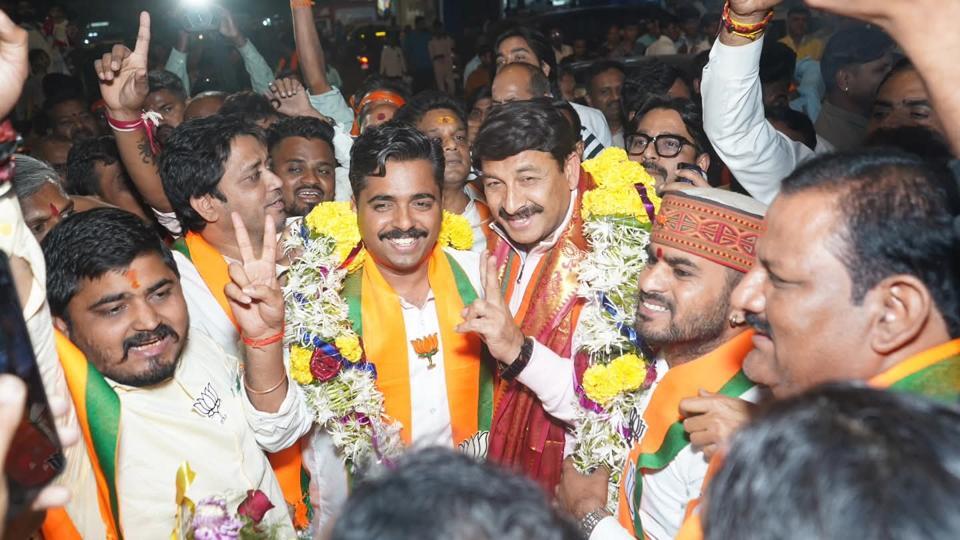
It’s a familiar election scene, but this time, the BJP executed it at scale, across languages and neighbourhoods, as it sought to navigate Mumbai’s complex electoral battleground ahead of the Brihanmumbai Municipal Corporation (BMC) polls on Thursday.
Over 50 prominent leaders from outside Maharashtra—ranging from MPs and MLAs to mayors, cultural figures and folk artistes—were drafted into the campaign, aimed at connecting with the city’s diverse ethnic and linguistic communities. There were also hundreds of pravasi karyakartas or party workers from other states, deployed as foot soldiers working at the grassroots level.
The list of star campaigners included firebrand leaders such as K Annamalai from Tamil Nadu and Hyderabad-based Madhavi Latha, Bhojpuri film stars and MPs Manoj Tiwari and Ravi Kishan, and folk singer Maithili Thakur. Each leader was assigned to a specific ward based on the linguistic and cultural profile of the voters.
According to rough estimates, of the 10.3 million voters in Mumbai, around 1.7 million are north Indians, over 400,000 are south Indians, while around 1.5 million belong to the Gujarati and Marwari communities.
Ward No. 135, where Tiwari was campaigning, is a diverse mix of residents from all communities, including those from Uttar Pradesh and Bihar. The hugely popular Bhojpuri actor received a great response at over 10 public gatherings and road shows he addressed in Mumbai ahead of the polls. “His rally and song in Bhojpuri will have a great impact on around 12,000 (out of 40,457) north Indian voters in my ward,” said Ban, the BJP candidate.
Singer Maithili Thakur, now a first-time MLA in Bihar, was brought in due to her pan-India following. While her core base is among Hindi-speaking voters, BJP workers said she also enjoys popularity among Maharashtrians for her renditions of Marathi abhangs by saints such as Sant Tukaram and Tukdoji Maharaj.
“When people heard Maithili was coming to campaign, even Marathi-speaking neighbours wanted to meet her,” said a BJP worker coordinating the visits of celebrities and pravasi karyakartas. “Her music cuts across language barriers.”
In Telugu-dominated pockets of the city, Hindutva activist Madhavi Latha addressed a series of small meetings, attacking AIMIM chief Asaduddin Owaisi, against whom she lost the 2024 Lok Sabha election. During one such meeting in Worli, she also said that Mumbai needed a Hindu mayor, and urged Telugu voters to vote for the BJP’s Hindutva plank.
Another key campaigner was Aparna Yadav, vice-chairperson of the Uttar Pradesh State Women’s Commission and daughter-in-law of the late Samajwadi Party founder Mulayam Singh Yadav. She joined the BJP in 2022. A north Indian BJP leader told HT that Yadav commands a lot of respect among north Indian voters, particularly the Yadavs. “Her meetings make a lot of impact on the voters,” the leader said, adding that the BJP organised multiple public meetings for her across the city, each attended by 200-500 voters.
Operating in parallel with the star campaigners were over 50 elected representatives from states such as Uttar Pradesh, Madhya Pradesh, Telangana, Chhattisgarh, Assam, and Gujarat, who were stationed in Mumbai, along with hundreds of pravasi karyakartas. Some of the elected representatives were appointed Lok Sabha constituency-wise in-charges of the campaign.
For instance, Jagdish Ramu Rohra, mayor of the Dhamtari Municipal Corporation in Chhattisgarh, was given charge of 35 wards in South Central Mumbai. Stationed in the constituency since December 30, he will remain there until the counting day, supported by a team of foot soldiers from various states, who will stay for two days each.
“We coordinate with the local party workers here, understand their problems and try to resolve them,” said Rohra. “For instance, in one Sindhi-dominated pocket, there was resentment over the lack of representation in nominations. We pacified them by engaging them in dialogue with a community leader… The observers submit their reports to the city unit on a regular basis.”
The celebrities and pravasi karyakartas were deployed in the wards based on the candidates’ demands. “We invite the demands from the candidates for the star campaigners and pravasi campaigners, and the request is placed by them, taking the linguistic and religious identity of the wards in mind,” said the BJP worker quoted earlier.
“For instance, Manoj Tiwari was made to campaign in north Indian dominated areas, while Madhavi Latha campaigned in areas dominated by Telugu-speaking voters. Similarly, party workers from other states who come to work here as foot soldiers are placed according to their connections with voters. Not only the pravasi karyakarta but even party workers from a specific region in the state are called for specific wards. Nitesh Rane and party workers from Konkan are in demand for campaigning in the Konkani-dominated belts of Bhandup, Parel, and Lalbaug. It helps in directly connecting with the voters,” the leader added.
Party leaders insist the presence of workers from outside the city does not clash with the interests of local workers. “It is a well-accepted organisational practice,” said Mumbai BJP general secretary Shweta Parulekar.
“Party workers who come from outside look at issues neutrally and without any bias. They are hardcore, loyal party workers who think only in the interest of the party. They work in tandem with local booth-level workers and panna pramukhs (a panna refers to a page in the electoral rolls), understand their requirements, and help resolve issues. They ensure that the outreach programme is implemented in toto and party workers have reached every voter,” she added.
As Mumbai heads into a high-stakes civic election, the BJP’s message is clear: in a city of migrants, electoral success hinges on speaking the voter’s language.


Stay updated with all the Breaking News and Latest News from Mumbai. Click here for comprehensive coverage of top Cities including Bengaluru, Delhi, Hyderabad, and more across India along with Stay informed on the latest happenings in World News.


