Mumbai: Maharashtra ranks among the world’s top 50 regions at risk of damage to the built environment due to climate change, states a report published on Monday. Maharashtra is ranked 38 on the global list, which also featured Bihar at 22, Uttar Pradesh at 25, Assam at 28, Rajasthan at 32, and Tamil Nadu at 36.
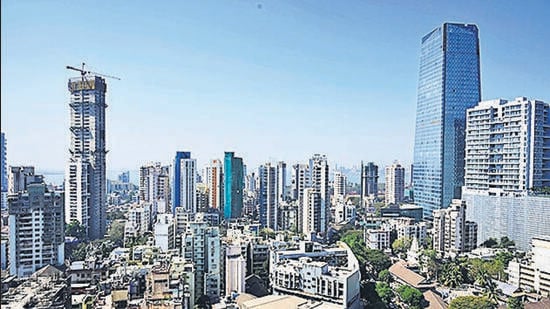
As per the report – Gross Domestic Climate Risk – by the Australia-based Cross Dependency Initiative (XDI), the more developed or ‘built-up’ a particular region is, the more vulnerable it will be to climate change-induced natural disasters by 2050.
XDI, part of a group of companies committed to quantifying and communicating the costs of climate change, calculated the physical climate risk to the built environment in over 2,600 states and provinces around the world in 2050.
Built environment refers to man-made structures, features, and facilities viewed collectively as an environment in which people live and work.
“This is the first time there has been such an assessment focused exclusively on the built environment, comparing every state, province and territory in the world. Since extensive built infrastructure generally overlaps with high levels of economic activity and capital value the physical risk of climate change must be appropriately understood and priced. For the first time, the finance industry can directly compare Mumbai, New York and Berlin in this respect using a like-for-like methodology,” said Rohan Hamden, CEO, XDI.
He pointed out that many highly-developed and globally-significant economies were found to be at great risk in the assessment, including Mumbai, Buenos Aires, São Paolo, Jakarta, Beijing, Hồ Chí Minh City and Taiwan.
{{/usCountry}}He pointed out that many highly-developed and globally-significant economies were found to be at great risk in the assessment, including Mumbai, Buenos Aires, São Paolo, Jakarta, Beijing, Hồ Chí Minh City and Taiwan.
{{/usCountry}}As the analysis focuses solely on damage and failure of features in the built environment, other social, environmental and economic effects of climate change (for example, water shortages, impacts on agriculture, biodiversity or human wellbeing) are not included. The analysis also does not account for future increases in building stock.
Mumbai’s climate vulnerability has been extensively reported by HT in recent years. As per the Brihanmumbai Municipal Corporation’s (BMC) analysis for the Mumbai Climate Action Plan (MCAP), 35% of the city’s population lives near chronic flooding hotspots. Temperatures are also on the rise, with more than half of the city’s 13 heatwaves since 1977 occurring after 2005.
Last year, HT also reported that land surface temperatures in south Mumbai have increased by at least 5 degrees over 20 years, while a recent study also indicates that the land around Mumbai is sinking at an average rate of 2mm per year, prompting experts to warn that the city is likely to see increased flooding unless urgent action is taken by urban planners and municipal authorities.
“These are all symptoms of rampant, unregulated land use change which accompanies growth and development. Regarding the action planning, firstly we have to do a similar assessment by Indian institutes. There are scientists and people who are working in different climate change areas in India. They need to get together and understand how this risk ranking can impact lives and livelihoods of the people living in various regions of India. We don’t have any time to waste. The window of opportunity as per the latest IPCC report is about 15-20 years. This means we need to both adapt and mitigate at the same time,” said Anjal Prakash, a research director and adjunct associate professor of Bharti Institute of Public Policy, ISB, and a lead author with the IPCC.
Stay updated with all the Breaking News and Latest News from Mumbai. Click here for comprehensive coverage of top Cities including Bengaluru, Delhi, Hyderabad, and more across India along with Stay informed on the latest happenings in World News.
Stay updated with all the Breaking News and Latest News from Mumbai. Click here for comprehensive coverage of top Cities including Bengaluru, Delhi, Hyderabad, and more across India along with Stay informed on the latest happenings in World News.