
 E-Paper



More productive nesting for Olive Ridleys near casuarina plantations: Study
Researchers working with the Mangrove Foundation said that this finding runs contrary to established science because it makes the nests more prone to ant infestation, predators and root invasion

 Prefer HTon Google


Mumbai A new study funded by the state forest department’s Mangrove Foundation has found that Olive Ridley turtles, which visit the Konkan coast in the late winter to early summer to lay eggs, may see more productive nesting seasons if protective hatcheries are set up in sparsely-vegetated casuarina plantations along the coast, which will regulate the incubation temperature of the nests.
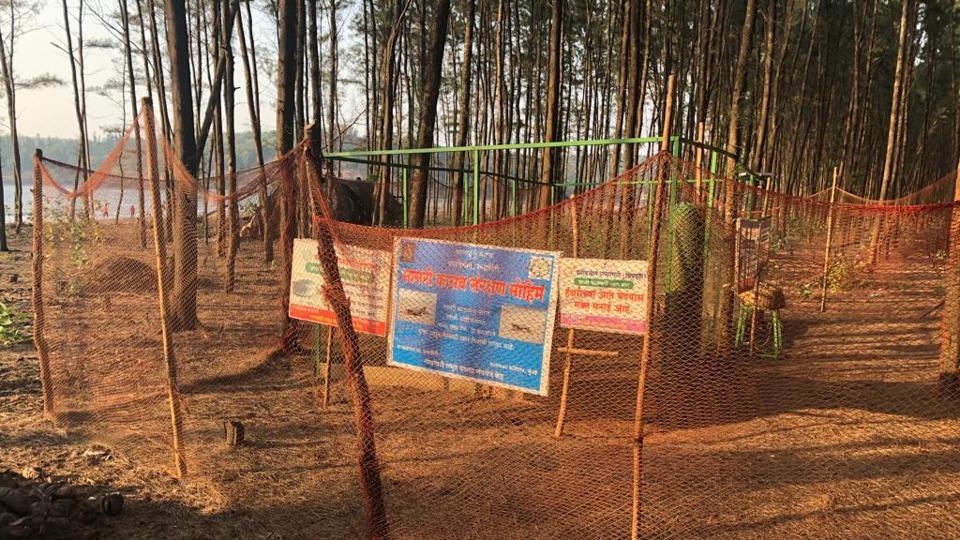
Researchers working with the Mangrove Foundation said that this finding runs contrary to established science because it makes the nests more prone to ant infestation, predators and also root invasion by plants, but added they are planning further studies to see if such an intervention can be feasible in the long run.
The aim of the study, conducted between 2019-20 and 2020-21 by the Wildlife Institute of India (Dehradun), was to map the incubation temperatures of Olive Ridley nests in Maharashtra, as the emergence of hatchlings as well as their sex ratio is highly dependent on the thermal exposure of eggs.
Based on the data collected from indigenously developed data loggers, researchers have been able to pinpoint a threshold temperature of 33 degrees Celsius, above which the emergence and sex ratio of hatchlings may be adversely affected.
The incubation period is inversely proportional to temperature. Higher temperatures result in shorter incubation periods, but may also lead to underdevelopment of the embryos and hatchling, which in turn may hinder their chances of emergence and survival. Higher incubation temperatures also lead to a strong female bias in the sex ratios of hatchlings.
Harshal Karve, a marine biologist with the Mangrove Foundation, said, “We know anecdotally that in India, the peak nesting season of Olive Ridleys has moved closer to the end of winter and early summer, as compared to early winter. This stands to expose the nests to higher incubation temperatures above 33 degrees Celsius in March-April, as opposed to December-February. So, the study also aimed to validate a few mitigation measures implemented at seven hatcheries across Maharashtra. One of the findings is that a hatchery in Gaonkhadi, Ratnagiri, situated in a casuarina plantation, showed higher emergence rate of hatchlings and a more balanced sex ratio.”
“The nesting season in Gaokhadi started in late January and ended in late May... These nests had their incubation period in March and April when the ambient temperature is high. The cooling effect of the plantation had affected the incubation temperature resulting in a higher emergence rate. An observable benefit of erecting hatchery inside sparse casuarina plantation is a well-balanced sex ratio of hatchlings,” the study notes. This was not the case at other nearby hatcheries in Kelshi, Anjarle, Kolthare, Dabhol and Madban in Ratnagiri, and Vayangani in Sindhudurg.
At the four locations where data temperatures were correlated with hatchling emergence, Gaokhadi showed a 59.6% emergence rate, as opposed to 56.4% in Kelshi, 18.6% in Kolthare and 40% in Dabhol. Nests at Gaonkhadi also had a longer incubation period than other hatcheries due to lower thermal exposure. Hatchery managers are known to use a range of temperature control measures, such as placing a wet jute bag over the nests, using tarpaulin sheets to keep the sun out, and sprinkling water around nest sites to reduce the temperature of the sand. Of these, use of tarpaulin sheets alone was not found to be effective at reducing incubation temperatures, while others were found to be only moderately effective.
“This finding is completely inadvertent. The hatchery in Gaonkhadi was set up in a casuarina plantation instead of on the beach, because the width of the beach was too small to protect the eggs against storm surges and cyclones. We are planning further studies with data loggers to see if this trend holds up. If it does, we may have a completely natural solution at hand for the future, when peak nesting season shifts to the early summer,” said Karve.
‘Natural line of defence’
Across the Indian coast, casuarina trees are grown close to the sea for a number of benefits. They protect against erosion of the shoreline, and like mangrove plantations, can provide a first line of defence against strong winds, cyclones and storm surges. India is among the world’s largest commercial foresters of casuarina, which is a non-native plant and can pose an invasive threat to other species of plants. As per the National Marine Turtle Action Plan of the union environment ministry, casuarina plantations are prohibited along turtle nesting beaches.


