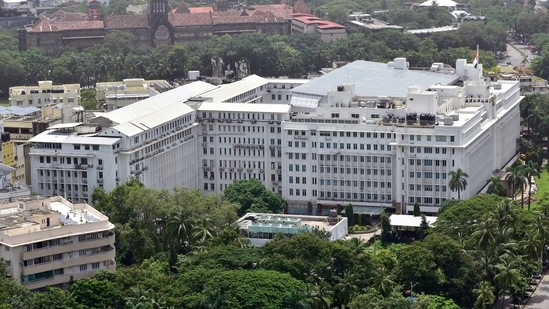
Within 25 to 30 years, South Mumbai's Nariman Point, the state secretariat will go be engulfed by the rising seawater level, Mumbai municipal corporation Iqbal Singh Chahal has recently said. There are enough warnings that nature is giving, but if people do not wake up, the situation will take such a dangerous turn that 80 per cent of areas like Cuffe Parade, Nariman Point and Mantralaya will just disappear, Singh said. The disaster will not be for the next generation to witness, the civic chief said, adding that people from this generation only will see it as it might take place in another 25 years.
Climate experts have observed that Mumbai, of late, witnessed some extreme weather conditions, the latest being the recent thunderstorm that took place in the city in July.
In 2020, cyclone Nisarga hit Mumbai fr the first time in 129 years and then in the last 15 months, there have been three cyclones. "On August 5, 2020, about 5 to 5.5 feet water was accumulated at Nariman point. There was no cyclone warning that day, but considering the parameters, it was a cyclone," Chahal said.
"Earlier, we used to hear about climate change events like melting glaciers, but not directly affecting us. But now it has come to our doorstep," he added.
This year's monsoon has been erratic as the city received maximum rainfall before the scheduled date of the monsoon's arrival. Before June 9, Mumbai recorded 84 per cent of the June rainfall. In July too, instead of being equally distributed across the month, the maximum rainfall took place over four days.
"The four-year period between 2017 and 2020 has seen a steady increase in the extremely heavy rainfall events. This indicates that the frequency of such extreme weather events is increasing for the city of Mumbai especially over the past four years," said Lubaina Rangwala, associate director, WRI India Ross Center for Sustainable Cities.
{{/usCountry}}"The four-year period between 2017 and 2020 has seen a steady increase in the extremely heavy rainfall events. This indicates that the frequency of such extreme weather events is increasing for the city of Mumbai especially over the past four years," said Lubaina Rangwala, associate director, WRI India Ross Center for Sustainable Cities.
{{/usCountry}}(With PTI inputs)
Stay updated with all the Breaking News and Latest News from Mumbai. Click here for comprehensive coverage of top Cities including Bengaluru, Delhi, Hyderabad, and more across India along with Stay informed on the latest happenings in World News.
Stay updated with all the Breaking News and Latest News from Mumbai. Click here for comprehensive coverage of top Cities including Bengaluru, Delhi, Hyderabad, and more across India along with Stay informed on the latest happenings in World News.