MUMBAI: The Bombay High Court has held that in cases where the facts fall under more than one category under guidelines for premature release from prison, the authorities must apply the category that is more beneficial to the convict.
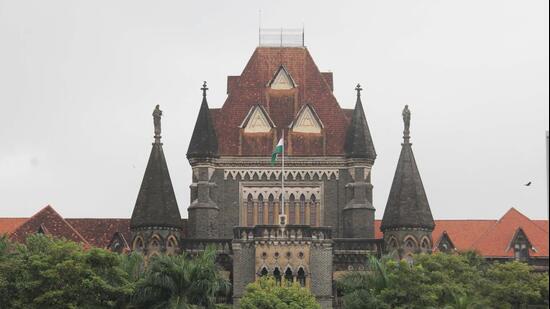
A division bench of justices Sandikumar C More and Vaishali Patil-Jadhav was hearing a petition filed by Devidas Haleghongde, a murder convict lodged in the Paithan open prison. He had challenged the Maharashtra home department’s February 2026 order placing him under category 2(c)—crime committed with exceptional violence or brutality—of the Guidelines for Premature Release of Life Convicts, dated March 15, 2010, thereby requiring him to serve 26 years’ imprisonment, including remissions.
Haleghongde argued that he ought to have been placed under category 3(b)—murders arising out of family disputes, family feuds, etc—which prescribes 22 years’ imprisonment, including remission. He also sought immediate release from jail on the grounds that he had already completed the 22 years’ total imprisonment prescribed under category 3(b).
The state government tried to justify the order, stating that the Nanded sessions court had in 2012 convicted the 58-year-old for brutally killing his mother-in-law, and assaulting his estranged wife and daughter with a sharp-edged weapon and an iron pipe. That’s why, it said, his case was placed in category 2(c), and he was asked to serve 26 years.
{{/usCountry}}The state government tried to justify the order, stating that the Nanded sessions court had in 2012 convicted the 58-year-old for brutally killing his mother-in-law, and assaulting his estranged wife and daughter with a sharp-edged weapon and an iron pipe. That’s why, it said, his case was placed in category 2(c), and he was asked to serve 26 years.
{{/usCountry}}However, the court held that the facts of the case also attracted category 3(b)—murder arising out of a family feud. It said that the Supreme Court has laid down the law, stating that the benefit of a liberal policy must be extended to a convict.
The high court said this principle is not confined merely to situations where policies change over time, but is equally applicable when a convict’s case falls under different categories within the same set of guidelines.
“In a situation where the facts of the case attract multiple categories under the same guidelines, the category which is more beneficial to the convict must be considered and shall be made applicable to him,” the bench said. It ordered the home department to place Haleghongde under category 3(b) and pass further consequential orders within 15 days.
Stay updated with all the Breaking News and Latest News from Mumbai. Click here for comprehensive coverage of top Cities including Bengaluru, Delhi, Hyderabad, and more across India along with Stay informed on the latest happenings in World News.
Stay updated with all the Breaking News and Latest News from Mumbai. Click here for comprehensive coverage of top Cities including Bengaluru, Delhi, Hyderabad, and more across India along with Stay informed on the latest happenings in World News.