Mumbai: While the Indian Railways aims to introduce more high-speed trains to cut travel time, the tragic Balasore rail accident has put focus on safety as well as the maintenance and robust infrastructure of railway routes.
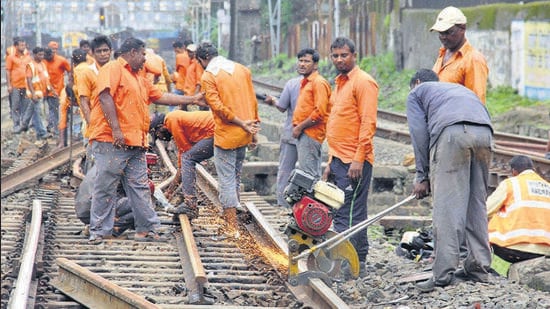
All eyes will be on Mumbai - Ahmedabad - Delhi (1483 km) and Howrah-Delhi (1525 km) rail corridors which will be among the first on Indian Railways to support trains to run at 160 kmph.
Experts say maintenance of tracks, signals, and other paraphernalia cannot be compromised after the deadly accident. Indian Railways is already facing flak for introducing faster trains like Vande Bharat.
“It will be pertinent for the railways to ensure that they thoroughly monitor the works on the routes which are being equipped for trains to run at 160 kmph. Simply introducing faster trains would not work here. Impetus needs to be made on tracks, OHE cables and signalling systems as well. The Odisha rail accident is a wake-up call for the rail administration which has been busy in announcing new Vande Bharat routes but they cannot forget the need to tighten the infrastructure,” said a former General Manager of the Indian Railways on condition of anonymity.
Sources in the railways said that as Mumbai-Delhi and Howrah-Delhi will be among the first rail corridors where the entire stretch will have Kavach; there is a need to upgrade the entire rail infrastructure holistically. “Smallest of details from points to electronic interlocking of rails should also be looked into. After all, there is no doubt that the supporting infrastructure for high-speed and semi-high-speed trains is inadequate. All this while we were talking about the current protection system being foolproof, but the accident has proved otherwise. When Kavach is being installed on these two routes where trains at 160 kmph will run, it needs to be checked multiple times before commissioning,” said a former Railway Board member.
{{/usCountry}}Sources in the railways said that as Mumbai-Delhi and Howrah-Delhi will be among the first rail corridors where the entire stretch will have Kavach; there is a need to upgrade the entire rail infrastructure holistically. “Smallest of details from points to electronic interlocking of rails should also be looked into. After all, there is no doubt that the supporting infrastructure for high-speed and semi-high-speed trains is inadequate. All this while we were talking about the current protection system being foolproof, but the accident has proved otherwise. When Kavach is being installed on these two routes where trains at 160 kmph will run, it needs to be checked multiple times before commissioning,” said a former Railway Board member.
{{/usCountry}}The Balasore rail accident has made people question the working of Kavach; however, railway officials and experts claim that the working of Kavach has nothing to do with this horrific accident that took 288 lives and left many injured. The contract for Kavach was issued late last year for the Mumbai-Ahmedabad-Delhi route by Western Railway. The WR officials said that they have reviewed Kavach, the work of which is in progress on Virar-Surat-Vadodara, Vadodara-Ahmedabad and Vadodara-Ratlam-Nagda sections on the WR.
“Various activities like site survey, erection of towers, installing OFCc, RFIDs, circuit designing, programming and testing of kavach have begun. We are ensuring that the rail infrastructure is strengthened and in future sufficient block time is given to engineers for maintenance works,” said a railway official. The capacity of overhead power lines between Virar to Ahmedabad and the laying of cattle safety walls are underway on a 380-kms route that will be ready by June-July. They are also installing thick web switches on the tracks to improve its safety and working.
The speeds will be augmented to 160 kmph once the entire network is upgraded at a cost of ₹10000 crore on the Mumbai-Delhi route including ₹6600 crore on the Mumbai-Ahmedabad section. Simultaneously works are underway on the Delhi-Mugalsarai-Howrah route as well and both these projects are expected to be ready before mid-2024.
Stay updated with all the Breaking News and Latest News from Mumbai. Click here for comprehensive coverage of top Cities including Bengaluru, Delhi, Hyderabad, and more across India along with Stay informed on the latest happenings in World News.
Stay updated with all the Breaking News and Latest News from Mumbai. Click here for comprehensive coverage of top Cities including Bengaluru, Delhi, Hyderabad, and more across India along with Stay informed on the latest happenings in World News.