A 76-year-old Malad resident clutches a folder containing colour printouts showing household items strewn across a living room floor, and charred utensils and vegetable waste on a kitchen counter. The printouts are evidence in a case against his son and daughter-in-law – filed not before a civil court but before a Senior Citizen Tribunal in Mumbai.
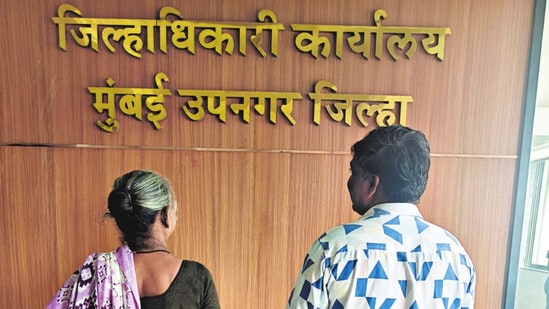
The couple has been confined to one room because stepping out would be risking a clash with their daughter-in-law, who they are seeking to evict. The 68-year-old mother-in-law, a cancer survivor, says the elderly couple spends hours scrubbing utensils and clearing vegetable waste. “By the time we return, she (her daughter-in-law) might just spill milk all over and leave it for us to clean. She has done that before,” says the woman, at the district collector’s office in Bandra (east).
Their son, a pilot, stays away from home for extended periods while his wife and child live with them in the flat they have owned for over 30 years. The elderly couple alleges they have been threatened to transfer their flat to their daughter-in-law.
Elderly men, women and their children in their 30s and 40s, stand within touching distance of each other as Yallappa Bajantri, the revenue officer or talathi at the tribunal, calls out their names. On Thursday last week, hearings were unexpectedly adjourned as the designated officer presiding over the tribunal was urgently called away.
While seeking a fresh date, two generations stood as opposing parties before the quasi-judicial body. Yet, at the end of the day, many would return to the same home – to the very circumstances that led them to the tribunal.
“Wife refuses to move out”
A Gujarati family was next in line. The parents were seeking the eviction of their son and daughter-in-law. Asked about their preferred next date of hearing in October, the son sought a different date and told Bajantri, “Not then. It will be festival time for us.” The parents, although the complainants, agreed. They chatted with their son in the corridor but his wife walked away.
The senior citizens’ lawyer, Jigar Shah, said, “The son is willing to leave the parents’ house but his wife is not. She refuses to rent a flat and insists her in-laws help them buy their own house if they want them out.”
SC ruling sets the ground for senior citizen tribunals
Senior citizens’ tribunals were set up under the Maintenance and Welfare of Parents and Senior Citizens Act, 2007, to address grievances relating to neglect, lack of basic maintenance, and property protection for the elderly. In a significant ruling last week, the Supreme Court ruled that these tribunals can order the eviction of persons from a property when such a measure is necessary to ensure the senior citizens’ maintenance or protection.
In Mumbai, property is at the centre of most disputes being heard by these tribunals. In 60-70% of genuine cases, elderly parents and their children are at odds over property, said Prashant Dhage, presiding officer of the tribunal in charge of Mumbai’s western suburbs. Steep rents, flat ownership and redevelopment of old buildings are recurring themes. Although set up to protect aggrieved senior citizens, these tribunals deal with as many genuine cases in which the welfare legislation is being misused.
Also Read I ‘Destroying Mumbai’: Aaditya Thackeray slams BJP for diverting Mulund’s open spaces
But for many seniors, the decision to approach these tribunals is itself a difficult one. Advocate Vandana Shah, who has represented many seniors in these cases, says it takes courage to make public the indignities they face at the hands of their families.
Shah cites the example of an elderly Malabar Hill couple being pressured by their son to sell their flat. “He even barred their cook and other staff from entering the home to further pressure them. They were initially reluctant, but eventually filed a complaint before the tribunal,” she said.
Proceedings in tribunals
The tribunal functions at both the district collector’s office in the city and in the suburbs. In addition, a designated officer in charge of the Kurla taluka or the eastern suburbs also sits in Vidyavihar.
Shah said proceedings before senior citizens’ tribunals move considerably faster than those in other courts. “What can take six to 30 years in a civil court is decided almost immediately by these tribunals,” said Shah.
The tribunal in Bandra east has 170 cases pending, of which 129 were filed between January and July. Additional collector Bappasaheb Thorat serves as the appellate authority over three deputy collectors who preside over the tribunal in Fort. Of the 126 cases that were pending before the appellate authority since September 2025, only 28 cases remain pending while decisions have been reserved in 21.
Thorat said they sometimes go beyond the relief sought by the senior citizens. “There was a case in which an elderly man had sought the eviction of his son from his house in south Mumbai. But we realised that eviction alone would not solve the elderly man’s problem. We inquired whether he earned a pension to support himself. We then ordered the son to pay maintenance as well,” Thorat told HT.
Cases with innate complexities
Some cases are very layered. In Bandra, on Thursday, a 32-year-old expectant mother was seeking a date for the next hearing in a complaint filed by her mother. “My mother filed a complaint against us and we had to leave her house in Goregaon. She didn’t even let me take my belongings. My father suffers from dementia and I moved him to a care facility because my mother ill-treated him. She accused me of kidnapping him and now wants him back because the building is slated for redevelopment and no agreement will be final without his signature.”
Another litigant was a single father of two contesting his mother’s maintenance claim. “She earns a pension and lives in her own house. I support two children and live in my bank quarters. My mother incurred losses in a business and I repaid her loans. When I asked her to pay me back, she filed this claim for maintenance,” said the bank employee from Malad.
For all the law can do, there are some wounds it cannot heal. In some cases, families are provided counselling by the state social welfare department before they approach the tribunal. Says Prashant Dhage, “We try our best to bring about a resolution among families. The orders we pass are as per the law but, at the end of the day, a family breaks.”
Stay updated with all the Breaking News and Latest News from Mumbai. Click here for comprehensive coverage of top Cities including Bengaluru, Delhi, Hyderabad, and more across India along with Stay informed on the latest happenings in World News.
Stay updated with all the Breaking News and Latest News from Mumbai. Click here for comprehensive coverage of top Cities including Bengaluru, Delhi, Hyderabad, and more across India along with Stay informed on the latest happenings in World News.