A fresh damage has been reported near the Biharigarh flyover, where sections of the newly constructed Delhi-Dehradun Expressway have caved in at two locations. Separately, severe soil erosion has emerged near the Dalhedi flyover in the Badgaon area of Saharanpur district.
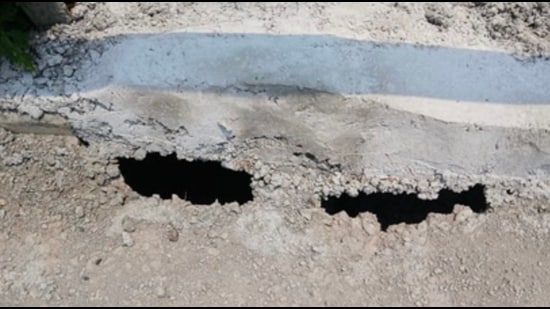
These latest flaws intensify concerns over the quality of construction on the ambitious ₹12,000-crore project, which has already seen multiple structural defects and incidents of road subsidence across various parts.
Prime Minister Narendra Modi inaugurated the 210-km-long expressway on April 14. Within weeks of its opening, cracks had appeared in the wall of the Biharigarh flyover, forcing authorities to use anchor plates to stabilise the structure. The most recent incidents further question the expressway’s durability and safety.
According to officials and locals, the road near Amanatgarh on the Biharigarh flyover section recently subsided at two separate locations, posing significant inconvenience and safety risks to drivers. Following the discovery, the construction company quickly mobilised JCB machines on Tuesday to remove the damaged portions and begin repairs. As a precautionary measure, two lanes on one side of the expressway have been barricaded and closed to vehicular movement. Traffic is currently restricted to one operational lane, causing congestion and slower movement in the affected stretch.
Locals noted that this is not the first instance of road subsidence in the area; the same section reportedly sank six months ago and underwent repair work. The recurrence of the problem raises serious questions about the construction quality and long-term sustainability of the expressway infrastructure. Residents expressed fears that conditions could deteriorate significantly once the monsoon season begins, noting that the current damage occurred even before heavy rains.
{{/usCountry}}Locals noted that this is not the first instance of road subsidence in the area; the same section reportedly sank six months ago and underwent repair work. The recurrence of the problem raises serious questions about the construction quality and long-term sustainability of the expressway infrastructure. Residents expressed fears that conditions could deteriorate significantly once the monsoon season begins, noting that the current damage occurred even before heavy rains.
{{/usCountry}}Meanwhile, an alarming issue surfaced near the Badgaon interchange. Severe soil erosion near the slopes adjoining the Dalhedi flyover has created deep craters. Continuous rainwater flow and pressure from heavy vehicles have washed away large amounts of soil from the embankments. The construction company has now initiated reinforcement and concrete stabilization work in the affected areas.
Drivers using the route reported that the erosion is so severe at certain spots that the ground could collapse if a heavy vehicle is parked near the edge. Two-wheeler riders, especially at night, face a heightened risk due to poor visibility around the eroded sections.
Similar erosion problems, often linked to inadequate drainage, are also being reported near rest areas and other stretches. The soil near flyovers, bridges, and service roads is continuously being washed away, creating pits as deep as four to five feet along some service roads.
Structural concerns are not new to the project. Last year, following the monsoon season, 24 pillars of the elevated section were found to be weak and subsequently had to be strengthened with protective jacketing. Several other technical issues have also been reported along the corridor in recent months.
Confirming the ongoing repair work, Karan Singh, site engineer of NHAI, said, “The road repair work has already begun. The damaged stretch will soon be repaired and reopened for vehicular movement.”