
 E-Paper



Chhattisgarh: Senior Maoist leader Papa Rao’s wife among 6 killed in Bijapur encounter
The encounter took place in the dense forests of the National Park area between Kandulnar and Kachlaram villages on Tuesday.

 Prefer HTon Google


Two dreaded Maoist leaders — Buchanna Kudiyam and Urmila — were among the six ultras who were killed in an encounter with security personnel in Chhattisgarh’s Bijapur district on Tuesday, the police said on Thursday, adding that they carried a cumulative reward of ₹27 lakh on their heads.
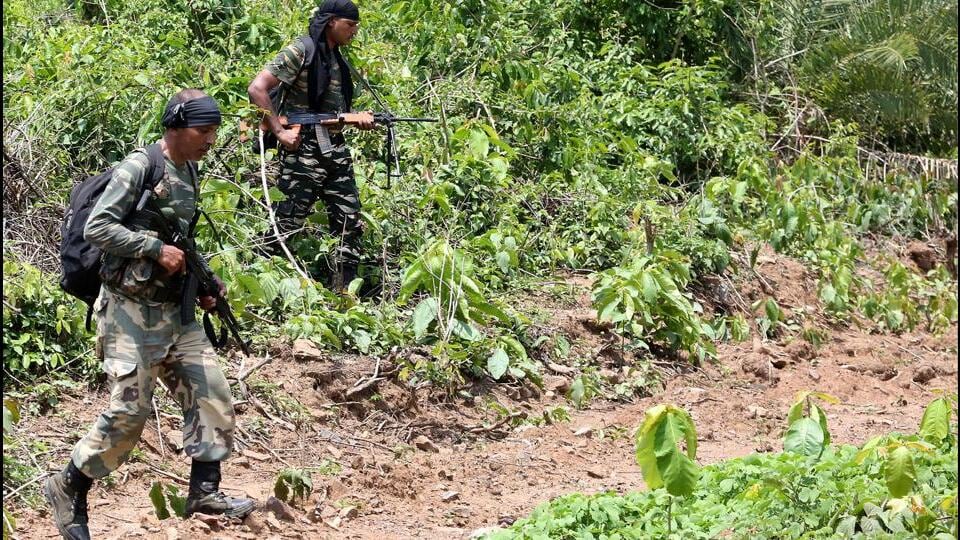
While Buchanna, alias Kanna, was a key planner and executor of several major Naxal attacks over the past decade targeting security forces, civilians and development projects, Urmila was the wife of senior Maoist leader and Dandakaranya Special Zonal Committee member (DKSZCM) Papa Rao .
Urmila was the main handler of logistical supplies for the PLGA (People’s Liberation Guerrilla Army) battalion of the outlawed CPI (Maoist).
The encounter took place in the dense forests of the National Park area between Kandulnar and Kachlaram villages, following specific intelligence inputs about the presence of senior Maoist cadres, including Papa Rao and several divisional-level leaders.
A joint team of the District Reserve Guard (DRG) from Bijapur and Dantewada, along with the Special Task Force (STF), launched an operation on November 11 morning, which led to a prolonged exchange of fire, officials said. After the gunfight ended, six Maoists were found dead at the spot, and a cache of arms, explosives and communication devices was recovered.
Among those killed, Buchanna, a resident of Guddipal in Bijapur, carried a reward of ₹8 lakh. Police described him as one of the most active commanders in south Bastar, wanted in more than 40 cases including multiple ambushes, IED blasts and civilian killings. His death, police said, marks the end of a “violent chapter” in the Madded area, where he led Maoist operations for over a decade.
Urmila, who also carried a bounty of ₹8 lakh, was the secretary of the Pamed Area Committee and among the most influential female Maoist cadres in the region. Police said she handled the supply chain for the Maoist battalion, ensuring the movement of ration, medicines, and uniforms to armed units in the forests. Her death, they added, has dealt a major logistical and organisational blow to the group.
The other Maoists killed were identified as ACM Jagat Tamo alias Motu ( ₹5 lakh reward), party member Deve ( ₹2 lakh), Bhagat ( ₹2 lakh) and Mangli Oyam ( ₹2 lakh).
Recovered weapons included two INSAS rifles, a 9mm carbine, a .303 rifle, a single-shot gun and a 12-bore firearm, along with grenades, live cartridges, Maoist literature, medical supplies and communication sets.
According to Bijapur Superintendent of Police Dr Jitendra Kumar Yadav, security forces in the district have so far this year neutralised 144 Maoists, arrested 499, and facilitated the surrender of 560 others.
Bastar Range inspector general of police Sundarraj P. said the ongoing operations have significantly weakened the Maoist structure in the region. “The Maoist organisation is now completely cornered and has no option but to abandon violence and return to the mainstream,” he said.
-kW0H-U20214218012MgB-250x250%40HT-Web.jpg)


