The Covid mortality rate among women in Ludhiana has been on a consistent rise since March, data sourced from the district health department reveals.
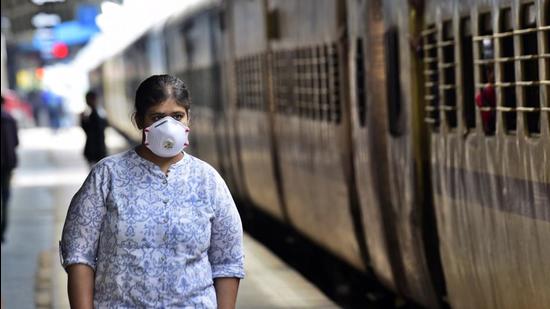
In March, the district had recorded a female mortality rate of 43%. In just 14 days (April 14), it went up to 44%. In January and February, the Covid mortality rate among women in Ludhiana was lower at 22% and 17% respectively.
Out of the 34 female deaths in the first 14 days of April, 15 were from rural areas while 19 were from urban areas. The youngest female to succumb to the virus was a 32-year-old while the oldest was an 84-year-old.
With 17 casualties, the 60-plus age group witnessed the most number of deaths. In the 50 to 59 age group, there were 13 female fatalities while four women, under the age of 50, lost their battle to the contagion this month.
Experts say the main reason behind the rising fatalities is that women don’t receive timely medical attention. “As per our findings, women, especially those in rural areas, ignore their health and their family members too don’t pay any attention to their deteriorating condition. Most of them keep working even when they are sick and visit the hospital only when things get out of control,” said cardiologist Dr Bishav Mohan, who is also a member of the Covid-19 task force of the state government.
Earlier, a study by the Dayanand Medical College and Hospital (DMCH) had revealed that fewer elderly women than men are coming forward to get vaccinated against the deadly virus.
{{/usCountry}}Earlier, a study by the Dayanand Medical College and Hospital (DMCH) had revealed that fewer elderly women than men are coming forward to get vaccinated against the deadly virus.
{{/usCountry}}Civil surgeon Dr Sukhjeevan Kakkar said that in most cases, it is the youngsters who bring home the virus with their reckless behaviour and it is the elderly, especially women, who pay the price for it.
Dr Gaurav Sachdeva, who is handling Covid care at Arora Neuro Centre in Ludhiana said, “There is a lot of misinformation floating around about the virus. The conspiracy theories that claim that the virus is a hoax or a government propaganda are the main reasons why many people are not taking the disease seriously or following the protocols.”
Dr Rajoo Singh Chhina, director, gastroenterology, Fortis Hospital, Ludhiana, and technical advisor UNIDO (United Nations) observed that as compared to the first wave, the fear factor has also diminished. “Earlier people used to rush to the hospital as soon as they started showing the symptoms, but now patients, especially those from rural areas, are arriving at the hospital only at a very later stage, which is leading to a rise in mortality,” said Dr Chhina.