
 E-Paper



Dilli Haat, a centrepiece of Delhi, turns 30
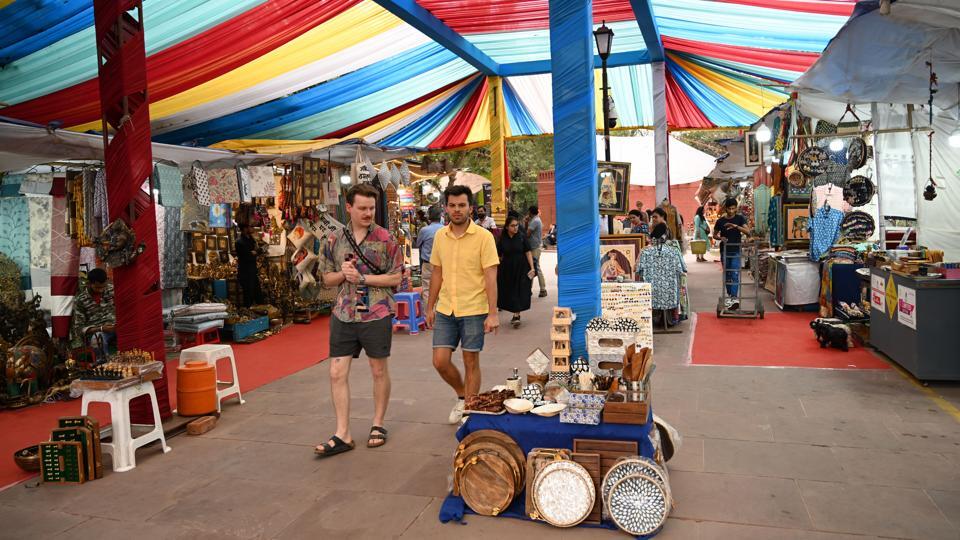
Dilli Haat boasts 166 stalls of artisans from across 28 states, 29 food stalls from 24 states, and is a part of all “must visit” lists.

 Prefer HTon Google


In March 1994, Ruby Ahmed, a shy and petite newlywed, followed her husband Islam to Delhi — 1,919 km away from their modest home in Guwahati in Assam — with 50 handwoven bamboo baskets.
The couple had been handpicked by the state government to exhibit the baskets at an experimental haat (market) in Delhi for 15 days.
“We were unhappy at first. Why did we have to go so far away to a city we had never set foot in to sell baskets? We already did that in Assam. In this new city, there was also no guarantee of sale,” recalled Ruby, 46, seated on a wooden stool at that haat 30 years later, surrounded by bamboo baskets with embroidered roses.
Ruby and Islam were the first few artisans from across the country who (reluctantly) set up a stall at Dilli Haat in INA market — the city’s first open-air haat for artisans — when it first opened in March 1994.
Dilli Haat, which boasts 166 stalls of artisans from across 28 states, 29 food stalls from 24 states, and is a part of all “must visit” lists, turns 30 this month.
“At that time, who knew that something that seemed so absurd at first would turn out to be such an indelible part of my life? We return almost every year... My daughter even goes to college in Delhi,” said Ruby, with a smile on her face, as she greeted shoppers on a sunny March afternoon.
From pashmina shawls of Kashmir, printed cotton shirts of Sanganer, Gond art of Chhattisgarh to steamed momo and fruit beer at the Nagaland food stall, puran poli at the Maharashtra stall, and yak cheese from Ladakh — Dilli Haat has something for everyone.
And in the middle of all this cacophony is 50-year-old Rampal who plays old Hindi film songs on a wooden sarangi. “When I play the sarangi on the side of a road, very few get sold but when I do the same at Dilli Haat, people buy. People stop and watch me play. They inquire about the instrument and end up buying — foreigners and children mostly,” said Rampal, who has been a sarangi seller at Dilli Haat since 1996.
His contract gets renewed every 45 days, and when it’s being processed, he earns a living by driving an e-rickshaw in Jahangirpuri.
Spread across six acres, Dilli Haat’s red brick masonry aesthetic and the option of shopping in an organised open-air market attracted throngs of people in the 1990s. For a city that was starved of safe, open spaces, Dilli Haat proved to be just the right spot for cash-strapped college students, young professionals, and for weekend family outings with kids in tow.
In the early 2000s, Kankana Das, who was a journalist at the time, would often visit Dilli Haat with her colleagues for a quick snack. “We would go there just for the cutlets and the momo, but would end up shopping so much. The food would be served on torn newspaper, and the entrance was less congested back then. Now the stalls all have this permanent concrete look and the idea of a haat is lost,” she said.
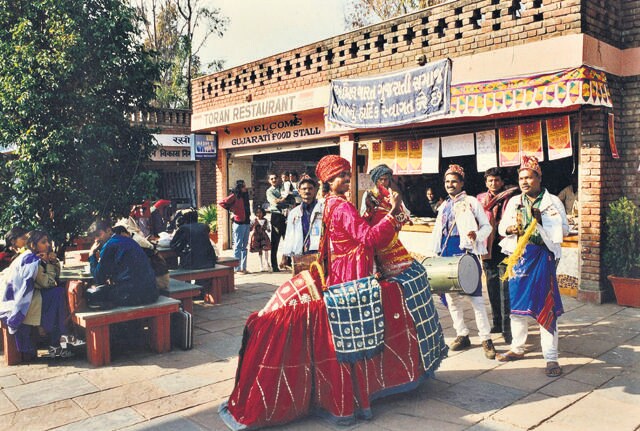
Das, who still frequents the place, shared a tip for Gen Z shoppers at Dilli Haat: “If you like something there, buy it or you will regret it because the stalls change every 15 days.”
This was not an arbitrary feature added in the 1990s. Jaya Jaitly, politician and craft promoter, who founded the Dilli Haat along with Ministry of Textiles, Delhi Tourism, and New Delhi Municipal Council (NDMC), told HT that craftspeople couldn’t be expected to have unlimited stock of items. “They made things with their hands, and they would only have a small inventory. So, 15 days was the perfect time for them to sell their stock, go back, restock and return,” said the 81-year-old.
Of the 166 stalls, four in the Purbashree emporium are fixed for states from the north-east, while the rest change every 15 days, said a Delhi tourism official. “We ensure that all states have a stall but the artisans from the states change. Many of them, however, come back on a rotational basis,” said the official, who asked not to be named.
For craftspeople, Dilli Haat also gives them respite from middlemen. The artisans must apply for a stall with the Delhi Tourism department, and the highest bidder for each stall from a state gets it for 15 days.
Eqhlaque Ansari, 28, a handloom craftsman from Uttar Pradesh’s Varanasi, who sells tussar and katan silk saris, folded a gold katan silk saree — priced at ₹27,000. “It takes us 40 days to weave one such piece. At Dilli Haat, I don’t have to deal with middlemen. I earn what I deserve,” said Ansari who has been coming to Dilli Haat for five years.
A few metres away, Ambika Devi, 72, from Bihar, who is the custodian of Madhubani art pieces, echoes Ansari’s sentiment. “I have been coming here since the day it opened. I am glad that I get to sell directly to the customer. Art has soul, and people will buy it if they connect with the artist. There is no middleman here, and that works for me,” said Devi.
Jaitly said that back in the 1990s, as urban markets welcomed global brands, a sense of vacuum existed when it came to Indian craftspeople. “We had to think about our own people. Our craftspeople needed to see the kind of markets they could have on their fingertips, with no exporters or middlemen involved. I used to organise crafts bazaars in different parts of the city, but they were temporary events. It made sense to open something similar for artisans that was a permanent feature, and that’s when the idea of Dilli Haat came up,” she said.
It still took six years for the idea to turn to reality as the project suffered teething problems like location. It was proposed to be built behind Bhairav mandir near Purana Qila but the National Zoological Park raised a concern regarding its proximity to the zoo.
“The then-head of the NDMC had taken keen interest and proposed this empty land, over a nallah. Finally, the location was decided,” recalled Jaitly.
The launch of the project was advertised on Doordarshan, and a ‘test’ crafts bazaar with a handful of people was also arranged.
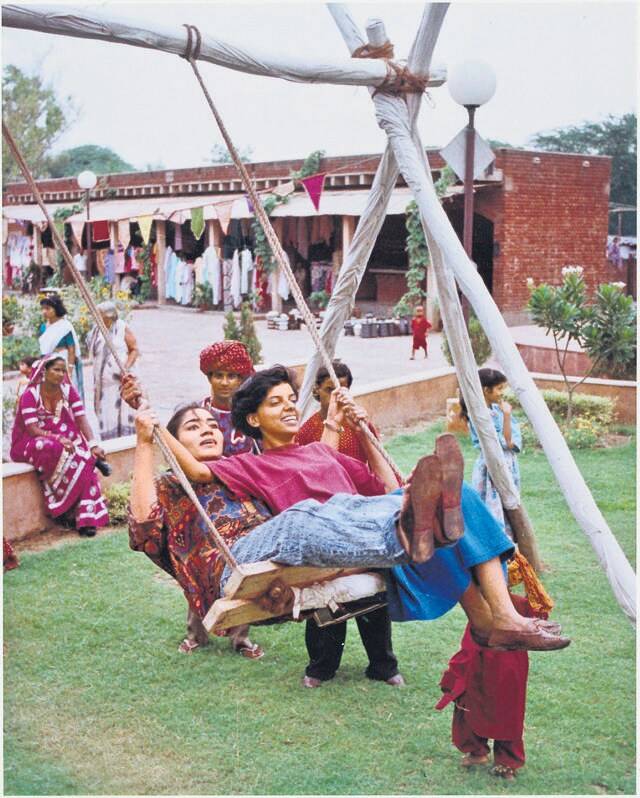
Dilli Haat has also helped artisans connect with each other and adopt helpful sale practices. “Initially, Madhubani artists used to sell their painting on a piece of paper, but then they saw how other artists brought framed paintings, which sold more. So, they changed their practices too,” said Jaitley.
For Ravi Kumar, 30, who sells juttis and other footwear, it’s an opportunity to meet celebrities, especially Hindi film actors. “I met Jahanvi Kapoor once. She haggled like all other customers do,” he said, with a laugh.
His family, based in Haryana, has been setting up a footwear stall at Dilli Haat for 15 years and has closely observed the changes — from cash transactions to reliance of customers and shopkeepers on UPI, and from weekend rush to weekday crowds.
In 1994, when Delhi Tourism nervously opened gates of Dilli Haat to public, there were just 62 stalls. But over the years, as business and footfall grew, the stalls did too. Now, there are 166 stalls which are allotted to different craftspeople every 15 days.
The food stalls have gone up from 25 to 29, and the ticket price has increased to ₹30 from ₹10. “At first, 200-250 people would visit Dilli Haat every day,” said an official from Delhi Tourism.
In January 2024, Dilli Haat recorded 142,126 visitors, and at least 125,093 visitors in February this year.
Suparna Valla (51), who worked with Pradeep Sachdeva – the celebrated architect who built and designed Dilli Haat – said that the original plan included a lot of open space. “I visited in January and noticed how much the character had changed. The space feels cluttered now, with selfie points set up near the entrance and concrete shops. The excitement that we used to feel because it was an open bazaar unlike the other markets of the city is gone. Earlier the shops did not even have shutters but now there are shops selling mass produced products and it looks like any other market in the city, with just more space.”
She recalled how there were hand-painted mosaic tiles that had the shop number written on them, outside each stall. “They have now been replaced with machine-made placards. The place was made for handicrafts and handlooms, so the machine-made concept does not go with the original vision... There was a kite-maker Umar Daraz who exhibited here for some years ago, he couldn’t afford a stall here. The vision was to create a place for people like Daraz but now the essence is lost,” said Valla.
Despite the tangible changes, Valla remains a Dilli Haat loyalist, especially in the monsoon and winters. “There are red bricks all over the area, which absorb rainwater... And what better than the fragrance of geeli mitti and some pakoras and tea after a successful shopping expedition?” she said.


