E-Paper



Govt subsidies fuel strawberry farming boom in UP
In Fatehpur district, Sant Lal Maurya of Simouri village in Airayan development block has emerged as an example of this growing trend.

 Prefer HTon Google


As input costs rise and margins fall making traditional farming less profitable, an increasing number of farmers in Uttar Pradesh are turning to strawberry cultivation, drawn by higher returns and government support.
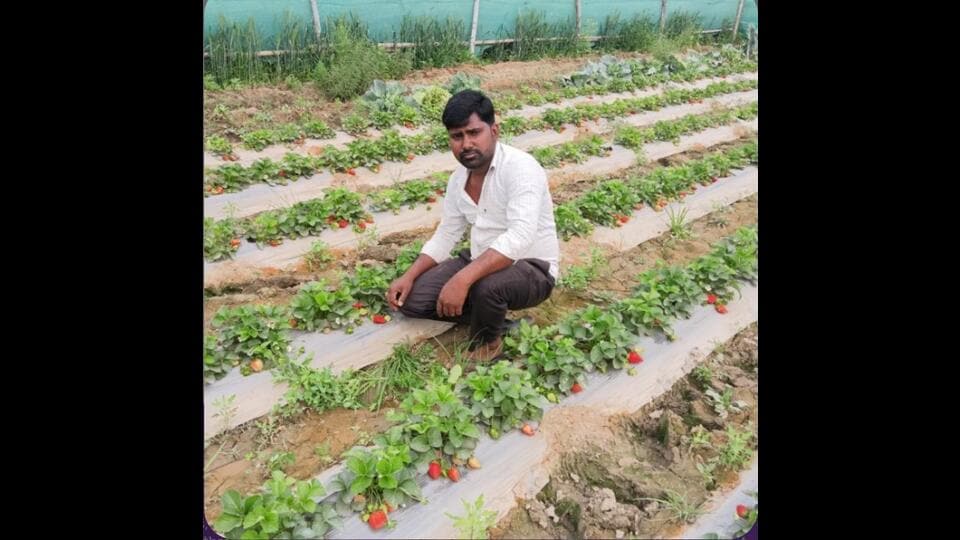
In Fatehpur district, Sant Lal Maurya of Simouri village in Airayan development block has emerged as an example of this growing trend. Maurya shifted from conventional farming to strawberry cultivation and claims to have earned several times more profit compared to traditional crops.
“I cultivate strawberries on two bighas of land using mulching technology and have received good production,” he said.
Maurya added that the horticulture department provided him financial assistance of ₹30,000 for purchasing plants and that subsidy support for mulching would also be extended next year. According to him, strawberries grown on his farm were supplied to markets in Lucknow and Varanasi, earning him a profit of around ₹8 lakh to Rs10 lakh per season. Encouraged by the returns, he now plans to expand cultivation in the coming season.
Officials said government subsidies and technical assistance are motivating more farmers to adopt strawberry cultivation despite the high initial investment.
Fatehpur district horticulture officer Saurabh Ramesh Pathak said strawberry farming is more expensive than traditional crops, but the profits can substantially improve farmers’ income. He said the cost of cultivation per hectare ranges between Rs12 lakh and Rs13 lakh, while farmers can earn a net income of Rs7 lakh to ₹8 lakh per hectare if they receive favourable market prices.
He added that the horticulture department and the state government are providing subsidies for drip irrigation, mulching, plants and other inputs to make cultivation more affordable. Small and marginal farmers are eligible for subsidies of up to 90%, while farmers in the general category cultivating more than two hectares can avail up to an 80% subsidy.
Pathak further said efforts are being made to equip farmers with technical knowledge through Krishi Vigyan Kendras, village chaupals and farmer workshops. During these programmes, agricultural experts and scientists train farmers in mulching techniques and drip irrigation methods aimed at improving productivity and reducing water consumption.
According to experts, strawberry cultivation in Uttar Pradesh began on a small scale in Saharanpur and Pilibhit districts nearly two decades ago. It was later adopted by farmers who traditionally cultivated tomatoes in polyhouses. The fruit is now being grown in more than two dozen districts of the state, including the drought-prone Bundelkhand region.
Strawberries are currently cultivated on around 440 hectares in the state, producing nearly 2,600 metric tonnes annually, officials said.
“Strawberries require porous soil, low water consumption and temperatures between 12°C and 18°C for fruiting. These conditions are easily available in most parts of the state during winter,” said a senior horticulturist.
Most strawberry growers also invest in drip irrigation systems, which are easy to install and can reduce water usage costs by over 30%. “Around 22,000 saplings can be planted in one acre, yielding nearly 20,000 kg of strawberries. The profit margin may vary between 30% and 45% depending on market demand,” the expert added.