LUCKNOW Despite the torrential downpour that struck Lucknow on Saturday, tucked away in Babu Banarasi Das U.P. Badminton Academy, under a leaking indoor stadium roof, the table tennis matches raged on amidst chants and chaos.
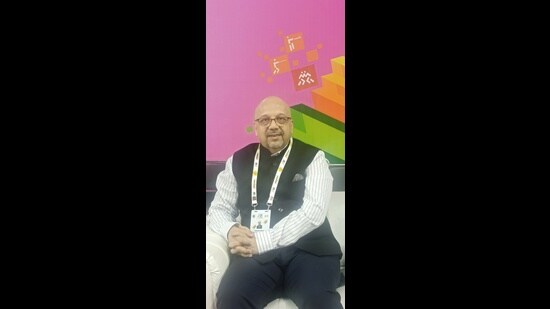
One of the special guests at this tournament, Kamlesh Mehta, former team India captain for table tennis and the government-appointed national observer for table tennis (TT), squeezed out some time to talk to HT on the future of the sport and how it has changed since his active playing days. Mehta led the Indian TT team from 1982 to 1989, and was the highest ranked Indian player in Asia and the Commonwealth Games.
According to Mehta, table tennis appeals not only as a serious competitive sport, but also as a leisure activity. “This is because the infrastructure or requirements for TT are not as elaborate or demanding as many other sports.” He said that while talented TT players used to drop out or get lost during the transition from school level to national level table tennis, the link being the university level TT scene has strengthened now.
Moreover, he also believes that media coverage of local sports talents goes a long way in encouraging young sportspersons to take it up as a career. “We see a lot of coverage for international matches, tournaments, and sportspersons -- but the local events are somehow ignored. If you want Indian players to do well, then one has to start at the local level, then only it will attract more youngsters. Moreover, we have a social responsibility to attract youth energy towards sports because it is one way of channelising energy into constructive activities, rather than going down any wrong path,” said Mehta.
{{/usCountry}}Moreover, he also believes that media coverage of local sports talents goes a long way in encouraging young sportspersons to take it up as a career. “We see a lot of coverage for international matches, tournaments, and sportspersons -- but the local events are somehow ignored. If you want Indian players to do well, then one has to start at the local level, then only it will attract more youngsters. Moreover, we have a social responsibility to attract youth energy towards sports because it is one way of channelising energy into constructive activities, rather than going down any wrong path,” said Mehta.
{{/usCountry}}While all sports have undergone a transformation over the decades, Mehta believes that table tennis has seen the most changes. “The only two things that have not changed in TT are the table size and the net size. The colour of the table, flooring, ball size and material, everything has changed in TT since my time, the scoring and competition pattern, and the technique as well,” he pointed out. However, the best change, in his opinion, is that the game has become far more professional than before. He believes that most exciting is that ex-players are coming back as coaches, and their experience and knowledge they have to share is invaluable. “Their wisdom is now being utilised to create national stars in the sport.”