The Allahabad high court has extended stay on archaeological survey of the disputed site in Kashi Vishwanath (KV) and Gyanvapi mosque case till August 31. On Tuesday, senior counsel SFA Naqvi appearing for Anjuman Intazamia Masjid of Varanasi in the Kashi Vishwanath and Gyanvapi mosque case argued that in a suit if an application had been filed that case shall be dismissed if the relief claimed was barred by law and such an application must be decided first and thereafter the suit be proceeded.
Naqvi further argued that in view of the provisions of Section 4 of the Places of Worship (Special Provisions) Act, 1991, the present suit was barred by law. “In view of the provisions of Section 4 of the Places of Worship (Special Provisions) Act, 1991, the present suit is barred by law as this provision bars filing of suit or any other legal proceedings with respect to conversion of religious character of any place of worship existing on August 15, 1947,” Naqvi said.
Appearing for the Sunni Waqf Board, advocate Punit Kumar Gupta argued, “The original suit no. 62 of 1936 was also filed in a representative capacity by which the rights of Muslims were recognised to do prayers in a particular place.” He further argued that the aforesaid property was a Waqf property.
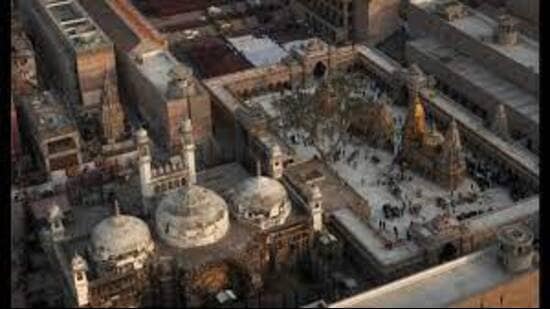
Justice Prakash Padia after hearing the parties concerned adjourned till August 31, hearing of the case filed by the Anjuman Intazamia Masjid of Varanasi challenging the maintainability of the original suit filed in 1991 in the Varanasi district court seeking restoration of the ancient temple at the site where the Gyanvapi mosque currently stands. In the suit, the plea was taken that the said mosque was a part of the temple.
{{/usCountry}}Justice Prakash Padia after hearing the parties concerned adjourned till August 31, hearing of the case filed by the Anjuman Intazamia Masjid of Varanasi challenging the maintainability of the original suit filed in 1991 in the Varanasi district court seeking restoration of the ancient temple at the site where the Gyanvapi mosque currently stands. In the suit, the plea was taken that the said mosque was a part of the temple.
{{/usCountry}}On July 22, advocate Vijay Shankar Rastogi had argued that the provisions of Waqf Act are not binding on Hindus and if any dispute arises between Waqf Board and a non-Muslim, a notice should be essentially issued to the opposite party.
According to the temple side, after commencement of the Waqf Act, 1995, properties which were un-registered or were registered previously were all required to be registered again. In the present case, the property in dispute has admittedly never been re-registered as required after commencement of the Waqf Act, 1995 and, therefore, the property in dispute cannot be termed a Waqf property.