
 E-Paper



Lecture on Sir Syed’s quest for peaceful co-existence held
The programme was part of the series of events to mark the birth celebrations of Sir Syed Ahmad Khan, celebrated as Sir Syed Day.

 Prefer HTon Google


Sir Syed Ahmad Khan strove for peaceful co-existence between communities in India, especially in the aftermath of the revolt of 1857. In an atmosphere that was surcharged with religious and sectarian polemics, Sir Syed talked about reconciliation and inclusiveness.
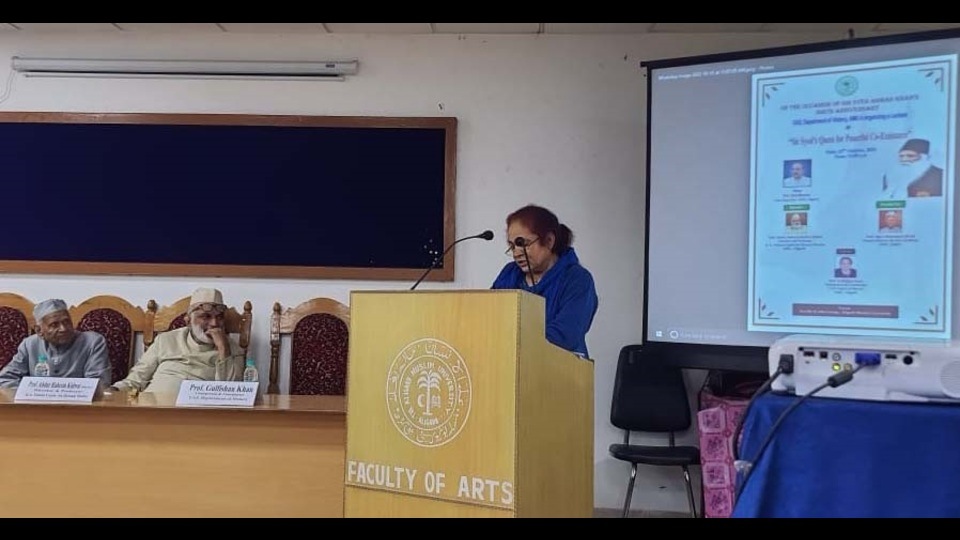
This was highlighted by speakers during a lecture on ‘Sir Syed’s Quest of Peaceful Co-existence’, organised by the Centre of Advanced Study, department of history, Aligarh Muslim University (AMU) at the Arts Faculty Lounge.
The programme was part of the series of events to mark the birth celebrations of Sir Syed Ahmad Khan, celebrated as Sir Syed Day.
In his speech, Prof Abdur Raheem Kidwai, director, K.A. Nizami Centre for Quranic Studies, AMU, contextualised the attempts of Sir Syed to nurture pluralism and inclusiveness in society in the 1850s of Northern India.
“This was a turbulent phase for the Muslim Community where the Mughal Empire had collapsed and Muslims were in a state of political, social as well as economic crises. Sir Syed wrote his works when the general atmosphere was dominated by Oriental biases, sectarian polemics and rigorous missionary activities,” he remarked.
“He also encouraged Hindu brethren to undertake overseas journeys for higher education in England. These attempts of Sir Syed bore results and eventually eighty donors out of hundred and twenty donors for the construction of M.A.O College were Hindus and Christians,” Prof Kidwai highlighted.
“In this way, Sir Syed held not only the Muslims but the whole of India very close to his heart and nurtured civility and mutual respect in the society”, he concluded.


