VARANASI An international team of scientists in its recent study has concluded that the Nitrogen Aerosols are ‘threatening the fragile ecosystem’ in the Himalayan & Tibetan Plateau (HTP) region. Dr Kirpa Ram, Institute of Environment and Sustainable Development, Banaras Hindu University, was also part of this global research team, said BHU in press statement, adding that wildfires are causing nitrogen imbalance in the HTP region.
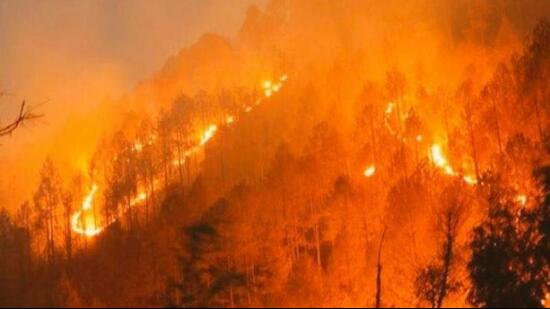
The statement further said that the team, for the first time, has been able to identify the source of Nitrogen Aerosols which were unknown so far. The study has indicated that the concentration of nitrogen witnesses a significant increase during March and April due to wildfires. The findings of the study have been published in the globally reputed scientific journal Environmental Science and Technology.
The press statement added, the team of scientists also included researchers from State Key Laboratory of Tibetan Plateau Earth System, Resources and Environment (TPESRE), Institute of Tibetan Plateau Research, Chinese Academy of Sciences (CAS) and international collaborators Geotop/Université du Québec; Montréal (UQAM), Canada.
The HTP region is still quite pristine (though it has seen an increase in air pollution in recent years) and unique in terms of its biodiversity. It assumes importance with regard to the global biodiversity and supports the cultural and economic livelihoods of the region’s human communities and regional sustainable development. Such pristine regions act as natural laboratories and are key places to understand regional air pollution and climate change induced changes in ecosystem, biodiversity, flora and fauna, microbial diversity of the system.
The researchers conducted chemical and satellite-based analyses as well as field observations to arrive at the findings. Dr Kirpa Ram said that the study explored the abundance, sources, and deposition of nitrogen aerosols in the fragile and eco-sensitive HTP region. Through ground-based chemical and stable isotope analyses and satellite-based atmospheric observations at the Qomolangma monitoring station, situated at 4.3 km above the sea-level, authors provided unequivocal evidence that wildfire emissions in South Asia can come across the Himalayas and threaten the HTP’s ecosystem. Although such wildfire episodes mostly occur for a relative short span of time in spring (March–April), they have not only substantially elevated atmospheric nitrogen concentration but also altered its composition.
{{/usCountry}}The researchers conducted chemical and satellite-based analyses as well as field observations to arrive at the findings. Dr Kirpa Ram said that the study explored the abundance, sources, and deposition of nitrogen aerosols in the fragile and eco-sensitive HTP region. Through ground-based chemical and stable isotope analyses and satellite-based atmospheric observations at the Qomolangma monitoring station, situated at 4.3 km above the sea-level, authors provided unequivocal evidence that wildfire emissions in South Asia can come across the Himalayas and threaten the HTP’s ecosystem. Although such wildfire episodes mostly occur for a relative short span of time in spring (March–April), they have not only substantially elevated atmospheric nitrogen concentration but also altered its composition.
{{/usCountry}}Moreover, the long-range transport of anthropogenic aerosols (like black and brown carbon) emitted from wildfire activities and natural dust aerosols from south Asia have led to elevated levels of pollution in the pristine Himalayan regions and also caused increased incidents of high rainfall events in the foothills of the Himalayan region. Moreover, deposition of black carbon (BC), can adversely affect the health of the glaciers and accelerate melting in the Himalayan glaciers. Such adverse impact is particularly concerning, given the anticipated increase of wildfire activities in the future under climate change scenarios.
The study provides a new understanding for evaluating the impact of human activities and climate change induced wildfire on the HTP region. It also forms a basis for optimising the construction of ecological security barriers, and provides important scientific support for national environmental diplomacy as well as necessitates dedicated research in the Himalayan region.