The Odisha government has issued a tender for around 2 crore jute shopping bags for distribution among the state’s 96 lakh odd beneficiaries of public distribution system (PDS) foodgrains in a move to wean people away from the hazardous plastic bags.
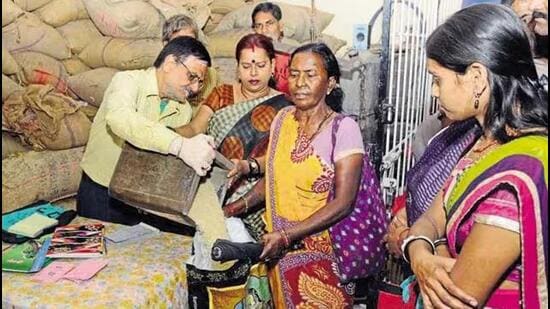
The tender worth ₹240 crore is meant for the 96 lakh beneficiaries of the National Food Security Act (NFSA) and the Support for Food Security Activities (SFSA) schemes who would use the jute bags to carry foodgrain given at the PDS outlets. State food supplies and consumer welfare department officials said in the next one month, each of the familles would get 2 bags of different sizes so that they use it repeatedly and reduce their dependence on plastic bags.
“The move will help protect the environment because jute is a natural, biodegradable, renewable and reusable fibre. Plastic carry bags are global problems which are endangering our environment and habitat too. The bags are being given free of cost,” said MA Haque, special secretary of food supplies and consumer welfare department.
Officials said the push for procuring jute carry bags was to make people use it for regular shopping needs since they are reusable. Though various state and central agencies have procured jute carry bags in the past with central PSU getting 10000 such bags for distribution among people in the area around its coalmines in Odisha last year, the current Odisha tender is remarkably substantive both in numbers and value.
{{/usCountry}}Officials said the push for procuring jute carry bags was to make people use it for regular shopping needs since they are reusable. Though various state and central agencies have procured jute carry bags in the past with central PSU getting 10000 such bags for distribution among people in the area around its coalmines in Odisha last year, the current Odisha tender is remarkably substantive both in numbers and value.
{{/usCountry}}Despite Odisha banning polythene bags under 75 microns in September 2021, and then extending it to bags under 120 microns as well as single-use disposable cutlery, wrapping or packaging films around sweets boxes, ear buds, plastic sticks for balloons, flags, candy sticks, ice-cream sticks, polystyrene from December last year, the situation has only gone from bad to worse. As per Odisha Pollution Control Board, the state generated 134.75 tonnes of plastic waste per day in 2022-23 while 37.184 tonnes of plastic could be processed leaving a huge amount litter out environment.
Environmentalist Jayakrushna Panigrahi said as plastics are non-biodegradable they threaten the ecological system by reducing the fertility of soil and thereby hamper the growth of plants, choke drains and sewer resulting in overflowing gutters. “If swallowed by cattle, they may cause death by obstructing their intestine. The colour pigments contaminate food products wrapped in them and cause health hazards and some of it are even carcinogenic,” said Panigrahi.
“Jute bags are a great substitute for plastic bags since they are environmentally friendly. That’s why Jute bags can reduce plastic pollution. By emphasising the advantages of utilising jute bags, we may urge people to switch to them and promote the usage of these bags. At the same time a lot needs to be done to stop the mounting generation of plastic waste,” he said.
Envrionmentalist Biswajit Mohanty while welcoming the use of jute bags said, the government needs to come hard on the production of single-use plastic, that is currently clogging the sewers across districts of Odisha. “It is one thing to order a ban on single use plastic. but a different one to enforce the ban. The government has singularly failed in enforcing the ban. By simply giving free jute bags to people would not solve the problem of plastic pollution,” he said.