
 E-Paper



Balirajgarh excavation can uncover 2,000-year-old roots: ASI expert
Dr Phanikant Mishra said that discovering pre-Mauryan and pre-Christian era evidence can push back Balirajgarh’s history, shed light on early Indian civilisations

 Prefer HTon Google


With the Archaeological Survey of India (ASI) giving its nod for fresh, major excavations at Balirajgarh in Bihar’s Madhubani district, former regional director of Archaeological Survey of India (ASI), Eastern Zone, Dr Phanikant Mishra said there should be clear objective of the excavation resuming after 16 years in an area of around 122 acres .
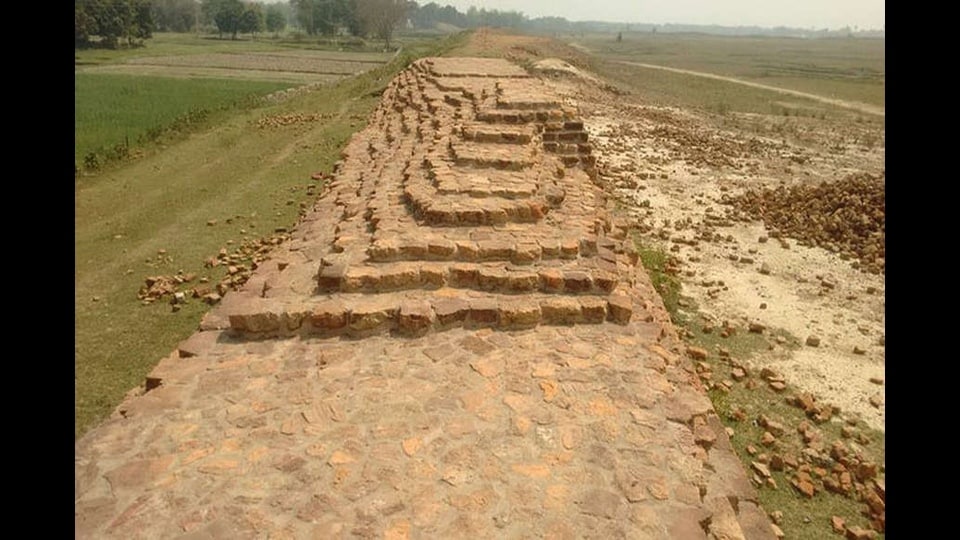
“It is a well known site which has had previous excavations (1962 - 2014 ) and five distinct cultural phases were established -- Mauryan, Shunga, Kushana, Gupta,and Pala periods. Now it would be interesting to explore if Balirajgarh was the ancient Capital Of Videha Kingdom and its historical significance and relevance to the region,” he added.
Recipient of the prestigious Rakhaldas Memorial Award in 2017, he said that discovering pre-Mauryan and pre-Christian era evidence can push back Balirajgarh’s history, shed light on early Indian civilisations and provide insights into trade and cultural exchange networks and the fresh excavation should go beyond what is already known to make a meaningful impact by aiming to uncover 2,000-year-old roots of the ancient Mithila civilisation.
“Believed to be the capital of the Iron Age Videha tribe, this site holds significant structural remains, including massive fortification walls from Shunga, Kushana, and Gupta periods. The collaboration with specialists from relevant disciplines ( e.g.numismatics,epigraphy, anthropology, geology, ground water etc ) will add value,” he added.
Thanking the initiative of Rajya Sabha MP Sanjay Jha and the Centre’s move for excavation, he said it would be important to determine if the site’s origin predates the pre-Christian era, as hinted in the Indian Archaeology Report (IAR) due to important findings during the previous excavation and use of satellite data from the Regional Remote sensing Centre in Kolkata would be very effective.
“Ground penetrating radar surveys will be very useful here as they are non-destructive geophysical methods that use high-frequency electromagnetic pulses to image the subsurface, detecting buried utilities, voids, structural concrete defects and geological features. Developed countries use method,” he added.
Author of ‘The Hoysalas, The Kadambas, Archaeological Exploration in Sikkim’, and an important book on conservation of monuments, Mishra has also been involved with the conservation of UNESCO World Heritage sites such as Khajuraho, Sanchi, and Nalanda.
“From the pre-defence deposits, sherds of the Northern Black Polish Ware were obtained. The fortifications seem to have been built somewhere in the second century BC and remained in use till the Pala period. Other finds obtained from the associated levels included beats, coins, Sunga, terracotta plaques, bone objects, etc. The remains of a temple were also found,” said Mishra, referring to the IAR.
He said that it was important to re-examine the existing cultural phases, explore the continuity patterns in the site’s occupation and find out the nature of settlement pattern during each cultural phase and if there are indications of trade and commerce network.
“I am of the view that Singhorgarh, Chankigarh (west Champaran ) Balirajgarh and Janakpur are all of the same age and needs a collective scientific excavation so that hidden history is brought to light,” he said, adding the excavation could help clarify Balirajgarh’s role in the Videha kingdom and its historical significance, and give valuable Insights on the site’s association with Asura king Balirajgarh and its cultural implications.
He said there should be a thorough survey of the site to identify potential areas of interest and stratigraphic excavation in selected trenches should be undertaken to address specific research questions.


Stay updated Bihar Lok Sabha Result and with all the Breaking News and Latest News from Bengaluru. Click here for comprehensive coverage of top cities including Delhi, Mumbai, Hyderabad, and more across India . Stay informed on the latest happenings in World News.


