
 E-Paper



Paul Wallace: An Indophile who shaped scholarship on democracy
Wallace visited India as a Fulbright fellow in the early sixties and was invited to work from the department of political science, Panjab University, Chandigarh.

 Prefer HTon Google


Paul Wallace, a great friend, committed academic, and a noble soul is no more with us in this world. He died on February 22, 2020, at the age of 89. He was with us in Chandigarh a month before to launch his edited book, India’s 2019 Elections: The Hindutva Wave and Indian Nationalism. A professor of political science at the University of Missouri Columbia in the United States, he continued to work till the end. India was his second home, figuring prominently in his academic pursuits. He is survived by Robin his wife, son Brian and daughter Lisa.
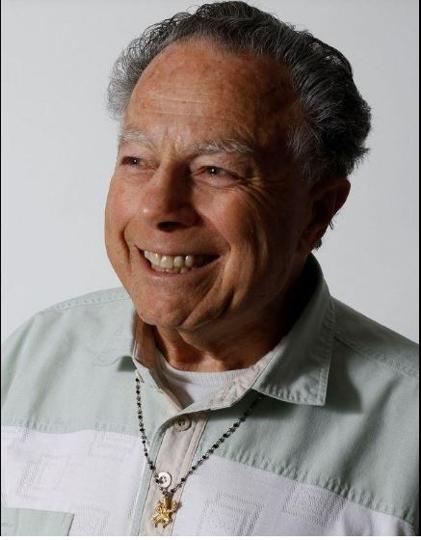
I remember visiting the University of Missouri, Columbia, where he was my host in 1989. He was a considerate host as he lodged me in a house he maintained separately for friends and students coming from South Asia. A large number of such students were admitted in the university and were lodged in this house without having to pay for accommodation. He was a generous person who was also sensitive to the needs of the students from South Asia.
Wallace visited India as a Fulbright fellow in the early sixties and was invited to work from the department of political science, Panjab University, Chandigarh. He has written extensively on Punjab politics, terrorism, elections and other related issues. He was the author or editor of over 10 books and more than 40 book chapters. He was a consistent scholar as exemplified by six edited volumes on the elections in India in a row, published by Sage. In his acknowledgements to the contributors of the sixth volume, he writes: “Special recognition must be accorded to 29 contributors whose expertise and professionalism helped produce 20 chapters. I did not believe that academics could adhere to such a rigorous timetable. ‘Disciplining academics is like herding cats’ is the accepted cliché that I have long accepted as absolute truth. I now happily stand corrected.”
It was not that the academics ceased to be an indisciplined herd, but it was his energy, passion and motivation which did the trick. Wallace also served as the expert witness on the violence at the Air India trial in Vancouver, Canada.
He was a family-oriented person. During my stay with him, I found that he had a great sense of responsibility towards his children and his own parents. A wonderful partner to his wife Robin Alison Remington, he dedicated the 2019 election book to her and wrote: “Not only has she has been my wife and best friend As we collaborated across India and Europe But as colleagues critiquing each other’s work, inspiring scholarship and moral values.” He wrote it at a time when Robin, unfortunately, suffering from dementia, would not be able to fully appreciate this.
Wallace proudly shared that his grandson, who as a trained environmentalist could earn a good living, but was surviving at a subsistence level. The New York Times reported that Brian-Sonia-Wallace wrote personalised poetry in public spaces for tips. That he and his typewriter became popular and the strangers for whom he had written poems began inviting him to tap the muse at private events. His poetry was for someone other than him.
This is the value system Wallace nurtured, supported and took pride in. He was also an avid tennis player. He had made many friends in Chandigarh. They join me to pay their respects to his scholarship and friendship including Professors Harish Puri, Ronki Ram, and HS.Shergill, Ramesh Vinayak, executive editor, Hindustan Times, Ramesh Inder Singh, former Punjab chief secretary ,and civil servant JR Kundal and many others.
Writing an obituary gives you solemn and nostalgic moments but there’s nothing better to sum up Wallace’s life than Marc Antony’s famous words on the death of Brutus in Shakespeare’s Julius Caesar:
His life was gentle, and the elements
So mix’d in him that Nature might stand up
And say to all the world, “This was a man!”
(The writer is director, Institute for Development and Communication, Chandigarh)


