While the Pune Municipal Corporation (PMC) has served as many as 20,662 notices to unauthorised constructions across the city in the past five years and four months, it hasn’t provided data on how many of these structures were subsequently demolished, regularised or are still pending action.
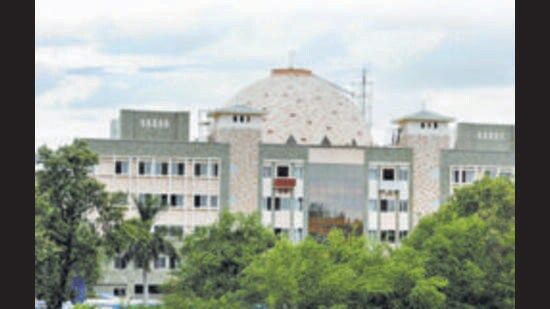
The issue came to light after Bharatiya Janata Party (BJP) corporator Archana Tushar Patil sought details from the civic administration on action taken against these unauthorised constructions during the PMC general body meeting this month. The civic body’s response showed a substantial gap between the number of notices served and the enforcement data available.
According to the PMC, only 181 cases have obtained stays from various courts however the administration has not provided case-wise or consolidated figures on the action taken in the remaining cases, making it difficult to assess the extent of enforcement following the issuance of notices.
The PMC’s building permission department has been serving notices to unauthorised constructions every year since 2021-22 with the highest number of notices served in 2025-26. However, the available data does not indicate how many of these notices resulted in demolition, compounding or other enforcement measures.
Property owners facing action often approach courts seeking relief. The PMC has a panel of 41 lawyers to contest such cases, including five representing the civic body in the Supreme Court (SC), six in the high court, and 30 in municipal and district courts. According to the administration, 181 cases have secured stays in various courts. However, the administration has not disclosed case-wise details of fees paid to the lawyers handling these matters. Lawyers appearing before municipal and district courts and the high court are paid as per the PMC’s existing policy. As there is no separate policy for SC cases, fees of those lawyers are paid with the approval of the municipal commissioner.
{{/usCountry}}Property owners facing action often approach courts seeking relief. The PMC has a panel of 41 lawyers to contest such cases, including five representing the civic body in the Supreme Court (SC), six in the high court, and 30 in municipal and district courts. According to the administration, 181 cases have secured stays in various courts. However, the administration has not disclosed case-wise details of fees paid to the lawyers handling these matters. Lawyers appearing before municipal and district courts and the high court are paid as per the PMC’s existing policy. As there is no separate policy for SC cases, fees of those lawyers are paid with the approval of the municipal commissioner.
{{/usCountry}}Pravin Shende, superintendent engineer, building permission department, said that the number of notices covered a period of more than five years and that several factors affected enforcement. “When it comes to the disparity between notices and actual demolition drives, several factors are at play. Many cases involve court stays, while in other instances, people are actively residing in those properties. At times, we also face a lack of police protection during execution,” he said.
Shende said that not every notice necessarily involves a completely unauthorised structure. “Not all complaints pertain to entirely unauthorised structures. Some concern societies that have not received completion certificates, while individual residents may have subsequently closed terraces or installed grills,” he said. “Thus, not every reported violation requires complete demolition. We do not slack on enforcement. In fact, according to our records, we demolish approximately 40 to 44 lakh square feet of unauthorised constructions every year,” he further said.
The figures nevertheless highlight the need for greater clarity on the outcome of the thousands of notices issued by the PMC. With unauthorised constructions continuing to be a concern in several parts of the city, details of demolitions, regularisation, pending cases and other enforcement action would provide a clearer picture of the effectiveness of the civic body’s drive.