PUNE: The decision to increase or decrease the gap between two doses is based purely on scientific evidence and not political considerations or shortage of vaccines, said Dr Bharti Pawar, minister of state in the ministry of health and family welfare. She was addressing a press conference at the Pune Municipal Corporation (PMC) on Monday. Earlier, Cyrus Poonawalla, founder of the Serum Institute of India (SII), said that the government had increased the gap between two doses from one month to three months due to shortage of vaccines.
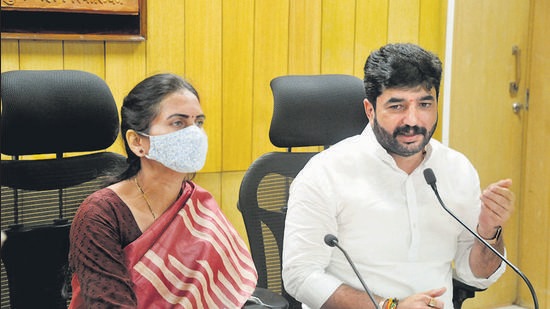
Interacting with the media about the work carried out by the PMC during both waves of the Covid-19 pandemic, Pawar said, “The decision to increase the gap between two doses was based on evidence and studies undertaken by the ICMR, the central health ministry and various other experts. It was not a political decision and neither was it due to shortage of vaccines. We also have a medical task force which works on this and so, political statements do not matter.”
On August 13, Poonawalla said that a gap of two months between two doses of Covishield is ideal however the current gap of three months and the earlier gap of just one month are both wrong. “A two months’ gap is ideal. Also it is true that the number of antibodies would decrease after six months however memory cells are present in the body. It is advisable to get a third dose or booster shot six months after the second dose. Unless the virus has reduced nominally across the world, we might need to take vaccines,” Poonawalla said. SII is the largest manufacturer of Covid-19 vaccines and is supplying over 90% of the required vaccines in the country.
Dr Pawar said that the decision regarding the booster dose and allowing people who have got only one shot of the vaccine to travel would also depend on expert opinion and not political statements. On Sunday, state health minister Rajesh Tope said that the state government is contemplating whether or not to allow people who have got only one dose of the vaccine to travel by train or visit malls – activities that are currently reserved only for those who have taken both shots of the vaccine.
{{/usCountry}}Dr Pawar said that the decision regarding the booster dose and allowing people who have got only one shot of the vaccine to travel would also depend on expert opinion and not political statements. On Sunday, state health minister Rajesh Tope said that the state government is contemplating whether or not to allow people who have got only one dose of the vaccine to travel by train or visit malls – activities that are currently reserved only for those who have taken both shots of the vaccine.
{{/usCountry}}However, task force member, Dr Sanjay Oak, said, “According to the ICMR, the ideal gap between two doses is 82 days which is currently applicable. Also, the task force has recommended to the government that though we cannot remain in a state of lockdown perpetually, this unlock cannot be a substitute for Covid-19 appropriate behaviour like wearing a mask or following basic respiratory hygiene. Also, it is not advisable to allow people who have got only one shot to travel freely as both doses are essential and immunity levels after one dose are not enough.”
Pawar also lauded the work carried out by the Pune Platform for Covid-19 response, a volunteer and citizen group formed during the pandemic and invited the team to Delhi to explain their model so that the same could be replicated in other cities as well.