Grasslands that are ploughed for agriculture or cleared for development may never fully return to their original ecological state, even after centuries of regrowth; according to a new global study involving researchers from the Indian Institute of Science Education and Research (IISER) Pune.
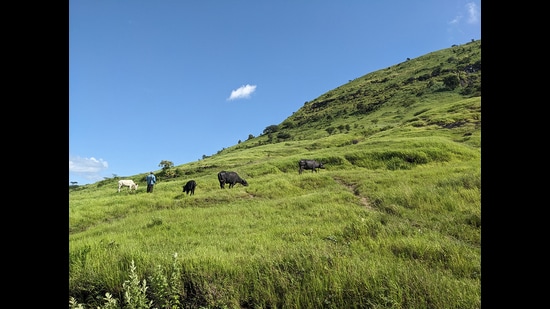
The study – published in the journal Proceedings of the National Academy of Sciences (PNAS) on August 24 – analysed 742 plant species across grasslands on six continents to understand why secondary grasslands (those that regrow after being disturbed) remain different from ancient, undisturbed grasslands.
The researchers found that the differences are remarkably consistent across regions, regardless of whether the grasslands are in north or south America, Africa, Asia or elsewhere. “Differences between old-growth and secondary grasslands are remarkably consistent around the globe,” said Lars Brudvig, professor at Michigan State University who is one of the authors of the study.
Previous research by Ashish Nerlekar, lead author of the study and currently a researcher at IISER Pune, had shown that secondary grasslands can take decades to recover their biodiversity. Some plant species may remain absent even after centuries of regrowth. The new study offers an explanation for this slow recovery. The researchers found that plants characteristic of old-growth grasslands tend to be long-lived perennials with tough leaves. These traits help them survive drought, grazing and fire, but they also grow relatively slowly.
“When an old-growth grassland is destroyed, these slow-growing plants struggle to compete with species that are better adapted to rapidly capturing available resources,” Brudvig said. By contrast, secondary grasslands tend to be dominated by faster-growing and more rapidly reproducing plants. These species are often better at competing for water, nutrients and sunlight, allowing them to establish themselves quickly and reproduce before slower-growing native species can regain ground. For instance, wiregrass – a drought-tolerant native perennial found in the pine savannas (grasslands) of the southeastern United States – is more characteristic of old-growth grasslands. Regrowing (secondary) grasslands, meanwhile, are more likely to be dominated by faster-reproducing annual plants such as white goosefoot.
{{/usCountry}}“When an old-growth grassland is destroyed, these slow-growing plants struggle to compete with species that are better adapted to rapidly capturing available resources,” Brudvig said. By contrast, secondary grasslands tend to be dominated by faster-growing and more rapidly reproducing plants. These species are often better at competing for water, nutrients and sunlight, allowing them to establish themselves quickly and reproduce before slower-growing native species can regain ground. For instance, wiregrass – a drought-tolerant native perennial found in the pine savannas (grasslands) of the southeastern United States – is more characteristic of old-growth grasslands. Regrowing (secondary) grasslands, meanwhile, are more likely to be dominated by faster-reproducing annual plants such as white goosefoot.
{{/usCountry}}Nerlekar stressed, “Plants in secondary grasslands tend to grow taller, giving them an advantage in accessing sunlight. These characteristics can persist for surprisingly long periods. In one case examined, secondary grassland plants remained taller than those in old-growth grasslands even 300 years after regeneration began”. The findings have implications for grassland conservation and restoration policies. The researchers said that simply abandoning disturbed land and allowing it to regrow naturally may not be enough to recreate the ecological characteristics of ancient grasslands.
“What these findings suggest is that we need to be taking an active hand in grassland recovery, doing things like sowing seeds and transplanting if we want secondary grasslands to function like the old-growth ones,” Brudvig said. Whereas Nerlekar stressed the importance of protecting existing ancient grasslands, given how difficult they are to restore once destroyed. “Preserving and conserving existing old-growth grasslands matters because you don’t quickly get back what is lost,” he said. The researchers said further studies are needed to determine how the differences between old-growth and secondary grasslands affect their ability to store carbon, cycle nutrients and provide other ecosystem services.
Grasslands cover nearly a quarter of the Earth’s land surface and play a crucial role in regulating ecosystems. Their extensive root systems help reduce water runoff and erosion, while grassland soils store a significant share of the carbon held in terrestrial ecosystems.
Grasslands also provide habitat and fodder, and support the livelihoods of more than a billion people globally. However, large areas of ancient (old-growth) grasslands have been converted into cropland, plantations and urban developments over the past two centuries. At the same time, abandoned agricultural land has created opportunities for new, secondary grasslands to develop.