
 E-Paper



Diwali Ank: Celebration of words and lights gets another festive cover
For over a century, Diwali Ank editions of Marathi magazines have been a staple of the state’s cultural landscape.

 Prefer HTon Google


Pune: As festive lights brighten homes across Maharashtra, another vibrant Diwali tradition quietly illuminates the minds — special magazines known as Diwali Ank, Marathi literature’s enduring gift to readers. Despite growing concerns about dwindling reading habits, more than 350 such magazines have hit the stands this year, offering a rich mix of literature, thought, and culture.
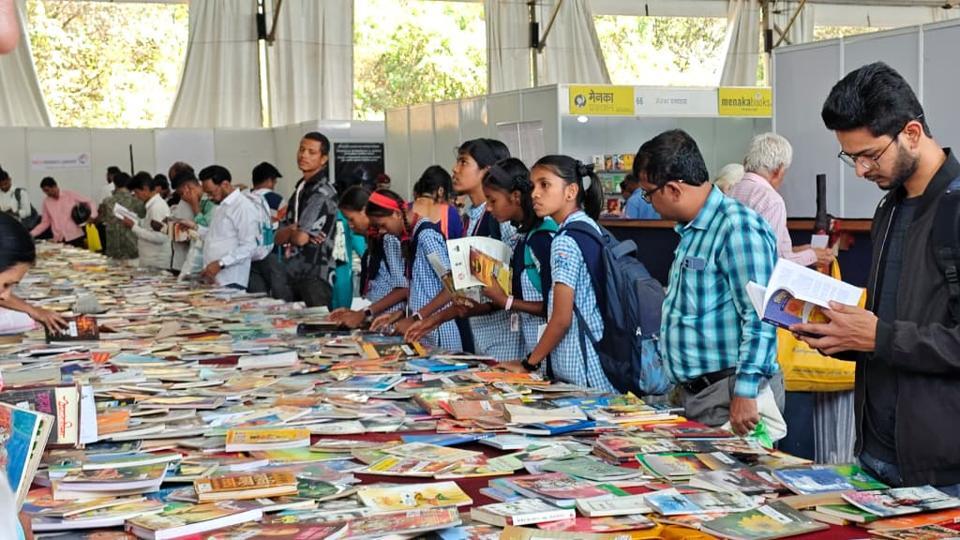
For over a century, Diwali Ank editions of Marathi magazines have been a staple of the state’s cultural landscape. The magazines, usually thicker and more elaborate than regular issues, arrive just before Diwali and bring with them a literary feast of short stories, poems, travelogues, essays, and social commentary. For many, they are as essential to the festival as faral, the festival snacks.
While traditional Ank once revolved around fiction and poetry, their scope has expanded in recent years. “Earlier, short stories dominated Diwali Ank. But now, readers get to explore subjects ranging from travel writing to artificial intelligence,” said Motiram Poul, editor, Akshardan Publications. “It’s heartening to see a rise in participation from new writers. The readership is also diversifying, thanks to online accessibility.”
Indeed, Diwali Ank 2025 reflects the pulse of contemporary society. This year’s themes range from social, economic, health, environment, and agriculture issues to film, astrology, cuisine, and women-centric writing. Unusual concepts like “Purush Uvach” (focused on men’s issues), “Dakshata” (about police life) and “Punyabhushan” (celebrating Pune city) have grabbed readers’ attention for their unique perspectives.
However, one noticeable gap remains—sports. Despite being a popular subject, editors say few writers engage in sports-related editions.
State initiative
Recognising the cultural value of these annual publications, the Maharashtra Directorate of Libraries this year released an official list of Diwali Ank which is available in public libraries. Of the 187 selected magazines, 82 originate from Pune, underlining the city’s status as the literary hub of Maharashtra. “The initiative will help readers easily access quality reading material on diverse topics,” said Ashok Gadekar, director, Directorate of Libraries, adding that it’s a step toward promoting reading culture in the digital age.
Gadekar said, “Diwali Ank is an inseparable part of Marathi literary tradition and plays an invaluable role in enriching readers’ taste and intellectual depth.”
Adapting to changes
The digital shift has also reshaped how readers access these festive publications. Pune-based BookGanga reported that online sales have surged. “Many readers prefer ordering Diwali Ank online, where they often receive discounts or bundled offers,” a representative said. “Still, physical sales continue to do well, showing that Marathi readers value the tangible feel of print.”
At Rajhans Pustak Peth, seller Sanjay Joshi described this year’s response as “wonderful”. “The demand is really strong even though magazines arrived a bit late because Diwali came early this year,” he said. “Prices have increased by around ₹50, but that hasn’t stopped buyers. People come in with their Diwali snacks shopping lists and won’t leave without a Diwali Ank. My shop is filled all day with readers excited to buy them.”
Yet, Joshi pointed out a persistent logistical problem—courier delays. “We sent a batch of magazines meant for Mumbai that ended up in Bengaluru. Every year, postal inefficiency disappoints customers. These services need serious improvement,” he said.
Age no bar
For regular reader Anagha Pandit, themed Diwali Ank holds a special charm.
“I love issues dedicated to a single subject. Over the years, magazines like Waghur, Akshardaan, Bhawatal and Chitrangan have offered meaningful reading. Sadhana’s Yuva Ank, Miloon Saryajani, Purushspandan, and Prutha are equally enriching,” she said.
However, Pandit expressed concern about quality control. “If readers are paying ₹300 to ₹400 per magazine, the content must justify the price. Some issues seem driven more by advertisements than creativity. The younger, Gen Z audience needs relatable, contemporary literature. Editors must evolve their strategy to engage them meaningfully.”
Vishal Rathod, another avid reader, said, “Some magazines are now using AI-generated covers and even publishing articles about artificial intelligence like Insight Magazine which is refreshing. But there’s a huge quality gap. Some magazines are extraordinary, others are just fillers,” he said.
He also raised the issue of affordability. “With each Ank costing ₹300– ₹400, not every student can afford to buy multiple issues. Years ago, I used to buy them secondhand at Lakdi Pul for ₹20– ₹30. That’s how I nourished my reading habit,” he reminisced.
Interestingly, children’s Diwali Ank are seeing renewed enthusiasm. “It’s fascinating that people think kids aren’t interested in reading anymore, but this year children’s magazines like Kishor, Chikupiku, Kulfi, and Password are in high demand,” said Joshi. “In fact, we should consider English editions of such magazines to reach more young readers.”
The artistic presentation of Diwali Ank has evolved alongside their content. From hand-painted covers in the past to AI-assisted designs today, the visual appeal remains a major attraction. Renowned artists’ works often feature on covers, while others align artwork with the theme of the issue. This year, popular publications such as Mauj, Shabdalaya, and Parivartanacha Vatsaru have drawn attention for their distinctive and thoughtful cover art.
As readers across Maharashtra unwrap their copies this festive season, the Diwali Ank tradition continues to affirm one truth: even in an age of instant content, the pleasure of turning a printed page remains timeless.


