Once exotic and used by select people, dragon fruit is now popular among all sections of society as it has become affordable for the common public mainly due to higher cultivation.
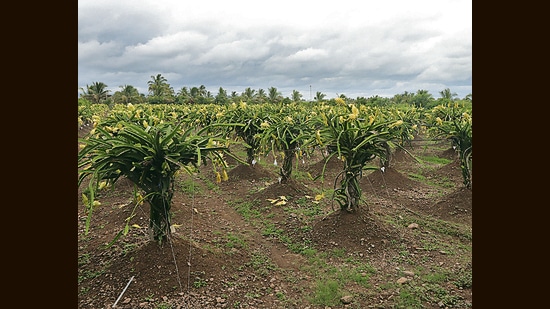
In the past three years, several farmers from Pune, Satara, Kolhapur districts and parts of Marathwada along the coast have turned to dragon fruit cultivation. Also known as Kamalam, dragon fruit is an herbaceous perennial climbing cactus originating from Southern Mexico, Central America and South America.
According to traders, dragon fruit cultivation has significantly increased over the past three years in Maharashtra, resulting in its prices coming down.
Akash Nimbalkar grower from the Pune district said, “The initial cost of a dragon fruit garden is high, but its life is more than 15 years. I spent ₹5 lakh per acre in the first year but from next year, the cost would come down considerably. This year I got ₹75 per kg rate on my farm. The rate of dragon fruit is dependent on its size as good quality fruits get good rates. This year due to rain, prices of the produce have come down.”
Around three years before, the fruit was above ₹200 per kg in the retail market. However, due to large cultivation, it has become affordable with consumers getting good quality fruits at ₹100 per kg or second-grade quality at ₹50 per kg at the retail market.
{{/usCountry}}Around three years before, the fruit was above ₹200 per kg in the retail market. However, due to large cultivation, it has become affordable with consumers getting good quality fruits at ₹100 per kg or second-grade quality at ₹50 per kg at the retail market.
{{/usCountry}}Retail trader Sushila Netke said, “Previously, I never considered selling dragon fruit. However, customer demand increased over time. This year’s supply is higher as we sell dragon fruit for ₹50- ₹100 per kg, depending on quality. Two years prior, I sold it for ₹200 per kg.”
Another fruit retailer Ramesh Taware said, “During the Covid-19 outbreak, the fruit gained popularity. Even now, prices are relatively cheap due to massive arrivals at the wholesale market.”
According to Vijaysinha Kakade, a researcher at ICAR-National Institute of Abiotic Stress Management, due to health benefits, rich nutrient contents and antioxidant properties, the fruit has become popular all over the world.
“Due to good returns, many farmers started growing the fruit in India. Now as per the estimate, the dragon fruit is cultivated over 15000 hectares in the country as it requires less water for growth as compared to other traditional crops. Apart from that, health-conscious citizens are showing interest in this fruit.”
BOX
Considered to be native of Mexico and Central America, the dragon fruit is grown mainly in Maharashtra, Karnataka, and Gujarat. The highest plantation in Maharashtra is in the Sangola area, Solapur.
“The main season of this fruit is from June to November. The tenure of the dragon fruits tree is up to 20 years,” said ICAR researcher Vijaysinha Kakade.