Above-normal rainfall in July has triggered a dramatic turnaround in Maharashtra’s Kharif sowing, reversing the sluggish start caused by a weak monsoon in June, according to the state agriculture department.
The latest figures show Kharif sowing has been completed across 117.68 lakh hectares, covering 82% of the state’s normal Kharif area of 144.36 lakh hectares. Although sowing remains about 10% lower than the corresponding period last year, when 132.7 lakh hectares had been covered, officials said the gap has narrowed rapidly following widespread rainfall this month.
Maharashtra has received 340.9 mm of rainfall in July so far against the normal 288.2 mm, an excess of 18.2%, providing much-needed soil moisture and favourable conditions for sowing.
State agriculture minister Dattatray Bharne told HT that the abundant July rainfall had proved to be a boon for farmers. “Kharif sowing is now progressing robustly,” he said.
Agriculture commissioner Suraj Mandhare said the season had staged a remarkable recovery after beginning on a weak note due to delayed and uneven monsoon rains in June.
“The widespread rainfall across the state this month has significantly improved soil moisture and created favourable conditions for sowing. This recovery reflects the resilience and preparedness of Maharashtra’s farmers. Our department has been continuously monitoring the situation and assisting farmers with crop management and re-sowing. If the monsoon remains supportive in the coming weeks, we are optimistic about healthy crop growth and a good Kharif season,” Mandhare said.
{{/usCountry}}“The widespread rainfall across the state this month has significantly improved soil moisture and created favourable conditions for sowing. This recovery reflects the resilience and preparedness of Maharashtra’s farmers. Our department has been continuously monitoring the situation and assisting farmers with crop management and re-sowing. If the monsoon remains supportive in the coming weeks, we are optimistic about healthy crop growth and a good Kharif season,” Mandhare said.
{{/usCountry}}He added that the department has registered more than 200 FIRs against those allegedly involved in the manipulation of seeds and other critical agricultural inputs.
The season had opened on a disappointing note in June, when the state received only 125.9 mm of rainfall against the normal 207.6 mm. The rainfall deficit severely affected soil moisture, restricting sowing to just 11.2 lakh hectares, compared with 76 lakh hectares during the same period last year.
Officials said the momentum picked up after heavy July rains and is expected to continue if the current monsoon pattern persists.
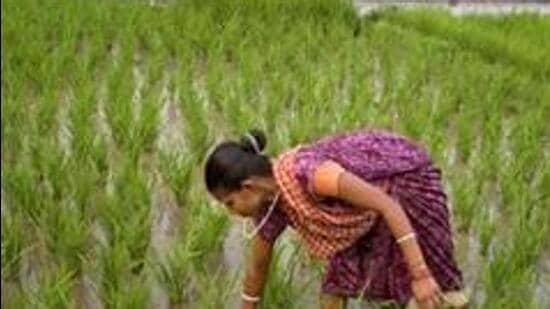
Paddy transplantation is now progressing rapidly in Konkan, parts of North Maharashtra and Vidarbha, aided by sustained rainfall.
Among major crops, cotton has been sown across 36.49 lakh hectares, accounting for 96% of its normal area, while soybean sowing has reached 45.10 lakh hectares, or 86% of its average acreage.
Officials, however, said sowing is yet to gather pace in a few districts, including Solapur, Pune and Nandurbar.
“We expect the sowing scenario in these districts to improve by early August, provided rainfall continues,” an agriculture department official said.
Pune district agriculture officer Sanjay Kachole said the district has received 500 mm of rainfall in July so far, significantly higher than the normal 309 mm.
“More than 57% of sowing has been completed in the district’s total Kharif area of 2.02 lakh hectares. With paddy transplantation now gathering pace, the coverage is expected to increase further,” he said.
In Solapur, 50% of sowing has been completed across a total Kharif area of 3.37 lakh hectares, while Nandurbar has achieved 61% sowing across 2.73 lakh hectares.