Regenerative braking technology (RBT) will be used in the Hinjewadi to Shivajinagar metro trains, which will help save 30 to 35% electricity. Alok Kapoor, head, Tata Projects Pune Metro, said, “Regenerative braking technology (RBT) will be used in the Hinjewadi metro trains to save energy and provide advanced services and facilities to passengers. Due to this technology, a lot of the energy required to run metro trains can be saved.”
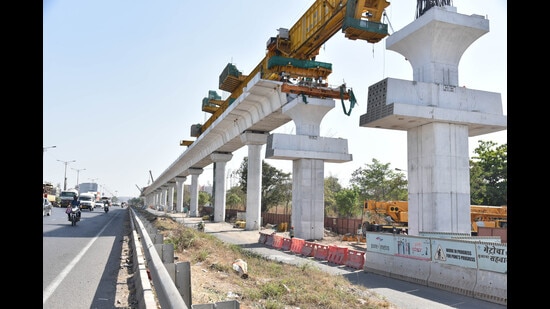
Meanwhile, work on the metro line is progressing rapidly and recently, installation of 300 metro piers was completed. The Pune metro will be buying 22 trains of three coaches each from the Alstom company in Chennai. Like other metro trains, these trains too will have modern facilities such as CCTV cameras and Wi-fi and will contribute to energy savings. Whereas, the third rail method will be used to provide electric power to these trains. A third rail – also known as a live rail, electric rail or conductor rail – is a method of providing electric power to a railway locomotive or train through a semi-continuous rigid conductor placed alongside or between the rails of a railway track. It is typically used in mass transit or rapid transit systems having alignments in their corridors fully or almost fully segregated from the outside environment. Third rail systems usually have direct current electricity.
The Pune metro line 3 is a 23 kilometres’ elevated metro rail project which is expected to start by March 2025. The authorities have decided to start operations of a complete stretch instead of partially. Whereas the Maha Metro had started a 12 km route (Vanaz to Garware and Pimpri-Chinchwad Municipal Corporation/PCMC to Phugewadi) last March. The remaining route is yet to be started.
{{/usCountry}}The Pune metro line 3 is a 23 kilometres’ elevated metro rail project which is expected to start by March 2025. The authorities have decided to start operations of a complete stretch instead of partially. Whereas the Maha Metro had started a 12 km route (Vanaz to Garware and Pimpri-Chinchwad Municipal Corporation/PCMC to Phugewadi) last March. The remaining route is yet to be started.
{{/usCountry}}