PUNE In a rare case, a 30-year-old woman who suffered from kidney failure due to a snake bite has completely recovered after six weeks of dialysis, said officials of Noble Hospital, Pune.
The woman visited the emergency department of Noble Hospital on December 2. According to the doctors, her urine output had drastically reduced and she had developed swelling all over.
Dr. Avinash Ignatius, Nephrologist and transplant physician from Noble Hospital, said, “When she visited the hospital her body was swollen. She was suffering from a severe renal shutdown. She was immediately admitted to the ICU. Blood reports showed destruction of red blood cells and platelets. After tests, we were able to diagnose her with a rare syndrome called Hemolytic Uremic Syndrome (HUS) which can be caused due to snake bite. The same was subsequently confirmed by a kidney biopsy.”
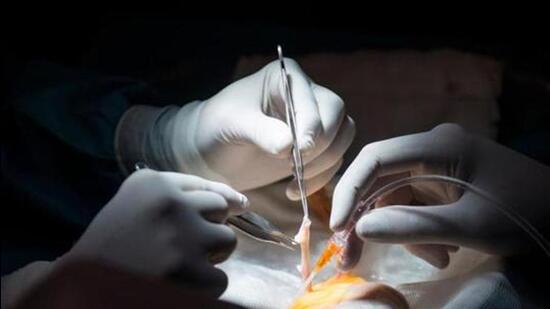
Dr. Ignatius added, “She needed urgent dialysis. Subsequent to diagnosis of HUS, plasmapheresis was immediately started, as any delay in treatment could have caused permanent damage to her kidney and condition could have been life threatening. During plasmapheresis contaminated plasma was removed by a special plasma-filter and was replaced with healthy plasma. She remained on dialysis for six weeks. Over these six weeks her urine output improved and we could discontinue dialysis. She is doing fine now. Her kidney function has recovered and she will not require dialysis now. This is a very rare case. According to studies published in the Indian Journal of Nephrology, there are less than 30 cases reported worldwide with patients suffering from HUS and complete kidney failure.”
Dr ZA Khan, Intensivist said, “Snakebites are one of the common occupational hazards in tropical countries with high mortality and morbidity. The World Health Organisation (WHO) has estimated that nearly 125,000 deaths occur among 250,000 poisonous snakebites worldwide every year, of which India accounts for 10,000 deaths.”
{{/usCountry}}Dr ZA Khan, Intensivist said, “Snakebites are one of the common occupational hazards in tropical countries with high mortality and morbidity. The World Health Organisation (WHO) has estimated that nearly 125,000 deaths occur among 250,000 poisonous snakebites worldwide every year, of which India accounts for 10,000 deaths.”
{{/usCountry}}He further said, “In our patient, the cause for kidney failure could be attributed to thrombotic microangiopathy (TMA) which in simple words means inflammation of micro blood vessels supplying blood to the kidneys and also micro clots clogging off the lumens of these blood vessels. A clinician has to keep a high index of suspicion when treating a patient with snake bite and kidney failure. To reach the diagnosis is a challenging job, but fortunately we can pinpoint and confirm the presence of HUS.”