
 E-Paper



Maha village adopts daily digital detox, draws attention from neighbouring states
At precisely 7 pm each day, a siren atop the Bhairavnath temple in Mohityanche Vadgaon signals the start of a 90-minute no-screen period


A small village in Maharashtra’s Sangli district has become a frontrunner in the campaign against mounting screen addiction among children. It has done so by introducing a community-wide digital detox every evening – a practice that has now begun to influence neighbouring villages and even parts of Karnataka.
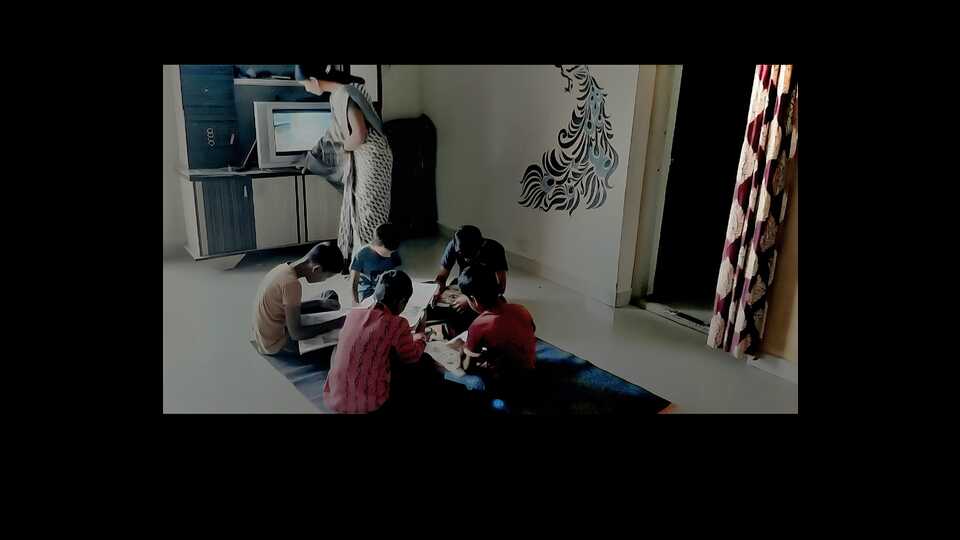
At precisely 7 pm each day, a siren atop the Bhairavnath temple in Mohityanche Vadgaon signals the start of a 90-minute no-screen period. Till 8.30 pm, residents voluntarily switch off their mobile phones, televisions, laptops and other digital devices. This time is instead spent studying, reading, playing outdoors or engaging in family interactions.
The initiative is being followed consistently for nearly five years now. Village sarpanch Vijay Namdeo Mohite said that the programme was formally launched on August 15, 2021, with the aim of reducing excessive dependence on digital devices, particularly among students.
“The problem became very visible during the Covid-19 pandemic,” Mohite said. “Online education made mobile phones and computers unavoidable but that dependence slowly turned into addiction. We saw its impact on children’s mental health, physical well-being and academic performance.”
According to Mohite, the prolonged screen time had also reduced the children’s interest in books and outdoor activities. The village therefore decided to introduce a fixed daily ‘prime time’ during which digital devices would not be used by anyone, including parents. The 7 pm to 8.30 pm slot was chosen deliberately, as it coincided with peak television viewing hours in most homes.
“Televisions would be on while children were trying to study. That disturbed concentration and reduced family interaction,” Mohite said. “This was never about opposing technology. We only wanted to limit excessive use. Uncontrolled screen time affects us socially, mentally and physically.”
Implementing the programme was not easy initially. Mohite said that there was resistance from both children and parents, many of whom argued that televisions and mobile phones are personal property. “Even parents were addicted to screens,” he admitted.
To address the resistance, the village formed monitoring teams comprising retired teachers, ASHA workers and anganwadi workers. These teams visited homes, explained the initiative in detail and ensured compliance during the detox period. In some cases, televisions were switched off and mobile phones were temporarily taken away from children. A fine of ₹500 was imposed on those repeatedly violating the rule.
Mohite said that women played a crucial role in rendering the initiative successful. ‘Special Mahila Gram Sabhas’ were held to convince mothers, whom he described as central to shaping household behaviour. “Once mothers supported the idea, implementation became much easier,” he said.
Positive changes were visible within six months, Mohite added. Students showed academic improvement and social behaviour in the village began to shift. “Earlier, youngsters would spend hours at the chowk watching reels or playing online games like PUBG. Today, that scene has completely changed,” Mohite said.
The system now functions almost automatically. The siren, audible within a radius of one to 1.5 km, prompts residents to turn off devices without reminders. A second siren at 8.30 pm marks the end of the detox period.
Mohite said that villages such as Vangi and several others in Sangli and Kolhapur districts have adopted the model after seeing its impact. The initiative has continued uninterrupted from 2021 to 2025, with sustained community support. “If someone breaks the rule today, family members themselves inform me. That shows how strongly people believe in this,” he said.
The idea has also crossed state borders. Inspired by Mohityanche Vadgaon, Halaga village in Karnataka’s Belagavi district has recently launched a similar initiative.
Vandana Mohite, a resident and mother, said that the change within her household is striking. “Earlier, my children would not eat or study without a mobile phone or television. After the digital detox started, the atmosphere at home completely changed,” she said. Family members now talk more, children read and spend time outdoors. “Reducing screen time is not a punishment. It is necessary for children’s health and future,” she added.
Cyber and digital wellbeing expert Mukta Chaitanya described growing digital dependency as a serious social concern. “People today are almost constantly attached to screens, except while sleeping. This is a red alarm,” she said, noting that average screen time in India is officially estimated at seven to eight hours a day, though actual usage may be higher.
She warned that children refusing to eat without screens is particularly worrying and stressed the need for balanced, mindful use of technology. “We cannot completely switch off the internet, but society is increasingly misusing digital tools rather than benefitting from them,” she said.
Mohite said that he hopes the initiative will be replicated more widely. “I strongly believe this programme should be implemented in every village, and on an even larger scale. Society truly needs it today,” he said.


