
 E-Paper



Sanitation workers’ bandh call hits normal life across Punjab
Sanitation workers also took out protest rallies at several places against the Punjab government, demanding legal action against police officials involved in the lathicharge

 Prefer HTon Google


Normal life was disrupted at most places in Punjab on Thursday with markets and commercial establishments remaining shut following a state-level bandh call by sanitation workers over their pending demands and the Barnala lathicharge incident.
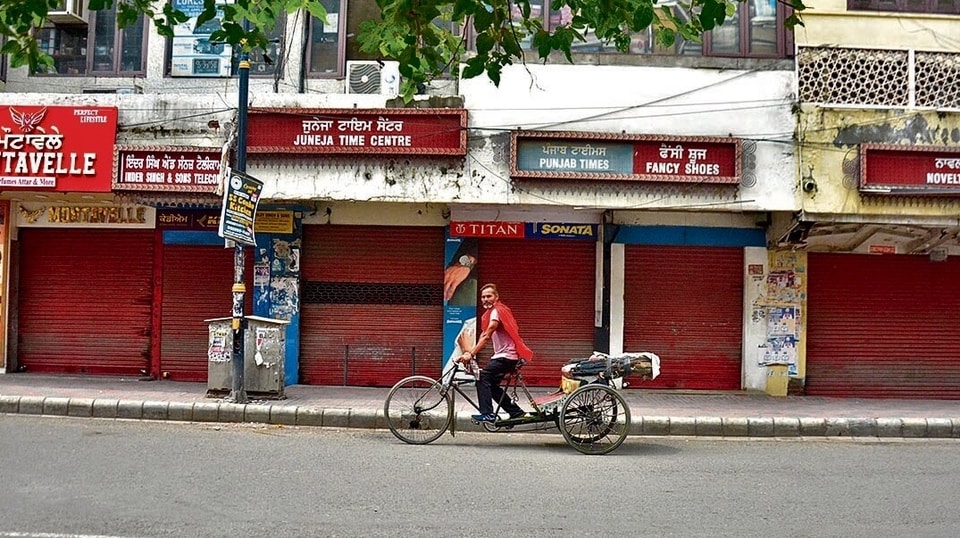
Sanitation workers also took out protest rallies at several places against the state government, demanding legal action against police officials involved in the lathicharge.
Sanitation workers have been striking work since July 8 to demand regular jobs for outsourced staff, salary increase and restoration of the old pension scheme, severely hitting garbage collection, transportation and disposal operations in various parts of the state.
On July 27, cabinet ministers Harpal Cheema and Harjot Singh held a meeting with sanitation unions and announced an increase in the monthly wages of contractual employees from ₹10,500 to ₹20,500.
The government also announced the constitution of a special investigation team (SIT) to probe the police action against the protesting sanitation workers in Barnala on July 22, besides providing financial assistance of ₹1 lakh to those injured in the lathicharge.
Gopal Thapar, state president of Municipal Employees’ Union, alleged that the government was playing politics with sanitisation workers, offering false promises to end the strike at any cost.
“However, we are not going to relent. The government claims that the salary has been increased to ₹20,500. But around ₹2,600 will be deducted towards EPF, and there will also be ECR deductions. So they will receive around ₹17,000 only,” Thapar said.
On July 22, police resorted to a lathicharge in Barnala to disperse protesting sanitation workers after they tried to thwart a garbage clean-up drive by the district administration.
The situation escalated when protesters allegedly hurled garbage and stones at police personnel, prompting another round of lathicharge. Police maintained that force was used after the protesters turned violent, while the workers accused the police of using excessive force, alleging that even women protesters were beaten up with canes.
The clash left 22 people injured, including 18 sanitation workers and four police personnel.
Following the incident, the state government suspended Barnala DSP Satvir Singh, while Barnala City-1 SHO Lakhwinder Singh was transferred to the district police lines.
In Barnala, the Safai Sewak Union, along with farmer unions, traders, outsourced employee unions and locals, marched across the city, raising slogans against the state government.
Gulshan Kumar, district president of the Safai Sewak Union, said, “We ensure cleanliness of our surroundings while earning only ₹10,000. We will continue to press for our demands until they are fulfilled.” He also demanded an FIR against the cops involved in the lathicharge incident.
A similar bandh was observed in Sangrur district.
Sanitation workers and activists from various social organisations staged demonstrations in Bathinda, Mansa, Fazilka and other districts of South Malwa region as well.
In Bathinda, most shops in various markets opened as usual in the morning. Shopkeepers started closing the markets after slogan-raising protesters marched around the commercial areas before noon.
A section of the Beopar Mandal announced support for the sanitation workers and appealed to shopkeepers to extend support to the bandh call. However, educational institutes, chemists, public transport, banks, government and private offices worked smoothly.
In Doaba, Kapurthala, Hoshiarpur and Shaheed Bhagat Singh Nagar districts observed a complete shutdown, with all commercial establishments and educational institutions remaining closed. Valmiki community members and sanitation workers, accompanied by social activists, marched across Hoshiarpur to ensure shops remained closed.
Protesters gathered outside the mini-secretariat, seeking closure of the Suvidha Centre. They tried to enter the administrative complex but were prevented by security personnel. As the situation became tense, police officials intervened and got the centre closed.
In Amritsar, protesting Valmiki groups and sanitation workers gathered at Bhandari railway bridge, which connects both parts of the city, triggering traffic jams. The protest at the bridge started at 10 am and ended at 4 pm.
Inter-state and local bus movements at the Amritsar ISBT were also severely affected, forcing passengers to travel on foot. Roadblock networks also forced railway passengers heading toward the station to walk.
Apart from the shops and other commercial outlets, most offices of different private and government establishments and banks, along with schools, remained closed.


