For a project that has spent nearly four decades moving between planning documents, revised alignments and political announcements, Pune’s High Capacity Mass Transit Route (HCMTR) is suddenly looking less like a line on a map and more like a project preparing to take shape.
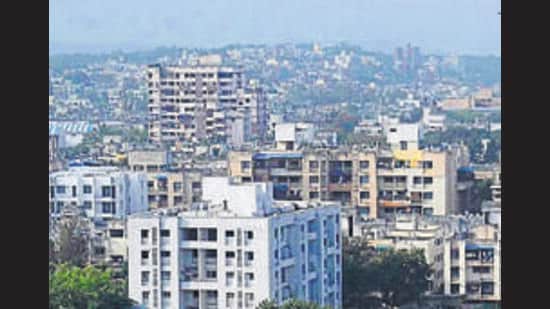
The Pune Municipal Corporation (PMC) has begun the process of appointing consultants for the project, the state government is working on the transfer of government land, and the civic administration is updating technical and land-related studies. PMC officials have indicated that construction tenders could be invited by October.
So, what has changed? And why is a project first conceived in the 1980s finally moving now?
The first answer lies in the project itself. HCMTR is no longer exactly the project Pune first imagined.
The corridor was included in Pune’s 1987 Development Plan and retained in the 2007 DP. The original proposal envisaged a roughly 36-km grade-separated corridor around the city. The revised project is now about 43 km long, with the Vishrantwadi-Bopodi missing link incorporated into the route to create a more continuous corridor.
The proposed corridor is planned to be six lanes wide, with a central provision for bus rapid transit. The estimated project cost has also changed dramatically. An estimate of around ₹5,000 crore to ₹8,000 crore was discussed in 2017. The current estimated cost is around ₹10,000 crore.
{{/usCountry}}The proposed corridor is planned to be six lanes wide, with a central provision for bus rapid transit. The estimated project cost has also changed dramatically. An estimate of around ₹5,000 crore to ₹8,000 crore was discussed in 2017. The current estimated cost is around ₹10,000 crore.
{{/usCountry}}But the more significant change may be less visible — the way the project is being prepared.
For years, HCMTR existed primarily as a reservation on the city’s planning map. The administration is now undertaking the technical work required to turn that reservation into an executable project.
PMC has floated tenders for appointing consultants for pre-tender work, including technical studies and preparation for the elevated and at-grade sections. Another consultancy process covers alignment feasibility and assistance for raising funds for land acquisition.
The land requirement, which has traditionally been one of the biggest concerns around HCMTR, also looks somewhat different in the latest assessment.
PMC estimates that around 68 hectares will be required for the project. About half of the alignment is expected to use existing roads with a width of at least 24 metres. A substantial portion of the remaining requirement is expected to come from PMC and government-owned land.
According to the civic administration’s latest assessment spelt out by top officials, only about 15% of the required land will have to be acquired from private parties. The state government has also indicated that government land required for the project can be transferred to PMC, either free of cost or at nominal rates.
That changes the nature of the land challenge. It does not eliminate it — individual properties will still be affected, and acquisition can be complicated — but the project is not starting with a requirement to acquire most of its 43-km alignment from private owners.
The state government’s involvement is another important difference.
HCMTR is now one of three major Pune-region transport projects being pushed by the state through a high-powered mechanism, along with the proposed 64-km tunnel network and the Pune inner ring road. That has brought the project beyond the routine cycle of a civic body’s development-plan reservation and into a larger state-level transport programme.
There is also an effort to update the planning assumptions.
The original HCMTR studies are more than a decade old. Pune’s transport system has changed significantly since then. The Metro network has expanded, new roads have been built, large parts of the city have urbanised, and traffic patterns have shifted. The revised technical exercise is therefore expected to take into account the current road network, Metro corridors, traffic patterns, land records and other changes.
That may be one reason why the current process looks different from earlier attempts. The administration is not simply dusting off an old DPR and announcing the project again. It is trying to rework the technical and land details before construction.
Money is another piece of the puzzle. The state government and PMC have indicated they have got an initial funding commitment of around ₹3,000 crore, while the overall project cost is estimated at around ₹10,000 crore. The government has also spoken of completing the project within three years of commencement.
None of this means the project is guaranteed to move smoothly.
The difficult stages are still ahead, including detailed surveys, finalisation of designs, land transfer and acquisition, shifting of utilities, statutory clearances, tendering and construction. Once surveys begin on the ground, the project will also have to deal with property owners, residents, businesses and road users affected by the alignment.
But that is precisely what makes the current phase different.
For decades, the HCMTR debate has largely been about whether the project would happen. The question now is becoming more practical: how will it happen?
There is also a larger lesson in the project’s long journey. Pune first conceived HCMTR when the city was far smaller, its traffic patterns were different and several areas through which the proposed corridor now runs had yet to undergo the development seen over the past three decades.
The project has survived because the underlying planning problem has not disappeared. But its alignment, cost, land requirement and relationship with other transport projects have all changed.
The latest push therefore deserves to be judged less by another announcement and more by what happens next.
After nearly four decades on paper, HCMTR has finally entered the stage where consultants are being appointed, land is being mapped, funding is being discussed, and construction is being planned.
The real test of this latest revival will be whether that sequence continues — and whether Pune can take a project conceived for an older city and actually build it for the city that exists today.