NITI Aayog chief executive officer (CEO,) B V R Subrahmanyam, has set an ambitious target of transforming Pune into half-a-trillion-dollar economy, and has directed officials to prepare an economic vision plan for the entire Pune region within the next four months.
Speaking at a stakeholders’ meeting in Pune, Subrahmanyam said, “The central government has earmarked ₹1 lakh crore for the ‘Urban Challenge Fund’. Growth hubs have already been launched in Mumbai, Surat, Varanasi, and Visakhapatnam in the first phase. Pune, Ooty, Bhubaneswar, and Cuttack are part of the second phase. Over the next four months, we will hold consultations with industrialists, political leaders, and citizens from all walks of life to identify untapped economic potential in the region. The government will intervene and promote those sectors.”
He pointed out that Pune’s current growth rate stands at 5.5%, which is far below its potential of 10%. “The economic growth is currently concentrated in Pune and Pimpri-Chinchwad, while surrounding regions remain neglected. We need to shift our focus to the wider district, where there is greater opportunity for expansion,” he said.
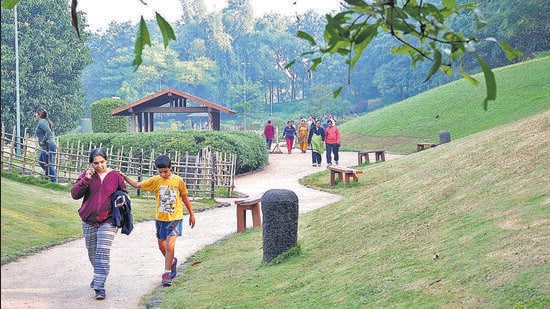
Raising concerns about the city’s urban infrastructure, Subrahmanyam said, “Pune has around 25% of its population living in the slums. In comparison, global cities have less than 5% slum populations. If Pune wants to match global standards, this figure must come down. We also need to develop more public amenities such as parks and open spaces. Given the city’s size and population, Pune should ideally have at least 200 km of metro rail.”
{{/usCountry}}Raising concerns about the city’s urban infrastructure, Subrahmanyam said, “Pune has around 25% of its population living in the slums. In comparison, global cities have less than 5% slum populations. If Pune wants to match global standards, this figure must come down. We also need to develop more public amenities such as parks and open spaces. Given the city’s size and population, Pune should ideally have at least 200 km of metro rail.”
{{/usCountry}}Highlighting the importance of diversifying economic drivers, he said, “Currently, IT, manufacturing, and education are the key economic pillars. However, we need to identify and promote other potential sectors. Take Hyderabad for example—it was not an IT hub initially. But with just two IT towers built by the state government, the city rapidly transformed into a dominant player in the sector. Pune too has several untapped opportunities, and we aim to identify them during the upcoming consultations.”
Subrahmanyam noted that Pune’s per capita GDP stands at $4,300—double the national average—and the region’s total economy is valued at ₹4 lakh crore. “We aim to raise Pune’s economy to $60 billion by 2024. The city has immense potential, and we need to accelerate its growth trajectory,” he added.
He also proposed that Pune focus on urban tourism. “We usually associate tourism with destinations like Goa, but there’s a growing global concept of urban tourism. Cities like New York and London attract visitors for business conferences and events. Pune can position itself similarly. In addition, sectors such as agri-processing, research and development, startups, innovation, and existing industries like IT, manufacturing, and education should be strengthened.”