PUNE: In a bid to strengthen scientific waste management across the twin city, the Pimpri-Chinchwad Municipal Corporation (PCMC) has urged citizens to segregate household waste into four distinct categories instead of the earlier two-bin system. The initiative is being implemented through an extensive public awareness drive led by the civic body’s health department, officials said.
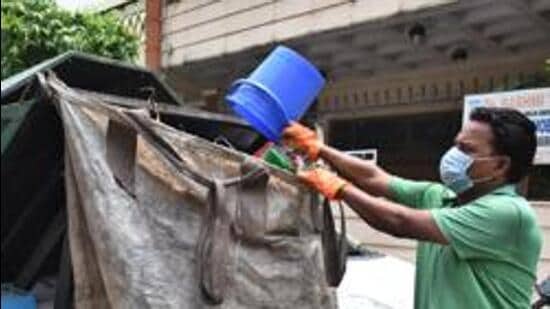
Under the guidance of Pimpri-Chinchwad municipal commissioner Shravan Hardikar and additional commissioner Vijaykumar Khorate; and supervised by deputy commissioner Dr Pradeep Thengal and assistant commissioner Amit Pandit; the campaign is being rolled out across all city wards, officials said.
Under the revised system, citizens are now required to hand over waste to door-to-door collection vehicles only after proper segregation into wet waste, dry waste, domestic hazardous waste, and sanitary waste. Green bins are designated for wet waste such as food leftovers and vegetable peels; blue bins for dry recyclables including paper, plastic, glass and metal; black bins for hazardous household waste like batteries, bulbs and chemical residues; and red bins for sanitary waste such as sanitary pads, diapers and medical disposables.
Civic officials said that this four-way segregation will make scientific processing easier; increase recycling; reduce pressure on landfills; and help control foul odour, garbage accumulation and environmental pollution. Awareness is being created through door-to-door outreach, banners, pamphlets, social media messages and programmes conducted with the support of non-governmental organisations.
{{/usCountry}}Civic officials said that this four-way segregation will make scientific processing easier; increase recycling; reduce pressure on landfills; and help control foul odour, garbage accumulation and environmental pollution. Awareness is being created through door-to-door outreach, banners, pamphlets, social media messages and programmes conducted with the support of non-governmental organisations.
{{/usCountry}}Dr Thengal said, “Waste segregation is a basic yet crucial responsibility for keeping the city clean.” He urged residents to cooperate fully by handing over properly segregated waste to municipal collection vehicles instead of dumping it haphazardly.