
 E-Paper



PMC cleans Pashan lake of water hyacinth ahead of monsoon
Ahead of the monsoon, the Pune Municipal Corporation (PMC) has successfully cleaned 133-acre Pashan lake


PUNE: Ahead of the monsoon, the Pune Municipal Corporation (PMC) has successfully cleaned the entire 133 acres Pashan lake under its Swachh Sarvekshan activity. The drive began on April 1 and extended for a span of two months till May 30 during which time, the corporation removed all the water hyacinth from the lake.
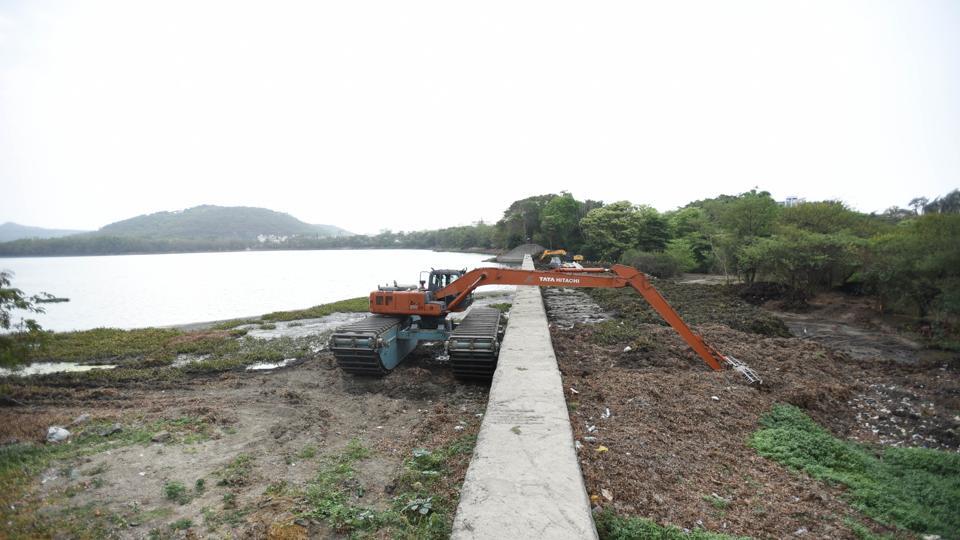
“The lake is now completely free of water hyacinth. Apart from this, the Ram Nadi, Mula-Mutha river and Katraj lake will also be cleaned before the monsoon,” said Mangesh Dhige, environment officer, PMC. The Pashan lake was built in the British era and has a catchment area of 40 square kilometre. It is a popular destination for bird-watchers.
“This is a regular process. The water in the rivers was completely covered with hyacinth. We removed the hyacinth using porcelain excavators, JCBs and mechanical machines such as spider machines. There were around 18 to 20 people involved in the process,” Dhige said.
The water hyacinth is a plant that rapidly grows during the summer season due to the lack of water flow in the lake. Water hyacinths create a thick layer over the water, thus invading the surface of the water completely. Since the water hyacinth has been removed now, the downstream of fresh water entering the lake during the monsoon will be easier.
Dr Gurudas Nulkar, head of the Symbiosis Centre for Climate Change and trustee of the ecological society, Pune, said, “There are two major effects of the hyacinth cover. Sunlight stops reaching the water and atmospheric oxygen stops mixing with the water completely. Due to lack of sunlight and decreasing dissolved oxygen in the water, life inside the water starts dying quickly. This wipes out the diversity in the water.”
The main reason for the growth of hyacinth is the phosphate pollution caused by the detergent load that enters the sewage. The cleaning of river bodies is done periodically every year to remove the hyacinth. “The permanent solution is not to allow sewage water into the Ram nadi. All the sewage treatment plants have to work at 100% efficiency. The society must release sewage water only after proper treatment,” said Nulkar. Additionally, people should be cautious about the usage of detergents in their households. Dhige said, “There cannot be any permanent remedy until the people are aware of the sewage inlet in the lakes.”
While the cleaning of water bodies has been done rapidly, the decision on the proposal to rejuvenate Pashan lake is likely to be taken in the next two to three days, said Yashwant Mane, deputy commissioner of the environment department, PMC.


