With potholes and deteriorating roads continuing to trouble motorists during the monsoon, the Pune Municipal Corporation (PMC) has also taken responsibility for repairing potholes across the city within a week. It has stepped up efforts to improve road infrastructure, including a new 160 tonnes per hour (TPH) asphalt mixing plant in Shindewadi and a technical audit of 136 km of roads and footpaths proposed for the Pune Grand Tour 2027.
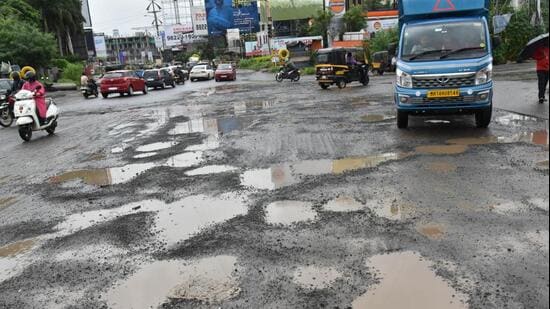
PMC standing committee chairman Shrinath Bhimale said the municipal commissioner would personally monitor the repairs and officials had been asked to prioritise public safety over procedural delays.
“The pothole repairs should be taken up on a war footing and completed within a week without losing time in procedural issues,” Bhimale said.
He also asked officials to use experienced contractors and complete the work quickly rather than allowing procedural requirements to delay repairs.
The civic body is also considering financial assistance for the family of a 10-year-old boy who recently died in an accident on the Sus-Mhalunge Road. Bhimale said, “A meeting of group leaders would be held to decide on assistance in line with the Supreme Court’s directions.”
Asphalt mixing plant to come up at Shindewadi
According to officials, to reduce the pressure on the civic body’s ageing asphalt plant in Yerawada and improve the supply of road material to southern parts of Pune, the PMC standing committee has approved a proposal to set up two new batch-mix plants with a combined capacity of 160 tonnes per hour (TPH) at Shindewadi.
{{/usCountry}}According to officials, to reduce the pressure on the civic body’s ageing asphalt plant in Yerawada and improve the supply of road material to southern parts of Pune, the PMC standing committee has approved a proposal to set up two new batch-mix plants with a combined capacity of 160 tonnes per hour (TPH) at Shindewadi.
{{/usCountry}}The project is estimated to cost ₹8.90 crore, with Parker Plant India Pvt Ltd selected through the B-2 tender process.
The new facility will come up on about 5.36 acres (21,700 sq m) of civic land at the Shindewadi octroi naka. The site is currently being used by the Pune Mahanagar Parivahan Mahamandal Ltd (PMPML) to store scrap material, including tyres, drums and old vehicles.
The Yerawada plant, with a capacity of 120 TPH, has been operating since 2016. It has produced around 7 lakh to 7.5 lakh metric tonnes of asphalt mix so far. Wear and tear of machinery has led to frequent breakdowns, affecting the supply of asphalt material for road works.
The Shindewadi facility is expected to help the PMC supply asphalt faster to Katraj, Gujarwadi, Kolewadi, Undri, Bibvewadi, Kondhwa-Yewalewadi, Dhankawadi, Sinhagad Road, Warje-Karvenagar and the newly merged areas in south Pune.
The civic body expects the new plant to reduce the production burden on Yerawada and cut the time required to transport asphalt to southern parts of the city.
136-km road network to be assessed for Pune Grand Tour
The PMC has appointed Pavetech Consulting Engineering Services Pvt Ltd as a technical consultant to inspect about 136 km of roads and footpaths along the proposed route of the international cycling event Pune Grand Tour 2027, scheduled to be held in January 2027.
The standing committee has approved the appointment.
The consultant will inspect the route and identify roads that require repairs or resurfacing to meet international standards. It will also conduct technical surveys, undertake automated road surveys and prepare maintenance reports using a GIS-based system. Additionally, the agency will provide technical guidance to the PMC on the work required before the event.
Pavetech had undertaken road works along a 75-km route within the PMC limits for the Pune Grand Challenge Tour 2026. According to the civic administration, the company has also worked as a technical consultant on several PMC projects over the past three to four years and is registered with the Indian Roads Congress and the National Highways Authority of India.
Under the PMC’s existing policy, the consultant will be paid 1.5% of the actual expenditure on works under packages one to four. The fee will cover both pre-tender and post-tender activities. Five per cent of the post-tender consultancy fee will be released after completion of the defect liability period.
The standing committee has also approved a proposal to pay contractors in installments over three years, with 10% of their dues to be paid each year, considering the short maintenance period of some road works. The consultant’s fee will also be paid in stages over three years.