PUNE: Every year on July 12, the ghost of the Panshet dam disaster of 1961 returns to haunt Punekars. Sixty years have passed since that fateful day when after a night of heavy rainfall, Pune woke up to sudden screams as water from the Panshet dam gushed through the city, carrying with it hundreds of homes and thousands of people towards the Mula-Mutha river. Reason: The Panshet dam had burst due to a breach in the construction of its wall, not to mention the incessant rain and pressure from the water in its hold. Several homes along the banks of the river were washed away, making it extremely important thereon for dams to be stronger and for them to release water during the monsoon when water levels rose beyond safety limits.
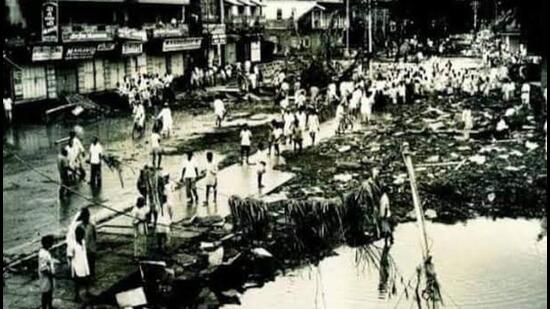
Much of the existing safety features of the dam were put in place in the decades following that catastrophe. So much so that the Pune Municipal Corporation (PMC) now has a designated disaster management cell and is continuously involved in making sure that similar such calamities are averted.
Ganesh Sonoune, head, relief and rehabilitation department, PMC, said, “As an urban body, we deal with prevention, mitigation and response and also with relief and rehabilitation. It is important that the residents know and remain alert during the monsoons, especially when the water levels rise. Towards this, we have installed flood sensors along the rivers which inform us of rising water levels.” The sensors were installed four years’ ago as part of the ‘smart city’ initiative and have helped the PMC keep the city safe from floods. The department has also taken up special training programmes for people living close to dams and rivers.
Additionally, the civic body each year identifies government schools and keeps them ready in case of evacuation. It also has a traffic management plan ready in collaboration with the building department. “We closely monitor the water levels from June to September using sensors and inform as and when dam levels rise,” said Sonoune.
{{/usCountry}}Additionally, the civic body each year identifies government schools and keeps them ready in case of evacuation. It also has a traffic management plan ready in collaboration with the building department. “We closely monitor the water levels from June to September using sensors and inform as and when dam levels rise,” said Sonoune.
{{/usCountry}}Vijay Patil, executive engineer, Khadakwasla irrigation department, said, “No one has forgotten the Panshet dam disaster but one must remember that it was an accident which took place due to a breach in the construction of the dam wall. We now have all four major dams in Pune district inspected by the Dam Safety Organisation before and after the monsoons.”
All said, it is not easy for Punekars to forget July 12, 1961. K Kumar, a resident of Somwar peth, recalled, “It was July 12, 1961 when we went to our school in the afternoon and our teachers sent all of us back saying that there was to be a flood and that water would start gushing. By the time we came home and informed our parents that water was going to surge through the city, it came with such force that it entered our house though we initially thought it would not reach the Somwar peth area. I was a kid and my mother picked me up and we went up to the first floor where our neighbours gave us shelter. However, the water kept rising and by the time we reached the first floor, all of us were in knee-deep water, shivering, not knowing what to do…”