When the porter arrived in India from Europe is unknown. Beer was being exported from London to the East Indies from at least 1728, but the earliest definite mention of porter being on sale is found in 1781 when Messrs Huggins and O’Donnell were offering porter for sale from their new warehouse in Calcutta.
The orders from the government were substantial, both singly and in total: in December 1851, for example, the East India Company was seeking tenders for 1,000 hogsheads of “export London porter”, and in 1858 consignments of ale and porter for the troops in India supposedly totalled nearly 1m pounds in value. Between 1854 and 1863 the London brewer Whitbread sold just over 308,000 barrels to the government in India, with most of it porter for the troops.
Even though the British Government believed that the beer made in India would not receive ready credence in England, India’s own breweries had started to offer serious competition in the early 1850s.
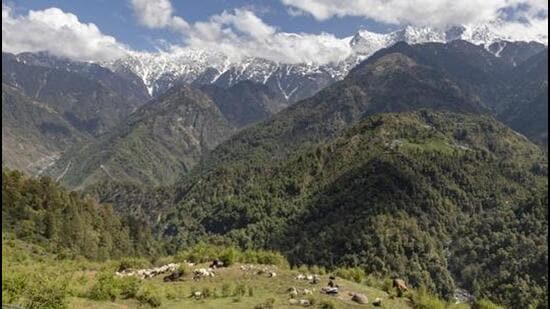
Henry Bohle established India’s first brewery in Meerut in 1827. Meerut then was home to the second-largest East India Company garrison. Bohle was undoubtedly drawn to start the brewery there because of the large number of thirsty British soldiers there. Three years later, finding Meerut too hot to make beer, he came to Mussoorie and started a brewery in the hills. The hill station was a convalescent depot for British soldiers, again supplying potential British customers. By 1841 the brewery was producing around 660 barrels of beer a year, all consumed locally. Most of it was pale ale.
After Bohle’s death, MacKinnon, his business partner, and son–in–law, continued brewing at Mussoorie. Around 1865, MacKinnon finally received the due encouragement his father-in-law had sought, when the government contracted with the Mussoorie brewery and one of its rivals, the Murree Brewing Company, to supply beer to canteens at the same rate paid for English beer, “to encourage a young industry”.
{{/usCountry}}After Bohle’s death, MacKinnon, his business partner, and son–in–law, continued brewing at Mussoorie. Around 1865, MacKinnon finally received the due encouragement his father-in-law had sought, when the government contracted with the Mussoorie brewery and one of its rivals, the Murree Brewing Company, to supply beer to canteens at the same rate paid for English beer, “to encourage a young industry”.
{{/usCountry}}One of the most infamous names in Indian history was closely connected with the most popular beer of the time. Around, 1850, Edward Dyer, father of Reginald Dyer, who earned for himself the sobriquet of “The butcher of Amritsar”, travelled up to Mussoorie where his brother John was living. Breweries had then been set up by Bohle, and in Shimla by Barratt. After their failures, it was generally believed that beer could not successfully be made in India and it continued being shipped out from Britain.
By mid-1850s, Dyer moved to Kasauli to set up a brewery. Within a short time, Asia’s first beer, “Lion”, was quenching the thirst of the British soldiers across the country. The Kasauli plant switched to distilling when the brewery moved to nearby Solan, and Dyer went on to set up further breweries at Shimla, Murree, Rawalpindi, and Mandalay. He became a sought-after name for entrepreneurs looking to set up breweries in India.
In 1860, a brewery on a more pretentious scale was started by Messrs Comill and Hay in Shimla. The lines on which it proposed to work might be said to have foreshadowed its failure. Even the bricks, which were employed in the construction of the buildings, were imported from England at an enormous cost. Expenditure on other branches of the concern was equally reckless, and the business closed and finally passed into the hands of Mr HG Meakin.
It is unclear when Henry George Meakin came to India. He belonged to a successful brewing family in Burton-on-Trent in England. He ended up buying the Kasauli and Solan breweries from Dyer who was seeking to expand elsewhere.
Meakin called its porter “Canteen Issue”: an analysis in 1882 of porters from six different Indian brewing companies found it had an abv of 6.81%, exactly the same as imported porter from the London firm of Taylor Walker.
The soldiers were slow at first to rate “hill beer”, but by 1874 the Times of India reported that “Her Majesty’s troops in the Hills and at Umballa had ‘taken kindly’ to the beer from Henry George Meakin’s brewery in Kasauli” and “actually prefer it to the beer supplied to the Commissariat at home; this is a strong test, for Her Majesty’s forces are the keenest of critics everywhere…and find faults in such things as beef, bread, and porter, which are frequently beyond the ken of their Commanding Officers”.
By the 1880s, the Indian government had ceased importing English beer, and in 1889 it bought almost 105,000 barrels of Indian-brewed beer for the troops, most of it porter, out of total production of beer in India of just under 143,500 barrels.
In 1891, there were 25 breweries in India, though 15 of those were owned by just three companies, of which 12 had been established since 1879, and eight since 1870. The plants were generally situated in the Himalayan foothills. The locations were selected not just because of the abundance of fresh spring water and because the climate was similar to the cooler climes of Scotland, but also because it was then ruled by the British, so there was a ready market for those that were stationed abroad and homesick for their traditional spirit. It helped that barley was grown to advantage along the Himalayan foothills.
The brewers usually made their own malt and imported their hops from Germany and England, as well as their machinery. The latter included considerable refrigerating apparatus. Wood was almost invariably employed as fuel except for drying malt on kilns where charcoal was used.
The brewing season for nearly all Indian breweries was restricted by the short winter. The season was usually from October to March. The class of beers, made in India, was practically the same as in England, more light gravity beer was consumed, however, than in England.
About 1875, a brewery was started at Bandra near Bombay. The peculiar feature of this establishment was that tidal water was used in brewing. This water was frequently quite salty and the beer was very nauseous; it however kept sound in a most remarkable manner. The beer was sold for a couple of years in Bombay before the brewery had to be shut down.
By the 1880s, Meakin had added more breweries at Ranikhet, Dalhousie, Chakrata, and Darjeeling.
Both the firms, E. Dyer & Co, and Meakin & Co. Ltd., continued doing business separately up till after the second decade of the twentieth century. The two firms joined hands soon after and started a new joint stock venture under the name of Dyer Meakin & Co. Ltd.
The Dyers and the Meakins were so-called “box-wallahs”, men engaged in trade, and were considered second-class British citizens at best. They did not belong to the Government or the military and were looked down upon in the caste-ridden British society of the nineteenth century. But they were responsible for shaping the brewing industry in India.
The success of the first brewery in Poona, Deccan Brewery, is also attributed to Meakin.
More about this the next week.
Chinmay Damle is a research scientist and food enthusiast. He writes here on Pune’s food culture. He can be contacted at chinmay.damle@gmail.com