Almost two decades ago, while travelling around Pondicherry, now known as Puducherry, I met a young man of thirty who had been travelling across India on his bicycle. He was Spanish and had spent a few years in Marseilles, France. He had an affinity for all things French and wanted to spend a couple of months in the former French colony before he left for Bengaluru.
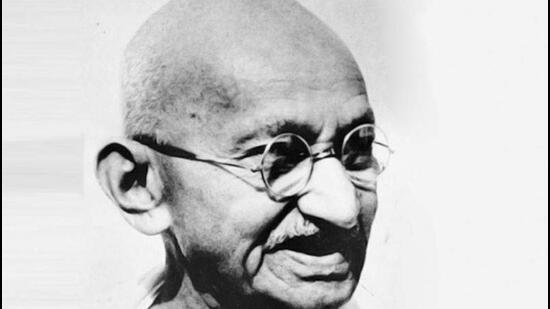
We were staying at the same hotel and would often bump into each other at the breakfast table. One morning, I found him reading “The Story of My Experiments with Truth” by Mahatma Gandhi. It was gifted to him by an associate of Dr MS Swaminathan, the renowned agricultural scientist and geneticist, with whom he had spent a few days in Chennai.
During our conversation, he happened to mention Gandhi’s dietetics. He was fascinated by Gandhi’s experiments with food and wanted to follow his diet. He had limited the amount of salt and sugar and drank fruit juice for dinner. He believed that India’s quest for self-reliance in agriculture and food could be achieved if we followed Gandhi. He had enjoyed the meals he had with Swaminathan who was influenced by Gandhi.
In January 1931, when Gandhi was jailed at Yerawada in Pune, he opted for a diet of sweet lime juice, grape juice, puree of boiled leafy vegetables, khichadi, and goat’s milk. His wife Kasturba visited him daily in the jail and ensured he did not go hungry. A short story published in the Marathi magazine “Usha” in August 1932, mentioned an old woman who was so fascinated by Gandhi’s values and morals that she fasted when he fasted. In the story, her relatives mocked her for her “blind faith” and ridiculed Gandhi for his preference for goat milk and dried dates.
{{/usCountry}}In January 1931, when Gandhi was jailed at Yerawada in Pune, he opted for a diet of sweet lime juice, grape juice, puree of boiled leafy vegetables, khichadi, and goat’s milk. His wife Kasturba visited him daily in the jail and ensured he did not go hungry. A short story published in the Marathi magazine “Usha” in August 1932, mentioned an old woman who was so fascinated by Gandhi’s values and morals that she fasted when he fasted. In the story, her relatives mocked her for her “blind faith” and ridiculed Gandhi for his preference for goat milk and dried dates.
{{/usCountry}}Gandhi’s experiments with food were as much a topic of contempt and jeering as were his experiments with truth. His followers never missed a chance to address the mockery, particularly during his birthday celebrations.
Gandhi’s birthday began to be celebrated all over India in the 1920s. In Pune, the festivity gained larger support in 1930 after the non-violent Civil Disobedience Movement. Lectures and, Swadeshi and Khadi Bazaars were organised all over the city.
Gandhi never failed to stress that the removal of untouchability was one of his major concerns. In an article in “Young India” written in April 1921, he described “untouchability” as “a blot on Hinduism”. Before that, in May 1915, he had said – “if it were proved to me that this (untouchability) is an essential part of Hinduism, I for one would declare myself an open rebel against Hinduism itself”. No wonder, inter-community feasts became an integral feature of Gandhi’s birthday celebrations.
Leaders like PN Rajbhoj, the social reformer who fought for the rights of Dalits, organised community lunches in “Harijan” localities in Pune on October 2 every year. On the menu were “jhunka” (thick gram flour curry) and “bhakari” (flatbread of jowar).
The conservatives in Pune often blamed Gandhi for “corrupting” Indian women. They held him responsible for encouraging women to get out of their houses and participate in the freedom struggle.
Women members of the Congress assembled at Narhar Vishnu Gadgil’s house on October 2 every year. They were supposed to bring with them at least one woman who belonged to the so-called “lower castes”. I am not sure how successful the initiative was. Gadgil, a senior politician, also encouraged them to invite those who were opposed to Gandhi’s thoughts and politics. Women would cook at the courtyard of his house and eat together after senior leaders praised Gandhi’s role in defining the morality of the nation.
Devajibuva Math near Daruwala Bridge was another venue where the celebrations were held every year. There, the members of the “Chambhar Vidyarthi Mandal”, would hold lectures, after which everybody ate together. The “bhakaris” were cooked by the women in the community who were also encouraged to attend the event.
In a “dharamshala” owned by Babulal Nanchand in Shukrawar Peth, leaders like Maganlal Patel, Chandulal Shah, and Trimbakrao Debgirikar arranged “Gandhibhojan” every year. Those interested in participating in this community dinner had to contribute four annas.
“Gandhibhojan” was an interesting concept where men and women belonging to all castes and religions ate together. Everyone was expected to donate a pre-decided minimum amount for the dinner and encouraged to donate more if they could afford it. Before the meal, leaders spoke about Gandhi’s frugal and austere eating habits. The audience was expected to adopt them as their commitment to his principles.
According to Gandhi, eating was not about indulgence, but a necessary duty to our body; one was supposed to eat just enough to help it to sustain itself. He, in a bid for self-discipline, had decided in the late 1920s to limit his diet to only five items in a day.
The menu at “Gandhibhojan” comprised dishes which followed Gandhi’s dietary practices. Jaggery was used instead of sugar. Vegetables were cooked with minimum spices. Brown rice was accompanied by plain, boiled dal.
Gandhi had his dinner before sunset. In 1934, Gadgil was requested by his followers to organise the “Gandhibhojan” at 5 pm instead of the usual 8.30 pm. But he refused. It was not possible for men, and especially women, to leave their houses before sunset and the children would get hungry at night if they had an early dinner.
Pune Municipality, in 1931, asked the local school board to grant a holiday every year on the occasion of Gandhi’s birthday. The suggestion was put forth by Rajbhoj and accepted unanimously. While some members were apprehensive about the wrath of British rulers, they agreed that it was important for students to get acquainted with Gandhi’s life, values, and morals and that his birthday was an apt opportunity to do so.
The next year, Congress leaders addressed students in the municipal schools in Pune and told them that they were welcome to be a part of community feasts if their parents permitted.
The early 1930s was a turbulent period in Indian politics. Gandhi had undertaken fast unto death against separate electorates for the untouchables that had resulted in the Poona Pact. While the Poona Pact was disliked by the Hindus and disfavoured by the so-called “untouchables”, it created a divide between the two communities. It evoked strong reactions from different circles and emboldened the sentiment of “us” versus “them”.
On October 2, 1932, Nijanand Atmanand Swami alias Bhagwanbuva Ghumatkar visited Dehu with his disciples. He was invited to the village to felicitate students of the primary schools. Children from Dehu and nearby villages with their parents were present on the occasion. During his speech that morning, he told them that at three in the morning, God Dattatreya had appeared in his dream and asked him to organise a grand feast for the “Harijans” in Dehu. According to him, Dattatreya not only wanted him to cook, but also eat with them.
The next morning, he and his disciples started to cook for the feast. The news had travelled fast and men, women, and children came from villages and cities like Bare, Talwade, Chincholi, Kinhai, Pune, Daund, and Chakan for the lunch with the swami. They helped him cook the food.
Everybody sat together irrespective of caste, religion, and gender to have lunch with the swami and his disciples. At several community feasts organised by nationalist groups, food was cooked by men belonging to the so-called “upper castes”. At Dehu that day, no such distinction was followed.
After lunch, the swami addressed the gathering and spoke about the common values of Gandhi and Dr Babasaheb Ambedkar. He urged them to give up eating dead animals and not to accept rotten food as alms. Remarkably, he did not ask them to give up meat. Even though vegetarianism was intrinsically linked to the principle of non-violence, neither Gandhi nor Nijanand Swami forced their dietary preferences upon others. The feast ended with chants praising Gandhi and Ambedkar.
Gandhi is often criticised for not doing enough to abolish untouchability. Some of his statements are quoted to indicate that his fight against the caste system was apocryphal. But his commitment to human values was unwavering and his fight against untouchability was radical. Gandhi’s “experiments with truth” continued throughout his life. His understanding of society, human behaviour, and politics changed and developed constantly. This ceaseless evolution is what makes him a Mahatma.
Chinmay Damle is a research scientist and food enthusiast. He writes here on Pune’s food culture. He can be contacted at chinmay.damle@gmail.com