
 E-Paper



WII approves leopard sterilization project in Junnar
Speaking on condition of anonymity, a senior WII scientist explained that the institute’s team relied on findings from a long-term study of leopard behaviour and movement in Junnar conducted over the past three to four years, alongside detailed data from the Junnar Forest Division

 Prefer HTon Google


In a step towards addressing the growing man-animal conflict in Junnar region, the proposed leopard sterilization project has received a green signal from scientists at the Wildlife Institute of India (WII). However, the ambitious plan now awaits the final word from the Ministry of Environment, Forest and Climate Change (MoEFCC).
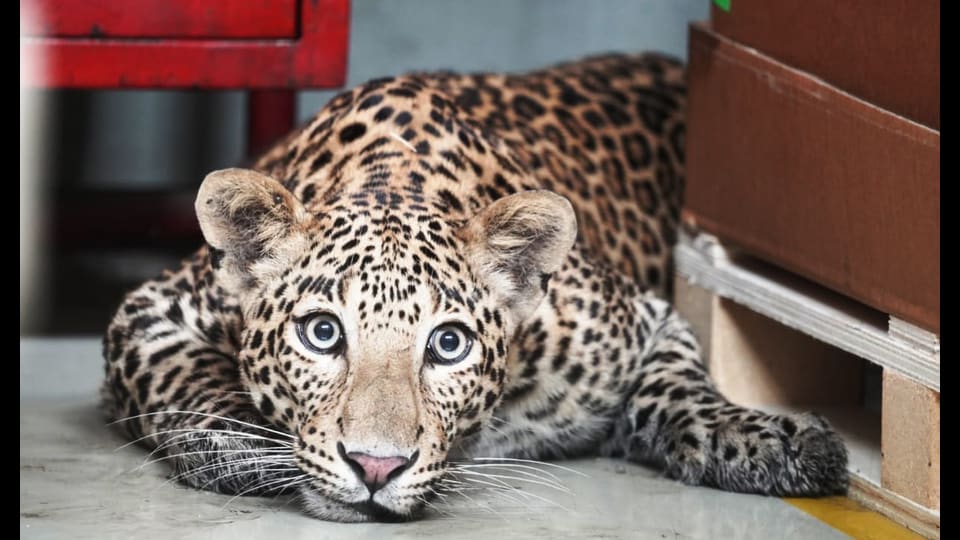
Speaking on condition of anonymity, a senior WII scientist explained that the institute’s team relied on findings from a long-term study of leopard behaviour and movement in Junnar conducted over the past three to four years, alongside detailed data from the Junnar Forest Division.
“Our review suggests that a pilot initiative in Junnar is possible, provided it is done in a controlled and scientifically monitored manner. However, the true feasibility of the project will only be understood after implementation, as it is envisioned as a long-term effort,” he said.
The project, a first-of-its-kind in India if approved, is aimed at curbing the rise in leopard-related incidents by controlling the population through scientific birth control measures.
Over the past few years, Junnar, in Pune district, has emerged as one of the state’s major hotspots for human-leopard conflict. Frequent sightings near human settlements, livestock attacks, and even occasional human injuries have heightened tensions in rural pockets, prompting the Maharashtra forest department to explore innovative interventions.
According to the Junnar forest department, this year one death was reported due to leopard attack. In 2024-25, as many as nine deaths were reported and nine others were injured in leopard attacks. In 2023-24, three people died and ten others were injured, while in 2022-23, as many as four people died and 16 were injured in leopard attacks. In 2021-22, one person died and six others were injured in leopard attacks. In 2019, as many as 21 deaths were reported.
The idea for the sterilization plan was first mooted by the Junnar forest division, which prepared a detailed draft to conduct a pilot project in the tehsil. The principal chief conservator of forest (Wildlife), Maharashtra, forwarded this draft to the MoEFCC in June 2024 for evaluation. The ministry, in turn, referred it to the WII for expert review to assess the feasibility and ethical considerations of implementing sterilization among wild leopards.
Following months of study, WII submitted its report, which endorsed the project — but only within the boundaries of Junnar.
The proposal was drafted by forest officer Amol Satpute during his tenure as deputy conservator of forest in Junnar. Now posted in Satara, Satpute elaborated that the plan targets 115 female leopards captured from five conflict-prone areas in Junnar.
“We have recommended the immunocontraception method for sterilization,” he explained. “Although WII has approved the approach, the final number of leopards to be included will be decided after the MoEFCC’s approval. With the green light from WII, we are optimistic that the ministry will soon clear the project,” he said.
The proposed method, immunocontraception, is a non-invasive technique used in wildlife management across the globe. It involves inducing an immune response in the animal that prevents reproduction without altering natural behaviour or causing lasting harm.
Ashish Thakare, chief conservator of forest, Pune, confirmed that the sterilization plan is one among several proposals sent by the Maharashtra forest department to the central ministry. However, he said his office has not yet received any formal communication about the WII’s report.
“I am aware of the discussions surrounding the project, but regarding the specific WII report, no official intimation has come to us from either MoEFCC or the state forest department,” Thakare said.
The urgency for such interventions stems from a steady increase in leopard sightings and encounters across Maharashtra, not just in Junnar. Districts such as Dhule, Ahilyanagar, Nashik, and Solapur have reported similar incidents, with occasional fatalities. The problem is not unique to Maharashtra; states like West Bengal are also witnessing rising leopard-human conflicts.


