This is going to sound like I am making this up. But it actually happened. Keyword: Fall.
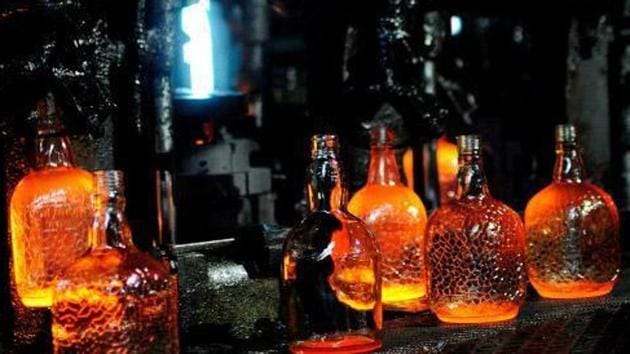
I was stuck in a jam at the erstwhile chhota golchakkar – another one of Chandigarh’s smaller roundabouts removed in favour of traffic lights — on the road that divides Sector 33 and 34. As you do, I was reading the news via Facebook on my phone. ‘The man behind Old Monk is dead,’ said a headline. Moving from one weblink to another, I landed on an analytical report about the fall and fall of the iconic brand. Just then, John Mayer confessed through the car stereo: “I’m a bad boy ’cause I don’t even miss her; I’m a bad boy for breaking her heart. And I’m free, free fallin’, fallin’.”
It was the kind of day when you’re fine hearing bad news. It was the kind of traffic jam in which you think of long-lost love affairs. And, after the sad news, it was the kind of day that you want to end with Old Monk. To a heart hardened by the brutality of daily news, I said, “Tonight, we shall raise a toast to Kapil Mohan.”
Kapil Mohan, 88, was the patriarch of Mohan Meakin that makes the dark rum whose vanilla flavour divides many — those who feel it’s cool to flaunt their love for the drink, and those who feel cool saying they’re not big fans of it. But, whether or not you stop in front of the company gates on the Shimla highway to pay respects, Old Monk’s iconic status is never in dispute.
The last time old lovers who moved on to other affairs felt a similar tug towards Old Monk was two years ago, when a news report said the brand was being discontinued. Soon enough, there were many hoarding bottles. About a week later, another news report appeared, saying that the earlier one was not true. It was time for celebration (no, not Celebration Rum by McDowell’s).
{{/usCountry}}The last time old lovers who moved on to other affairs felt a similar tug towards Old Monk was two years ago, when a news report said the brand was being discontinued. Soon enough, there were many hoarding bottles. About a week later, another news report appeared, saying that the earlier one was not true. It was time for celebration (no, not Celebration Rum by McDowell’s).
{{/usCountry}}On the ground, though, it’s wobbly and not pleasantly so. Old Monk lost its market leadership at the turn of the century and has since been selling a fraction of what Celebration Rum and other brands sell.
The obvious disconnect between market reality and social media buzz was visible even when Kapil Mohan passed away on January 6. First, not a lot of publications took note, or knew. Eventually, the usual flood of ‘content’ and nostalgia — much like this piece — started after a story was actually published two days later. There were tributes, clicks and clinks, and #OldMonk became a Twitter trend to boot.
Facts and myths were resurrected. The most interesting bit was the Amritsar connection of the company, as had been dug out by Arunabh Saikia in a story for the business paper Mint. Edward Dyer, a Scotsman, had set up the original brewery in Kasauli, Himachal Pradesh, in 1855. The Mohans eventually took over, and Old Monk was launched in a distillery by the name of Mohan Meakin in 1954. Dyer, by the way, was the father of Colonel Reginald Edward Dyer, the British army officer who oversaw the 1919 massacre in Jallianwala Bagh, Amritsar.
Trivia aside, Old Monk suffered market setbacks after liberalisation brought in foreign brands, and other domestic brands too upped their game. Then came Ponty ‘Monopoly’ Chadha, and doom was in sight for the Monk. As a new avatar of India’s licence-raj socialism — what they call ‘crony capitalism’ these days — took over, the original socialist brand could not keep up.
A turnaround is still just a theory. “We have seen sales recoup to over 5 million cases after touching an all-time low of 3.5 million a couple of years ago. There will be more action,” company director Vinay Mohan has been quoted as saying. Newer variants, priced higher and deemed premium, are targeted at getting newer converts.
Does that mean Old Monk will do a Bullet? Those familiar with Royal Enfield bikes and their rise, fall and rise will know what I’m saying.
I have a Bullet too, bought for love, rusting at home. As for the love of Old Monk, I am still to keep that promise made to my heart in that traffic jam that day. Tonight then, pakka, John Mayer will sing: “Oh, I’m gonna leave this, this world for a while. Now I’m free, free fallin’, fallin’.”