Covid-19 has and will continue to exacerbate many of the socio-economic problems that we already face. One of the most challenging is that of nutrition, or rather the lack of it, in many places. The government is working to ensure that people don’t go hungry, but the coronavirus has thrown up unprecedented scenarios which must be addressed.
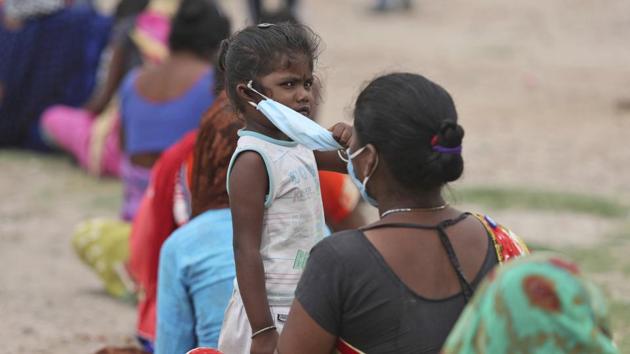
As is always the case in situations of disasters and pandemics, those affected the most are women and children. India already bears a disproportionate burden of malnutrition in the world.
The government is trying its best to ensure that rations are increased but with migrant populations on the move, getting food to them is a problem. Many outreach programmes involving food security are not functioning or functioning poorly thanks to the prolonged lockdown and reassignment of priorities in the welfare schemes. Simply providing rice or dal does not amount to nutrition, especially for pregnant women, lactating mothers or children. The disruption of the cooked meal programme for children under the Integrated Child Development Scheme (ICDS) at the village level will worsen the already existing under-nutrition in children. India ranks highest in wasting among children in the world. The Centre had earlier advised states to distribute dry rations to the beneficiaries of ICDS, but the lockdown led to the closure of many manufacturing units which make raw materials for these items.
Another problem is that when packages reach, given the patriarchal nature of society, it is often not given to the women and children but to male members of the family. Migrant women and children are most at risk as they have the least access to nutritious food. Food distribution by well-meaning citizens and non-governmental organisations (NGOs) is no substitute for proper State-run food schemes. Many workers who were earlier engaged in food distribution schemes have now been commandeered into Covid-19 work such as testing and tracing, further reducing the chances of proper nutrition reaching those who need it most. Sixty-nine per cent of under-five deaths among children can be attributed to malnutrition in India, according to Unicef. This will increase due to the pandemic.
{{/usCountry}}Another problem is that when packages reach, given the patriarchal nature of society, it is often not given to the women and children but to male members of the family. Migrant women and children are most at risk as they have the least access to nutritious food. Food distribution by well-meaning citizens and non-governmental organisations (NGOs) is no substitute for proper State-run food schemes. Many workers who were earlier engaged in food distribution schemes have now been commandeered into Covid-19 work such as testing and tracing, further reducing the chances of proper nutrition reaching those who need it most. Sixty-nine per cent of under-five deaths among children can be attributed to malnutrition in India, according to Unicef. This will increase due to the pandemic.
{{/usCountry}}The government has to work out nutrition intervention strategies now. It must use the cluster mapping underway for Covid-19 to identify rural areas and urban slums first, to target which of these suffer from severe nutrition crises. Covid-19 has also led to women and children staying away from nutrition centres set up in many states. One answer is to step up the take-home rations (THR) programme under ICDS.
Effective distribution of adequate THR for children and pregnant women, and interventions to ensure that these are consumed by those for whom it is meant, are essential. This could include effective messaging, implementing cash transfers, and livelihood interventions to make sure that the other members in the family are taken care of.
The poor are not just facing the loss of livelihoods, but also huge price rises. As mentioned in this column earlier, the panchayat system should be mobilised to activate local food supply chains and introduce mobile vegetable and fruit supplies. Local food banks can be set up with an emphasis on locally available products. Just providing basic food to stave off hunger is not enough for children and women.
The post-Covid-19 world will bring with it the monumental task of rebuilding our social security schemes. If the Centre, in consultation with state governments, begins the task of putting nutrition for women and children at the centre-stage now, we will get a head-start on this front.