Union minister Harsimrat Kaur Badal has resigned citing her distress with the growing discontent among Punjab’s farmers, while, her party, the Shiromani Akali Dal (SAD) will remain in the National Democratic Alliance (NDA). What she has done is known as political positioning. That is what the Shiv Sena (SS) and the Telugu Desam Party (TDP) had done earlier. TDP leaders resigned from Cabinet a year before the 2019 elections in Andhra Pradesh. The TDP lost the election badly. In contrast, SS ministers remained in the Cabinet till the end. They contested the 2019 assembly elections with the Bharatiya Janata Party (BJP), but smelling power in the state, quit.
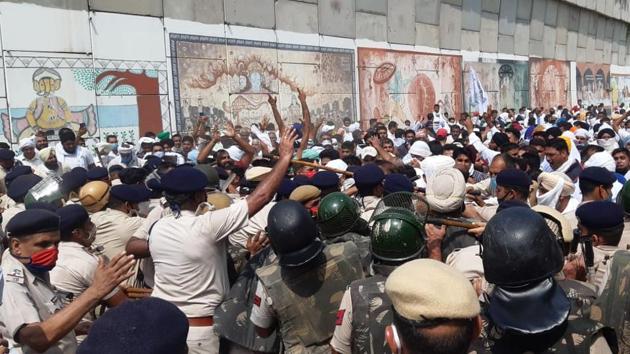
If SAD wants to protest, it should not employ double standards. In politics, there are very few examples of people rejecting privilege to work for the disadvantaged. Take one. In 1954, the Praja Socialist Party (PSP) formed a government in Travancore (now Kerala) with support from several parties. There was, at the time, an agitation for a separate state for the Tamil- speaking areas of Madras presidency. The police opened fire on peaceful protests, killing 15 people, including students and farmers. Ram Manohar Lohia was the general secretary of the PSP, and was in jail. The next morning, he sent a telegram, seeking the resignation of then chief minister (CM) Pattom Thanu Pillai. The CM did not resign immediately, but the party split and the government fell shortly after.
Farmers’ concerns have not been addressed for decades. India has only one model of agrarian success, the Green Revolution. There is talk of a second Green Revolution but not much has happened. I belong to Doab (the land between the Ganga and Yamuna). When millions of people returned to their villages because of the pandemic, they did not find shelter in the land of their forefathers. They lost their jobs in the cities and agriculture was not able to sustain them.
{{/usCountry}}Farmers’ concerns have not been addressed for decades. India has only one model of agrarian success, the Green Revolution. There is talk of a second Green Revolution but not much has happened. I belong to Doab (the land between the Ganga and Yamuna). When millions of people returned to their villages because of the pandemic, they did not find shelter in the land of their forefathers. They lost their jobs in the cities and agriculture was not able to sustain them.
{{/usCountry}}The Centre has passed two bills on agricultural reforms. Under the Framers’ Produce Trade and Commerce (Promotion and Facilitation) Bill, farmers will be able to sell their produce anywhere in the country. On The Farmers (Empowerment and Protection) Agreement of Price Assurance and Farm Services Bill, 2020, the government claims that the farmers’ income will increase and middlemen will be cut out. Earlier, the Essential Commodities (Amendment) Bill had been passed, which provides that grains, pulses, edible oils, potatoes, onions will not remain essential commodities. The government believes that this will attract foreign investment in agriculture.
Those opposed to this say that with the abolition of the current mandi structure, farmers will not get the Minimum Support Price (MSP). This could give private companies a means to exploit farmers. Traders will hoard and there will be volatility in food prices. This will end food security and increase the black market in essential commodities.
Prime Minister (PM) Narendra Modi has responded strongly saying that the system of MSP and government procurement will continue. Some BJP-run state governments have done well in getting farmers a fair price for their produce. The Uttar Pradesh government has distributed Rs 21,889 crore to farmers over the last two years.
About 86% of farmers have less than two hectares of land, hardly enough to feed their families. Little wonder then that, according to the National Crime Records Bureau, 42,480 farmers and daily labourers committed suicide last year, though the Union agriculture minister said in the Lok Sabha last Tuesday that state-wise figures for farmers’ suicides have not been available since 2016. But the truth is that farmers in several states are in a state of distress and ferment.
India is going through an unprecedented crisis. Tensions along the border with China, the lethal impact of the Covid-19 pandemic and the dismal economic situation have raised anxieties and apprehensions. At such a time, agrarian unrest will make things much worse.
Shashi Shekhar is editor-in-chief, Hindustan
The views expressed are personal