The twin aims of literature, the 17th century English poet John Dryden said, were to instruct and delight. What might be the aim of sport? Rather, what is the purpose of sport to those who are merely fans, who follow and watch sport but have no stake in it in terms of money or a career?
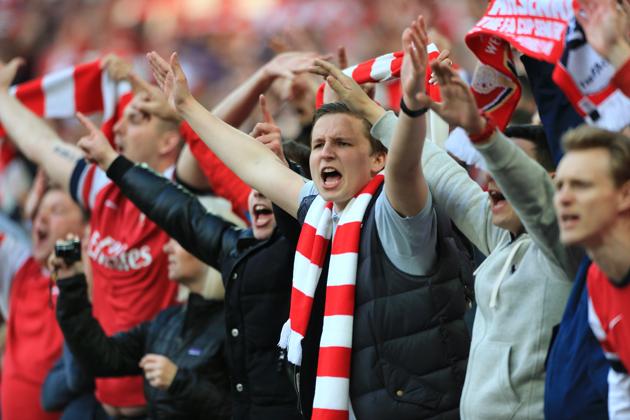
In the first month of the new year, it is worth exploring why we, as fans, make such huge investments in emotion and time on it, why we care about it to the point of obsession, why it is such an important part of our lives.
It is because sport is a window on to a parallel — perhaps better — universe, one that offers us unbounded joy, optimism and delirium.
On May 17, 2014, Arsenal, the football club I support, won the FA Cup. I watched the final at home with my daughter, who, like me, supports Arsenal with borderline crazy passion. In all her years as a fan (she was 12 at the time), she had never seen her team win a trophy. It had been 3283 days since Arsenal’s last piece of silverware.
In fewer than 15 minutes, Arsenal was 0-2 down. The wretchedness that Arsenal fans are familiar with began to engulf us. Not just my daughter and me. All our other fellow fans, in various parts of the world, watching in various time zones, who were in touch on text messages, began to despair. Bottled it. Again. Talk swirled of all the other finals we had let slip away. Then a sumptuous Santi Cazorla free kick made it 1-1. Arsenal left it till late in the game to equalise. But, after a nerve shredding period of extra time, a flick from the boot of Aaron Ramsey won the game. Arsenal. Champions again. The trophy drought was over. And the year was made for a certain 12-year-old, and thousands of other 12-year-olds, across the world.
{{/usCountry}}In fewer than 15 minutes, Arsenal was 0-2 down. The wretchedness that Arsenal fans are familiar with began to engulf us. Not just my daughter and me. All our other fellow fans, in various parts of the world, watching in various time zones, who were in touch on text messages, began to despair. Bottled it. Again. Talk swirled of all the other finals we had let slip away. Then a sumptuous Santi Cazorla free kick made it 1-1. Arsenal left it till late in the game to equalise. But, after a nerve shredding period of extra time, a flick from the boot of Aaron Ramsey won the game. Arsenal. Champions again. The trophy drought was over. And the year was made for a certain 12-year-old, and thousands of other 12-year-olds, across the world.
{{/usCountry}}The heart stopping delirium of it. The goofy grin that we could not wipe off our faces the morning after. The watching of the highlights on a loop.
Think of any favourite sporting triumph. Think of the 1983 cricket World Cup. Or India winning against Australia at the Eden Gardens in 2001. Or John McEnroe beating Bjorn Borg in the 1981 Wimbledon final. What is there to match these moments?
Grown men shouting and jumping in their living rooms, watching on TV and urging on players in action thousands of miles away, believing that their imprecations or exhortations can influence the course of play. Well, not quite believing. But just not being able to help themselves. It is what fandom does to you.
At the same time, I know that a famous victory for the team I adore has no material implication for me. Sport is a window on to a parallel universe because neither its joys nor its disappointments have any bearing on my job or my family or my real, lived life. It is an otherworldly thing, and so much the better for it. It means nothing to my life as I know it. And yet, it means everything. The joy sport offers is pure. It is almost an abstraction.
There was a time when sport used to consume my life. Now, I need to make space for it in the clutter and frenzy of a middle aged, working parent’s life. But make space for it I do. It preserves my sanity. I know that, when I am no longer middle aged, no longer working, and become a parent whose child has left home, I will still have sport to fall back on. At the flick of a switch, the press of a button or the click of a mouse, I will be able to summon those familiar images, those thrills, that other world.
Yes, that other world with its unique joys. As Nick Hornby writes in the closing pages of his book, Fever Pitch: “So please, be tolerant of those who describe a sporting moment as their best ever. We do not lack imagination, nor have we had sad and barren lives; it is just that real life is paler, duller, and contains less potential for unexpected delirium.”
–Spinoff appears every fortnight