
 E-Paper



The challenges of upward mobility | Opinion
The social justice project in India needs to transform and move beyond reservations

 Prefer HTon Google


One of the biggest questions facing India has been the issue of social justice. In a highly diverse, yet unequal, society, with multitude of regional variations, ensuring social justice has proven to be an unsurmountable challenge.
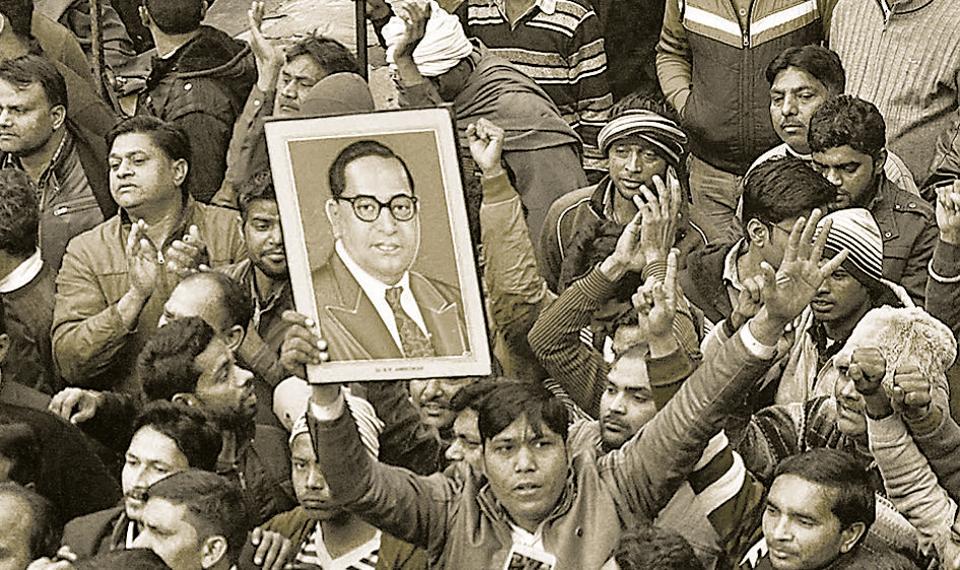
Unlike the colonial stereotype, India has not been a stagnant, other-worldly society, devoid of ideas of equality and egalitarianism.There are long traditions of egalitarianism in India. The central question in the idea of social justice in India has been the caste system and the debilitating effect it has on large sections of the society. And the worst manifestation of the caste system has been untouchability. It is, therefore, untouchability that became the central point of the discourse of religious and social reformers.
In fact, the removal of untouchability and the intermingling of castes were major themes of the Tantra and Bhakti movements that swept India in the medieval and early modern age. From the Virasaiva movement in the South to the Nath Sampradaya in the North, from Tukaram in the West to Kalachand Vidyalankar in the East, the argument against caste-based exclusion formed the core of the social vision, and was expressed using religious epistemology. Protest against caste discrimination was a common thread running across poet-saints, scattered across regions and centuries. From Chokhamela and Janabai to Kabir and Ravidas to the Kartabhaja movement and Matua Mahasangh, it was this imagination of a world without caste discrimination that drove their criticism of the social orthodoxy.
This idea of social justice deepened further in the modern era when, under British rule, the advent of the capitalist modernisation and colonial modernity started to transform society. The demand was no longer limited to merely ending untouchability, and throwing open temple doors to the masses. The idea of social justice became the idea of representation in jobs and the legislature. In the earlier discourse, the argument was largely limited to treating everyone equally, irrespective of caste. But the logic of caste — birth-based professions itself — was not sought to be superseded. However, from the 19th century, this became the central idea of the social justice discourse.
The demand for representation ultimately led to caste-based reservations. This was natural, as reservations only make sense when discrimination and exclusion is based on ethnic or caste identity, irrespective of the individual in question. The policies of Chhatrapati Shahu Maharaj or Justice Party in the pre-Independence-era laid the foundations of the reservation system. But it was the Rajah-Moonje pact between MC Rajah and Hindu Mahasabha leader, BS Moonje, and six months later, the Poona Pact, that sealed the idea of representation via reservations as the core of the social justice discourse. It is interesting to note that both pacts were signed between Dalit leaders and representatives of what is today called the “Hindu Right”. Though the Poona Pact is famously known as the Gandhi-Ambedkar pact, Gandhi didn’t sign it. Instead it was signed by the likes of Pandit Madan Mohan Malviya.
Since then, the policy of reservations has only deepened to include more and more disadvantaged castes till it encompassed the Other Backward Classes in the 1990s, and upper castes under the Economically Weaker Section category in 2019. The idea of social justice revolved around ensuring actual and effective implementation of reservations. But with increasing representation in legislature, educational institutions and jobs, the limits of reservations are being reached.
Social justice can no longer be reduced only to the demands of the representation via caste-based mobilisations. What we see today is an increasing desire for socio-economic mobility. The new India craves for socio-economic mobility, not just the end of untouchability and exclusion, or caste representation.
This is easier said than done. Even in countries like the United States of America, inter-generational socio-economic mobility is highly restricted. The recent work of the economist, Raj Chetty, among others, has revealed that the social background, or the neighbourhood one belongs to, has significant impact on future income. Social capital is one of the central factors in economic mobility. And a history of discrimination has a debilitating inter-generational impact on communities lasting centuries.
This is something we know very intimately in India, but refuse to acknowledge. Our political class, too, is stuck in the 20th century framework of thinking. Even parties claiming to represent Dalits, backwards, and the poor have failed to understand the shift — something that was clearly visible in the 2019 elections.
The long history of discrimination, deeply entrenched closed-door caste networks actively blocking new entrants, a high degree of economic inequality, and opposition to universal education means that the gap between the upward mobility that people want and what they can actually achieve will increase. This will lead to discontent and social unrest in a young country. It is time for us to seriously start thinking about the challenges of socio-economic mobility which is fast becoming the idea of social justice rather than mere representation.
Abhinav Prakash Singh is an assistant professor at SRCC, Delhi University
The views expressed are personal


