With 303 seats, Narendra Modi and Amit Shah have together scripted history. And with this victory, the transformation of India’s political landscape, a process that began in 2014, is now complete.
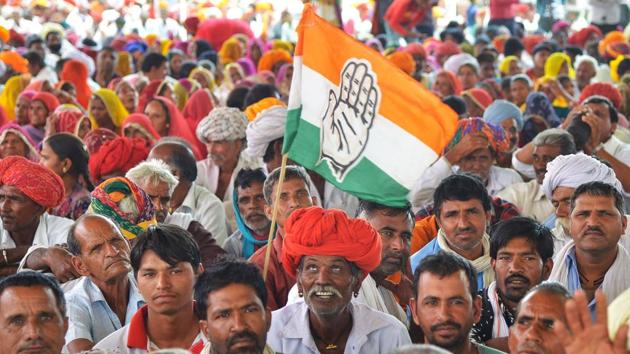
The Bharatiya Janata Party (BJP) has now firmly entrenched itself as India’s dominant national political party, pushing an already marginalised Congress into further irrelevance. Not only has the BJP enlarged its footprint to new areas — West Bengal, Odisha, even Telangana — it has won nearly every battle it fought directly against the Congress with a strike rate, as Neelanjan Sircar has analysed, of 93%. The Congress is now a marginal player even in states such as West Bengal and Odisha, where it remained till yesterday the principal Number 2. For all the heated debates of the last few days over the future of the Congress (should it die? what is its relevance?) this verdict has made one thing clear: at least electorally, the Congress has brought on its own slow death. This is why it suits the BJP to position itself in direct opposition to the Congress and win again and again. It is the regional parties and not the Congress that will provide the principal challenge to the BJP. And to them, the BJP is emerging as a formidable opponent.
But more importantly, with this victory, the BJP has turned on its head all the accepted frameworks through which we analysed Indian politics. The logic of vote transfers and caste arithmetic no longer apply to national elections. This was a trend that began in 2014 and the unexpectedly weak performance of the mahagathbandhan (grand alliance) in Uttar Pradesh suggests that this trend is now entrenched. For everyone who argued that 2019 may turn out to be like 2004, they missed one important fact (beyond the Namo factor). India is going through a massive social transition and we know relatively little about these changes and how these impact voter choices. This election is a testament to a changing India, one that is fundamentally upending all old assumptions about our polity. If the hegemony of the BJP is to be challenged, it cannot be done through old school caste arithmetic and alliance politics. A new framework will need to emerge.
{{/usCountry}}But more importantly, with this victory, the BJP has turned on its head all the accepted frameworks through which we analysed Indian politics. The logic of vote transfers and caste arithmetic no longer apply to national elections. This was a trend that began in 2014 and the unexpectedly weak performance of the mahagathbandhan (grand alliance) in Uttar Pradesh suggests that this trend is now entrenched. For everyone who argued that 2019 may turn out to be like 2004, they missed one important fact (beyond the Namo factor). India is going through a massive social transition and we know relatively little about these changes and how these impact voter choices. This election is a testament to a changing India, one that is fundamentally upending all old assumptions about our polity. If the hegemony of the BJP is to be challenged, it cannot be done through old school caste arithmetic and alliance politics. A new framework will need to emerge.
{{/usCountry}}And this is where the real challenge for India lies. Make no mistake. Regardless of the strengths and many weaknesses of the Modi government’s first five years in power, the BJP sought re-election entirely on the back of its ideological project. This was not an election about performance nor was it about future promise. From the deeply communal tone of the election speeches of many of its party leaders, including Amit Shah and the prime minister himself, and the effort to mainstream deeply polarising figures such as Pragya Thakur and bringing them to Parliament, for the BJP, this was an election to achieve ideological dominance.
The Congress, on the other hand, failed to provide an alternative ideological counter point. As this column has argued previously, in refusing to engage in a direct debate with the BJPs majoritarian agenda, in shying away from a real debate on secularism and reclaiming the “Idea of India” and instead nervously seeking to reaffirm its Hindu credentials the Congress presented itself to the voters not as an alternative to the BJP’s ideological agenda but rather as a sad imitation of the BJP. The PM’s remarks on secularism in his victory speech illustrate this.
The Congress undoubtedly did try and build a campaign on critical issues of the economy and it produced a manifesto that was refreshing in its policy ideas. But here is the problem. You cannot fight an ideological battle through policy. Ideological agendas need to be challenged through counter ideas, not technocratic policy. In the days to come, much debate is going to take place on the failures of Congress: its dynastic leadership; its failure to effectively market Nyuntam Aay Yojana (Nyay); and its weak party organisation. But the real challenge for the Congress is its unwillingness to be courageous and articulate an ideological counterpoint to the BJP’s hegemony. And without this alternative, the BJP’s hegemony is going to continue, unchallenged.
So has the BJP succeeded in its ideological project with this victory? Is the idea of a secular, plural India a relic of the past? I would be cautious to rush to judgement. As many journalists on the campaign trail, including reports in this newspaper, have pointed out, voters have chosen to re-elect Modi for a range of reasons, including ideology. These will need to be better understood both for social scientists and, more importantly, opposition parties as they seek to reinvent and redefine themselves.
But for the moment, India’s secular, plural foundations are in peril. In his victory tweet, perhaps for the first time since the 2019 campaign began, Modi reiterated his old promise of “Sabka Saath, Sabka Vikas”. Even if Modi, finally, turns his attention to “vikas” (development), the forces he has unleashed are unlikely to be contained. Rather in victory they will be louder and even more pernicious.
Yamini Aiyar is president and chief executive, Centre for Policy Research
The views expressed are personal