I’m sure that Manushi Chillar’s recent testimonial to mothers made many people fondly remember their own. It certainly made me think of mine. With that, alas, went thoughts about the struggle between perception and reality for women. However, while the bad news on that front is never in short supply, it might be nice to remember some traditional notions about the mother. This is not to ‘glorify’ biological motherhood but to appreciate the quality of motherhood or vatsalya bhava that all of us possess as human beings; the key to many an affectionate relationship.
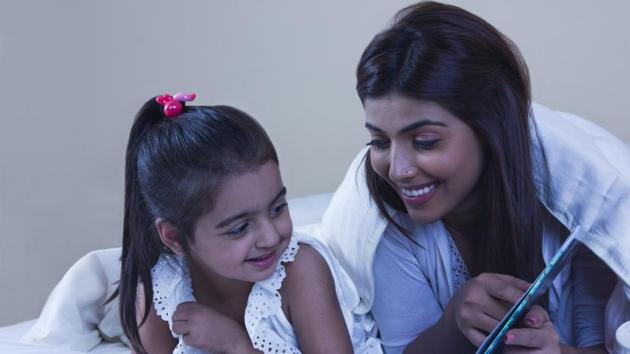
The mother is revered as one’s first guru in the saying ‘mata-pita-guru-deva’. Usually, it is she who teaches us not only the a-b-c-d of existence but also our human duty, and to respect the father. Our parents, if so minded, acquaint us next with a spiritual teacher, who, if genuine, is supposed to lead us to God.
Meanwhile, I’ve heard it said in religious discourses that the Dharma Shastras hold duty to one’s mother paramount. Apparently the shastras go so far as to say that if one’s father is a person of bad character, one may ask him to leave the household. But a mother, even if a disruptive presence, should never be abandoned or turned out. Rather, the family should put her on the emotional backfoot with unrelenting kindness and win her over to civility.
I would timidly suggest that an outstanding example of this is Rama. Bharata, as a person of honour, spurns his mother Kaikeyi not just for the shame brought on him but even more for the injustice and suffering caused to a caring person like Rama, who was especially attached to her. But Rama and Sita are so gently behaved and without a trace of reproach when Kaikeyi meets them in Chitrakoot that it stuns Kaikeyi. These two young adults, a man of twenty-four and a woman of eighteen, behave like mothers to her.
{{/usCountry}}I would timidly suggest that an outstanding example of this is Rama. Bharata, as a person of honour, spurns his mother Kaikeyi not just for the shame brought on him but even more for the injustice and suffering caused to a caring person like Rama, who was especially attached to her. But Rama and Sita are so gently behaved and without a trace of reproach when Kaikeyi meets them in Chitrakoot that it stuns Kaikeyi. These two young adults, a man of twenty-four and a woman of eighteen, behave like mothers to her.
{{/usCountry}}Like Valmiki, Adi Sankara, the acharya of acharyas or teachers in this tradition must have felt deeply for Bharata and appreciated Kaikeyi’s change of heart. A clue to this conviction lies in Acharya’s beautiful poem, Sri Rama Bhujangam. In it, Acharya alludes twice to Bharata as ‘Kaikeyi-nandan’ or ‘Kaikeyi’s joy’, which shows a charming restorative intention.
In fact, the mother goddess appeared as the ultimate guru to seekers in the tradition. Two famous recipients of her grace and favour were Tenali Raman in 16th century Hampi, the capital of Vijayanagar, and Mahakavi Kalidas of fourth century Ujjain. It seems Kalidas evoked compassion in the mother goddess and Tenali Raman, amusement.
Less known is Mooka Kavi, the poet without speech, said to have lived in the third century at Kanchipuram. Five hundred verses of praise poured from him after a vision of Kamakshi Devi as the ultimate guru, like ‘kundali kumara kutile chandi charachara savitri chamunde/gunini guharini guhye gurumurte tvam namami kamakshi’. My granny had this fabulous verse in her prayer book in which I also found a postcard of Mary holding Baby Jesus; an endearing affirmation, indeed, of mothers as gurus.
shebaba09@gmail.com
Views expressed are personal