If there was any doubt that the government’s last budget was framed squarely with an eye on the next elections, Prime Minister Narendra Modi quelled it on Saturday. Addressing a rally in West Bengal — a state in which the Bharatiya Janata Party (BJP) has invested remarkable political energy — he spoke about the direct income transfer to farmers, and how the main budget after the elections will have much more for all sections of society. The budget, Modi’s speech, and before that Congress president Rahul Gandhi’s announcement of giving a minimum guaranteed income to all poor citizens and his promise of farm loan waiver illustrates a key axis on which the election will be fought: class.
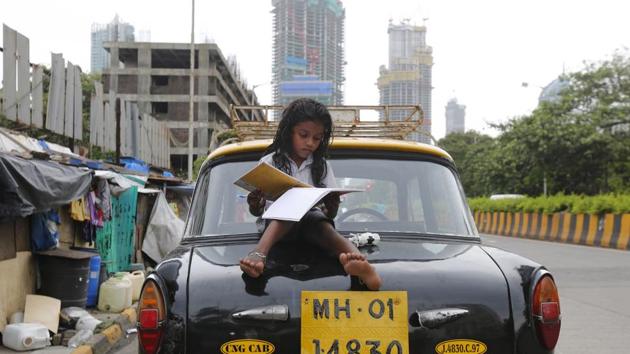
The Indian class structure now is remarkably complex. Those who still see society divided into the brackets of haves and have nots or an India and a Bharat are perhaps too simplistic in their assessment. The class structure now includes the tiny set of exceptionally wealthy; a substantial upper middle class; a rapidly expanding urban middle and lower middle class; a growing segment of urban poor (primarily workers in the unorganised sector) with dense networks back in rural India; the landed well-to-do rural big farmers who have children working in the modern, organised economy in urban India; a large pool of small and marginal farmers in villages who also turn into seasonal migrant labour in cities; and the deprived, landless labourers.
This class structure is pyramid-like, with the poorest in both urban and rural settings constituting the wide base at the bottom. Every party, irrespective of whether it is from the right or left, seeks to win over this huge segment. Every party, therefore, is constantly projecting itself as pro-poor. The criticism that stung the BJP the most in its early years in office was being portrayed as a “suit boot ki Sarkar”, for it felt this could be interpreted as being anti-poor. Both the BJP and Congress — with their recent announcements — want to occupy this space of being sensitive to the poor.
{{/usCountry}}This class structure is pyramid-like, with the poorest in both urban and rural settings constituting the wide base at the bottom. Every party, irrespective of whether it is from the right or left, seeks to win over this huge segment. Every party, therefore, is constantly projecting itself as pro-poor. The criticism that stung the BJP the most in its early years in office was being portrayed as a “suit boot ki Sarkar”, for it felt this could be interpreted as being anti-poor. Both the BJP and Congress — with their recent announcements — want to occupy this space of being sensitive to the poor.
{{/usCountry}}But national parties have to go beyond just one segment and construct multiclass coalitions. The BJP won close to 18 crore votes in 2014, and the Congress, despite its dismal tally of 44 seats, got more than 10 crore votes. This means they won support, in varying degrees, from people across the economic ladder. And that is why they are going beyond the poor to get other classes, with the BJP emphasising on middle class tax benefits, and social safety net for workers and the Congress critiquing the government’s failures on job creation and growth.
But there is one other axis which is closely linked to class: caste.
There is a major overlap between the two in India. If you are a Dalit, there is a higher probability of you being a landless labourer or a poor worker or uneducated or all of the above. If you are from an upper caste community, there is a higher chance you will get a good education, enter the organised workforce, earn higher salaries, occupy leadership positions in bureaucracy or the private sector. This does not mean all Dalits are poor and all upper castes are affluent. But caste identity is a key determinant of your social status; it is often the basis of upward mobility or social discrimination; and thus it becomes the basis of political mobilisation.
But single caste parties, in a first past the post system, don’t go very far. Therefore it becomes important for parties to construct multicaste coalitions. This requires a strong element of caste management, in terms of having representatives from diverse social groups for different seats, carving social alliances, distinct messaging.
Take Uttar Pradesh (UP). The BJP’s 2014 and 2017 successes were based on creating a coalition of the dominant castes (Brahmans and Thakurs) with subaltern castes (non Yadav OBCs and non Jatav Dalits). By emphasising that it has protected the existing framework of reservations while giving reservations to economically weaker sections, the BJP is trying to keep together such a multicaste coalition. On the other hand, by coming together in UP, the Samajwadi Party and the Bahujan Samaj Party have brought together a coalition of Muslims and Dalits — the poorest of the communities in the state — with Yadavs, who are a more dominant landed group.
While a lot of focus in elections is on the issue of leadership and candidates, it is actually this twin axes of class and caste, which will be key in 2019. The national party which is able to convince the urban middle class, the urban poor, the small farmer, and the rural landless that it can improve its quality of life and incomes will do better. Almost as a logical extension, the parties which are able to tell those castes which have traditionally been considered dominant that their prospects will not be jeopardised, while also telling the oppressed castes that their future would be safeguarded and a level playing field will be created by giving them asymmetric advantages, will do better. Pulling off these contradictory messages across classes and castes will be the true political test for parties and will determine who wins 2019.
letters@hindustantimes.com