In ancient Rome, in 45 BC, Julius Caesar is said to have banned wheeled traffic in the city centre during the daytime because of traffic congestion, a diktat that was also imposed by Roman emperors in later years such as in the first century AD, when Hadrian put a limit on the number of vehicles that could enter Rome. In a fascinating book titled Traffic and Congestion in the Roman Empire, Cornelis van Tilburg, a researcher of ancient infrastructure, studies the traffic system of that era: road networks; toll points; and the different measures taken to regulate traffic. Traffic congestion in cities is not, therefore, a modern malaise; it has been there since ancient times. But JC and the emperors who succeeded him had it way easier than today’s administrators; given that vehicles in their time were animal-drawn, they may have had to tackle traffic jams but not pollution.
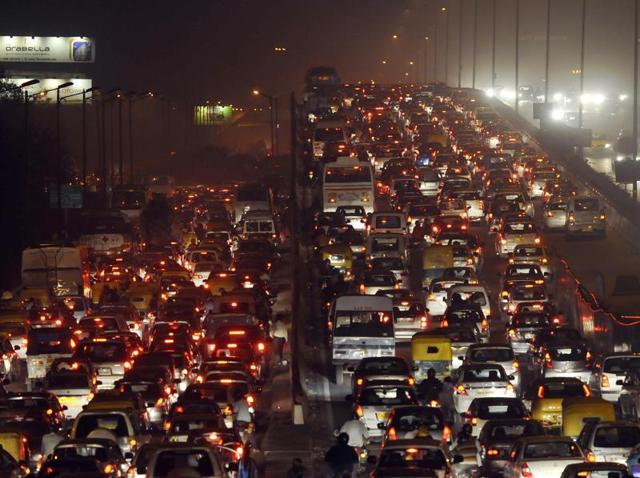
Today’s city administrators, as Delhi’s chief minister Arvind Kejriwal is realising, have it much tougher. Growing urban traffic can result in congestion but also, as Delhiites are discovering, alarming levels of pollution, which has adverse implications for the health of citizens. In winter, as a widely quoted IIT Kanpur study has found, 60% of the causes of poor air quality in Delhi is on account of vehicular emission and secondary particulates; in summer, it is 25%. Besides, in both seasons, waste burning, construction and road dust add considerably to pollution levels, which are on most days (measured by the concentration of suspended particulate matter of different dimensions) much higher than permissible limits.
Read: The time has come to clear Delhi’s air, Mr Kejriwal
Mr Kejriwal’s government has declared Delhi’s air quality situation as an emergency: it will shut down coal ash-spewing thermal power plants on Delhi’s fringe; it will crack down on the practice of burning garbage; and from next spring deploy powerful vacuum cleaners to rid Delhi’s roads of dust. But the most contentious of the proposals has been the decision to try and halve the number of cars that ply on Delhi’s roads by allowing only those with odd-numbered licence plates on one day and even-numbered ones on the next. It’s a practice that has been followed by many cities around the world. Beijing tried it during the 2008 Olympics to reduce air pollution and again more recently but it has been prevalent in Latin American cities for decades. In Brazil’s São Paulo metropolitan area, where there are 6.2 million cars for a population of nearly 20 million, road space rationing has been in vogue since 1996. In comparison Delhi has a car population of around 2.8 million and according to a four-year-old census, a quarter of its workforce goes to work using private vehicles.
{{/usCountry}}Mr Kejriwal’s government has declared Delhi’s air quality situation as an emergency: it will shut down coal ash-spewing thermal power plants on Delhi’s fringe; it will crack down on the practice of burning garbage; and from next spring deploy powerful vacuum cleaners to rid Delhi’s roads of dust. But the most contentious of the proposals has been the decision to try and halve the number of cars that ply on Delhi’s roads by allowing only those with odd-numbered licence plates on one day and even-numbered ones on the next. It’s a practice that has been followed by many cities around the world. Beijing tried it during the 2008 Olympics to reduce air pollution and again more recently but it has been prevalent in Latin American cities for decades. In Brazil’s São Paulo metropolitan area, where there are 6.2 million cars for a population of nearly 20 million, road space rationing has been in vogue since 1996. In comparison Delhi has a car population of around 2.8 million and according to a four-year-old census, a quarter of its workforce goes to work using private vehicles.
{{/usCountry}}Much of the consternation that Mr Kejriwal’s proposal to ration road space has given rise to is on account of the fact that Delhi’s public transport system is either messy, inadequate or both. The city’s Metro network is used by 2.6 million commuters daily but during peak hours the 220 trains that run come up short, resulting in over-crowding and long waits; and although 3.5 million people commute by bus, the 4,500-strong fleet needs to be more than doubled to match demand. The other issue raised about the ‘odd-even’ proposal is how it will be enforced in a city-state where the track record of motorists obeying traffic rules isn’t exemplary.
Read: Alarming Air Pollution is what Kejriwal must fight
The good news is that there are plans to augment the number of trains on the six metro lines and add more coaches to trains; and Mr Kejriwal’s government says it will buy 5,000 new buses. But it’s the second issue that needs more attention. The only way the road space rationing system will work is if Delhiites allow it to. That can happen if instead of trying to hoodwink the law and find ‘jugaad’ solutions, communities think positively. Offices could stagger their staff’s work timings so that fewer cars ply in any given time band; or operate small feeder services to and from metro stations; and reward employees who car pool or take public transport. You can think of a dozen more ways to make it work.
Tilburg’s book on Rome’s traffic also mentions how some of the measures to de-congest the ancient city failed — because of disinterest of politicians and citizens. Let’s hope that’s not repeated in Delhi centuries later.
(Sanjoy Narayan is the editor-in-chief of Hindustan Times. He tweets as @sanjoynarayan)
Read: Delhi pollution: We share the air, must share responsibility too