Most sports have significant home-ground advantages. Cricket is not an exception. An analysis of all international Test and One-day International (ODI) matches in the last three decades (since 1988) shows that the home team has a much greater win percentage (nearly 59%). Interestingly, venues do not seem to have much effect on win percentage in the newer T-20 format, where it is close to 50% for both the visiting and home team.
While headline numbers suggest that Tests and ODIs are equally biased in favour of the home team, things have been changing with time. A decade-wise analysis (since 1988) of home-team performance shows that Tests have become more biased in favour of home teams, while ODIs have seen a declining advantage for the hosts. (Chart 1 here: decade-wise wins in Tests and ODIs)
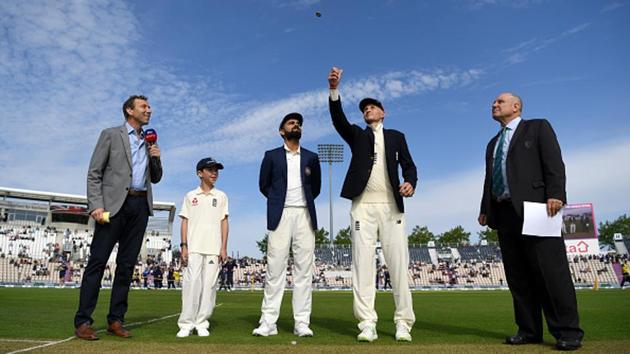
One reason why cricket might be biased in favour of the home team is the toss. Both weather and pitch conditions can be exploited better if a team can decide whether to bat or field first. This is more so in the case of Tests, which can go on for five days. A home team winning the toss can significantly tilt the balance of the game in its favour.
A briefing note circulated before the International Cricket Council’s cricket committee meeting in May, 2018 has talked about doing away with the toss in Tests and leaving the decision on whether to field or bat first on the visiting team, but decided against it. The toss is already semi-optional in first-class county matches in England. The visiting captain can opt to bowl first.
{{/usCountry}}A briefing note circulated before the International Cricket Council’s cricket committee meeting in May, 2018 has talked about doing away with the toss in Tests and leaving the decision on whether to field or bat first on the visiting team, but decided against it. The toss is already semi-optional in first-class county matches in England. The visiting captain can opt to bowl first.
{{/usCountry}}Will doing away with the toss reduce the advantage to the home team in Test cricket? To answer this question, we have broken down Tests match into four categories for a team: where the team wins/loses the toss while playing at home (H-TW/H-TL) and where the team is a visitor and wins/loses the toss (A-TW/A-TL). If the toss were to be done away with in favour of the visiting team, future Tests will only have two of the four categories listed above: H-TL and A-TW.

Chart 2 shows the percentage of wins for four Test teams; India, England, Australia and South Africa; in each of these categories since 1988. We take individual teams rather than total figures here because the latter method would cancel out of effects of home team and visiting team. (Chart 2 here: H-TL, A-TW, H-TW and A-TL win percentage)
As can be seen, the win percentage under both H-TW and H-TL are significantly higher than those under A-TW and A-TL. To be sure, the win percentage under A-TW is greater than A-TL for three out of the four teams considered in our analysis. This means that while awarding the toss to a visiting team might increase the probability of its winning the Test compared to when it loses the toss, it will not do away with the disadvantage associated with playing outside.
(Atanu Biswas is a professor at Indian Statistical Institute, Kolkata)