It sounds only fitting to know that India’s first finest wicket-keeper was responsible for giving Indian cricket its best ‘keeper batsman. Years ago, when Syed Kirmani – India’s first World Cup winning wicket-keeper – was the chairman of selectors with the Indian cricket team, his eyes spotted a talent who would not only go on to become India’s answer behind the stumps for years to come, but also emerge as the country’s most successful captain of all time.
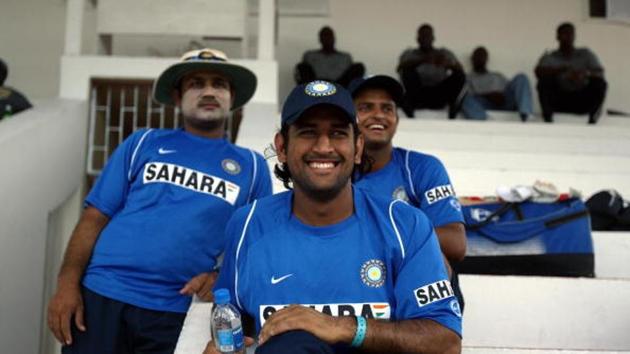
Yes, we’re talking about MS Dhoni; not the Dhoni who has been on a sabbatical since the last one year, but the young lad from Jharkhand who was once battling to switch between being an attacking wicket-keeper batsman and a job at Kharagpur’s Railway Station. Legend has it that during a Deodhar Trophy match in 2004, while representing East Zone, Dhoni famously hit monstrous sixes in the direction of the selectors who had come to watch the match, which eventually paid the way for his India selection.
It was a sequence well-documented in his biopic as well. However, one important bit the film missed covering was Dhoni’s selection for that match, for which the credit goes to Kirmani.
{{/usCountry}}It was a sequence well-documented in his biopic as well. However, one important bit the film missed covering was Dhoni’s selection for that match, for which the credit goes to Kirmani.
{{/usCountry}}Also Watch: MS Dhoni gives daughter Ziva a bike ride inside Ranchi farmhouse
Also Read | West Indies cricketers leave for England
“I have never disclosed this before but here is how Dhoni was picked. I and Pranab Roy - my co-selector from East Zone - were watching a Ranji Trophy match. I’m not sure which match it was since it was a long time ago, but Pranab Roy is proof. He said to me ‘there is this keeper batsman from Jharkhand, who is a very promising youngster and deserves selection’,” Kirmani told Hindustan Times in an exclusive chat.
“I asked him ‘is he keeping wickets in this match?’ Pranab said ‘no but he is fielding at fine leg.’ That is when I got Dhoni’s stats from the last two years to look into. And Wow! There was terrific consistency in his batting ability. Without even seeing him keep wickets, I suggested that Dhoni be selected for East Zone straightaway. And the rest is history.”
Also Read | Chappell calls India bowler ‘biggest wicket-taking threat in Australia’
It was a time when India were yet to find a player they could bank on entirely behind the stumps. With Nayan Mongia sidelined due to match-fixing allegations and Saba Karim’s career over after he lost an eye while keeping wickets, India, during the early 2000s, saw many options emerge as the team’s wicket-keeping contenders. Once the team was done having Rahul Dravid as its stop-gap arrangement post the 2003 World Cup, several names had a run with the senior team – Mumbai’s Sameer Dighe, Haryana’s Ajay Ratra and Deep Dasgupta from Bengal – but none was able to cement a place.
Also, by then Adam Gilchrist had completely revolutionised the role of wicket-keepers. Contrary to the era Kirmani played his cricket in, wicket-keepers in the early 2000s were no longer just figures behind the stumps, whose contributions with the bat would merely be labelled as bonus runs. Gilchrist, along with Mark Boucher and a fairly young Kumar Sangakkara, were beginning to redefine the role of keepers, while India were shuffling between Dinesh Karthik and Parthiv Patel, who despite being good wicket-keepers, weren’t as effective with the bat.
It all changed when Dhoni arrived on the scene in December of 2004, and inside one year, recorded the highest individual score by a wicket-keeper in ODIs with a belligerent knock of 183 not out against Sri Lanka. Dhoni’s rapid rise saw him being appointed captain of the Indian team, less than three years after his India debut, which Kirmani reckons changed the way Indian wicket-keepers were looked at.
“A wicket-keeper is the best guide to the captain, to bowlers and is in the best position to set the field and to find the weak points in a batsman,” Kirmani said.
“When Dhoni was appointed captain, it was the best thing to have happened to Indian cricket. He proved what the importance of a wicket-keeper batsman is all about. In my time, the committee thought that it would be an added responsibility, which could hamper the performance. I’m glad Dhoni proved them wrong and changed that perception.”
However, as much as Dhoni did his bit to change the mindset towards the role, Kirmani is worried the trend may shift again. Before the pandemic, India appointed KL Rahul as their wicket-keeper in ODIs and T20Is, and judging by captain Virat Kohli’s assessment that Rahul keeping wickets offers the team a better balance, Kirmani’s fears may turn out to be true. Furthermore, the fact that good keepers are in the team as specialist batsmen such as Karthik is another concern.
“Wicket-keeping has taken the back seat in this era. A batsman or an all-rounder is considered who can stop the ball behind. No wonder there have been some stunning stumpings and brilliant catches taken by makeshift wicket-keepers,” Kirmani said.